
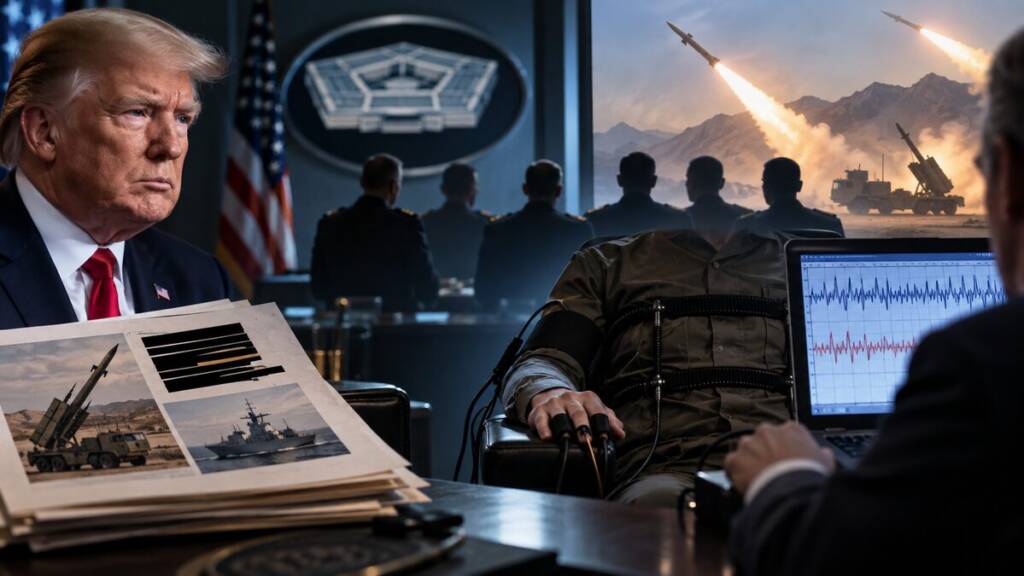
About 50 officers and civilian officials on the US Joint Staff were strapped to polygraph machines last month. Investigators wanted one name: whoever told reporters that America’s missile stocks were running dry in the Iran war. The story broke on September 4.
The questions ranged widely across national security matters. Several dozen people sat the tests. They included officials at US Central Command and several combatant commanders. General Dan Caine, chairman of the Joint Chiefs of Staff, was left out, a senior Pentagon official said.
Sean Parnell, the chief Pentagon spokesman, declined to discuss internal investigations. He said the department treats leaks of classified national security information extremely seriously. Meanwhile, legal and military experts are calling the scale unprecedented. The top of the US armed forces has never faced mass polygraph testing in modern times.
What the leaks revealed
The disclosures were awkward rather than tactical. It was reported last month that the US army had used virtually all its Army Tactical Missile Systems and Precision Strike Missiles. Patriot interceptor stocks had also dropped sharply.
Then came a bigger breach. On August 30, the Washington Post published contents of the Secretary of Defense Orders Book, a classified twice-monthly ledger of where US forces are committed. Its August 14 edition showed six four-star commanders warning that the Iran campaign was “unsustainable”. Four filed formal non-concurs, written objections that record disagreement but still carry out the order. Parnell named them himself on X: Admiral Daryl Caudle, General Alexus Grynkewich, Admiral Samuel Paparo and General Francis Donovan.
Why Trump wants a culprit
The US president, Donald Trump, denies the shortages outright. He says American factories are producing at record levels. He also insists the military has far more munitions than it could ever use. On August 6, he posted on Truth Social: “The ‘leakers’ of these treasonous statements are being hunted down.” Long jail terms would be sought, he added.
The motive is partly operational. Very few people held the munitions data. Officials therefore asked whether anyone with access might be working for a foreign intelligence service. Sources also told the Times the sweep was meant to deter future leakers, not simply to catch one.
The motive is also political. The leaks puncture the administration’s central claim: that the war is going to plan. Iran, meanwhile, keeps firing. Trump said this week the US may strike Iran’s Pickaxe Mountain site soon.
Has Trump lost faith in his generals?
Not entirely – but trust is thin. Caine, the most senior officer in uniform, was exempted. That detail matters. It suggests suspicion sits below the very top, inside a Joint Staff of between 1,500 and 2,000 people.
Trump has also kept backing Pete Hegseth, his defence secretary, and has praised his handling of the war. Yet Hegseth is the figure many officers blame. Current and former officials have said that his management style has bred distrust. He has ousted or blocked promotions for at least 80 generals, admirals and senior officials.
Are Trump and the military on the same page?
On the war’s direction, no. The Orders Book leak put that in writing. The commanders for Europe, the Indo-Pacific and Southern Command all argued that diverting ships, aircraft and interceptors to the Middle East had degraded their own missions, including homeland defence.
The non-concur, however, shows the system working. Officers disagreed formally, then executed the order anyway. The leak is the breach, not the dissent. Parnell called the publication a crime and “a betrayal of the force”.
Friction runs wider still. The Pentagon sacked the top editor and publisher of Stars and Stripes last month. Staff called it retaliation for reporting on conditions aboard the USS Abraham Lincoln.
What happens if someone is caught?
A confirmed leaker faces a hard road. In July, Hegseth announced a joint Pentagon-Justice Department task force to identify and prosecute leakers. “Leaked information risks lives,” he said. He also gave the Pentagon’s general counsel broad powers to demand records within two days.
Prosecution would most likely follow under the Espionage Act, which carries long sentences. Serving officers could additionally face court martial, dismissal and lost pension rights. Security clearances can be pulled long before any charge, ending a career quietly.
There is a catch, though. Polygraph results are not admissible in military justice proceedings; the US Supreme Court settled that in 1998. Tests can steer investigators. They cannot convict. And since nobody failed, prosecutors have nothing yet.
The wider record
Recent precedent is mixed. The Justice Department subpoenaed New York Times reporters in July over a story about Trump’s Qatari-donated jet. It later withdrew the subpoenas after a judge questioned prosecutors closely.
Federal law also requires the defence secretary to use polygraphs responsibly and to report their use to Congress. Lawmakers are likely to ask for that report next.