Iran threatened the United States with “economic warfare” on Tuesday, said it had fired an advanced ballistic missile at American warships, and confirmed plans to declare a new “exclusion zone” across part of the Gulf within days. The twin threats pushed Brent crude toward $98 a barrel and revived fears of a wider fight at the world’s most important oil chokepoint.
The warnings came just days after both sides traded blows at sea.
What the Exclusion Zone Would Do
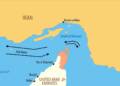
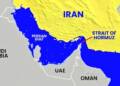
Mohsen Rezaei, secretary of Iran’s Supreme National Security Council, laid out the plan on state television on Sunday. The zone would begin where the American naval blockade of Iran ends and push into parts of the Gulf from there. Rezaei said any vessel entering the area would be added to an Iranian sanctions list.
That listing carries real commercial weight: shipowners could lose insurance cover, and charterers could lose passage rights. Some captains may soon face contradictory orders — a ship obeying the American blockade could breach Iranian rules, while a ship obeying Tehran could breach Washington’s.
Tehran has also promised to publish maps of a new shipping corridor through the Strait of Hormuz, though it has not said when those maps will appear.
Rezaei Repeats the Warning
On Tuesday, Rezaei restated the threat on X, claiming Washington had already received a clear warning from Iran’s newest missiles. Economic warfare, he wrote, “will be met by a maritime exclusion zone across the Persian Gulf.” He added that Iran had fundamentally reset its military posture toward American warships and bases in the region.
Rezaei was likely referring to the Qassem Basir. Iranian state media said Sunday that the missile had been fired at US warships near the strait; the US military said its vessels evaded the attack.
Iran describes the Qassem Basir as an upgraded weapon that manoeuvres better, slips past missile defences, and carries a guidance system resistant to electronic jamming. According to reports, the missile first saw combat in June 2025, against Israel.
Six Months of War
The war began on February 28 with US and Israeli strikes on Iran, and has since followed a rhythm of pauses and flare-ups.
US forces struck three Iranian oil tankers on Saturday, US Central Command said, destroying one. The strikes answered Iranian missile fire at two American warships; Iran, in turn, said it had hit three vessels using unauthorized routes, though those claims remain unverified.
CENTCOM said on X that it had redirected 94 commercial vessels while enforcing the blockade, disabling three ships and boarding two. The aircraft carrier USS George H.W. Bush is supporting the operation. Washington first imposed the blockade in April, then reinstated it on July 14.
Oil Markets React
Traders moved fast. Brent touched $98.06 on Monday — its highest since July 24 — before settling at $97.31. West Texas Intermediate also reached a six-week high, and Murban crude, the UAE benchmark, traded near $106.80.
The strait matters enormously: about one-fifth of global oil and liquefied natural gas shipments crossed it before the war. Yet shipping data now shows an average of just 10 commodity vessels a day over the past 10 days — the lowest level since May.
American drivers feel the difference. Petrol averaged $4.14 a gallon before the Labor Day weekend, nearly a dollar higher than a year earlier.
Trump Under Pressure
President Donald Trump has promised relief, predicting on social media that prices would fall sharply once the United States won the war, and suggesting petrol could eventually drop below two dollars a gallon.
Yet he has not met the aims he set in February. Operation Epic Fury sought to end Iran’s nuclear programme, halt attacks on neighbours, and create conditions for Iranians to topple their leadership. Iran’s clerical rulers remain in power, and opinion polls show the war is unpopular at home — a risk for Republicans in November’s congressional elections.
Diplomacy Stalls
Mediators keep working. Qatar has pushed both capitals back toward talks, and Iran and Oman have separately discussed a temporary corridor through the strait. Tehran, however, insists Washington must lift the blockade first. A 60-day deadline agreed in a June memorandum expired on August 17 without a deal.
Tehran has added a further condition: it wants Israeli strikes in Lebanon to stop. Israeli attacks on a town in southern Lebanon killed at least 12 people on Monday, Lebanon’s health ministry said.
Some analysts argue Iran’s leverage over the strait is fading, and new American sanctions are biting hard. Even so, Tehran retains missiles and drones, and warned on Sunday of retaliation that would be “more intense and more painful.” For now, neither side looks ready to blink.