
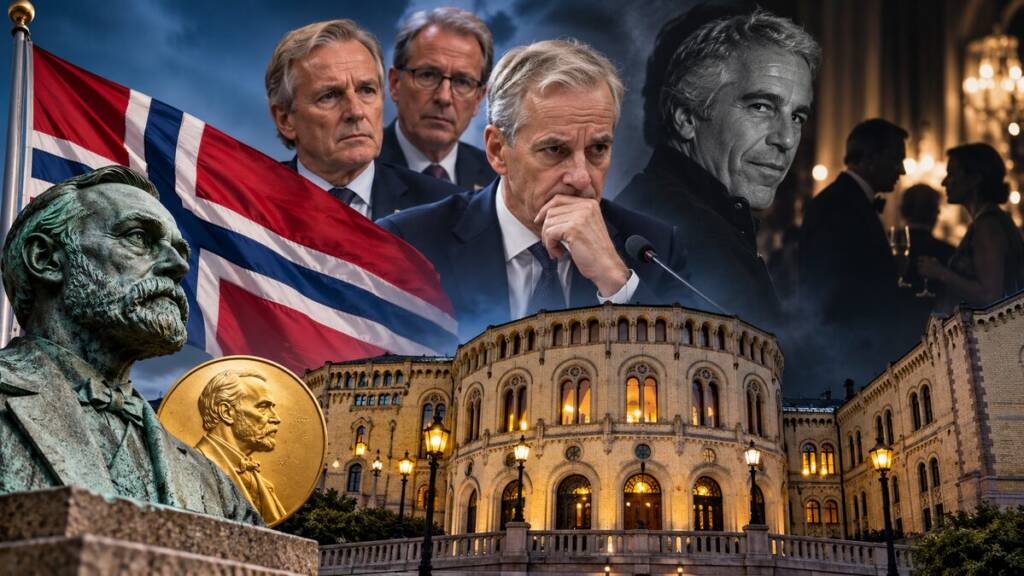
Just before nine on Wednesday, Erik Solheim walked into Norway’s parliament, becoming the first witness in its long-awaited Epstein hearings.
Norway sells itself as the conscience of the world. It awards the Nobel Peace Prize and brokers deals between sworn enemies. Now the files of a dead American sex offender have laid bare the private habits of its diplomatic class.
In January, the US Department of Justice released millions of Epstein documents, exposing links to politicians, royals and billionaires across the globe. Few countries have taken the blow as hard as Norway.
The Norway Epstein hearings run for two days before the Storting’s Committee on Scrutiny and Constitutional Affairs. MPs have summoned two serving and nine former ministers of foreign affairs and development. Prime Minister Jonas Gahr Støre, foreign minister from 2005 to 2012, sits near the top of that list.
Jonas Andersen Sayed, the MP who leads the hearing, put the problem in plain words: “There are many people who have demonstrated very poor judgement.” He is right. Yet poor judgement barely begins to describe what the files reveal.
A Cosy Club of Peacemakers
Consider Thorbjørn Jagland. He served as prime minister, chaired the Nobel committee and ran the Council of Europe. In his correspondence, Epstein dubbed him “the Nobel big shot.”
Økokrim says the files suggest Jagland and relatives used Epstein’s homes in Paris, New York and Palm Beach. In 2014, he even asked Epstein for help financing a flat in Oslo. In February, the Council of Europe lifted his immunity, and Økokrim searched his homes the next day. The economic crime unit now suspects him of aggravated corruption. Jagland admits poor judgement but denies any crime.
Then come Mona Juul and Terje Rød-Larsen, the golden couple of the Oslo Accords. In 2017, Rød-Larsen praised Epstein as a “thoroughly good human being” — nine years after Epstein had pleaded guilty to procuring a child for prostitution. In 2018, the financier helped the couple negotiate the purchase of an Oslo apartment. Police now scrutinise that deal.
Rød-Larsen also took a personal loan from Epstein and quit the International Peace Institute in 2020. Juul left her post as ambassador to Jordan and Iraq in February, with her own ministry citing a serious lapse in judgement. Økokrim suspects her of aggravated corruption and her husband of contributing to it. During a search, investigators also seized boxes of Oslo peace-process papers from the couple’s basement.
Their lawyers accuse Økokrim of breaching basic human rights. All three deny criminal wrongdoing, and the law rightly presumes their innocence. Yet none of them will face MPs this week.
Follow the Money
Yet the deeper scandal concerns public money, not private dinners. Between 1997 and 2018, Norway handed the International Peace Institute some 130.6 million kroner. The foreign ministry’s own table tells a striking story: grants climbed from 3.1 million kroner in 2004 to 11.1 million in 2007. Rød-Larsen took the helm at the institute in 2005. Støre took over the foreign ministry that same year.
Støre insists he never met Epstein during his years as foreign minister. On Wednesday, he defended the funding and dismissed talk of a rotten culture in the ministry. In February, he told NRK, “I take responsibility for those decisions.”
Responsibility means little without scrutiny, however. The Office of the Auditor General criticised the ministry’s handling of these grants back in 2021, in a report covering 2007 to 2012 — squarely within Støre’s tenure.
The hearing’s most revealing moment arrived within its first hour. Andersen Sayed asked Solheim and fellow ex-minister Heikki Holmås a blunt question: is it easier to spend money that counts as foreign aid? Both men answered yes.
Andersen Sayed then asked whether Norway would spend a billion kroner on American think tanks from the ordinary foreign budget. Holmås declined to answer directly.
That exchange should anger every Norwegian taxpayer. Aid exists to feed the hungry and heal the sick. It should never become an easy chequebook for well-connected think tanks. When spending feels easy, scrutiny grows lazy. Lazy scrutiny breeds exactly the cosiness this scandal has exposed.
An Overreaction? Hardly
Solheim branded the whole inquiry an “absurd overreaction” before it even began. He warns that diplomats will now practise needless self-restraint and damage the national interest. In the chamber, he claimed the ministry suffers no worse culture than parliament itself. Holmås, for his part, urged MPs not to frighten civil servants away from taking risks.
This argument gets things exactly backwards. Nobody asks diplomats to stop talking to awkward people — diplomacy often demands tea with tyrants. We simply ask them to refuse favours from a sex offender. Such restraint is not needless; it marks the bare minimum of public service.
Børge Brende, foreign minister from 2013 to 2017, also appears on Wednesday’s witness list. He quit as head of the World Economic Forum in February after the files revealed three dinners with Epstein. Brende says he knew nothing of Epstein’s crimes and regrets not checking him more carefully.
Perhaps he truly did not know. Yet Epstein’s 2008 conviction made headlines around the world. One internet search would have told a former foreign minister everything he needed.
Even the palace has felt the tremor. Queen Mette-Marit has apologised for her friendship with Epstein, though the hearing does not cover her. The pattern matters more than any single name — a small, closed circle rarely questions its own habits.
Who Guards the Guardians?
Here lies the most troubling part of the story. Ministers did not rush to invite outside scrutiny. Early on, the government rejected a Progress Party proposal for an independent inquiry. On Wednesday, Støre defended that choice and argued that the initiative rightly belonged to parliament.
Parliament duly took the job on itself. MPs appointed an external commission of academics and legal experts, only the ninth in 140 years. Former Dagens Næringsliv editor Amund Djuve leads it. The commission will examine more than three decades of Norwegian diplomacy and report by January 2028.
That timetable moves far too slowly. By 2028, the headlines will have faded and the careers will have moved on. Norway cannot wait that long to restore trust in its foreign service. Andersen Sayed rightly wants the government to explain how it will rebuild that trust now. Foreign Minister Espen Barth Eide faces the committee on Thursday. He should arrive with a plan, not a press release.
Three reforms would help at once. First, publish every grant to think tanks, with the sum and the signing minister. Second, ban serving diplomats and ministers from accepting loans, homes or holidays from private benefactors. Third, give aid-labelled spending the same hard scrutiny as any other public outlay.
The courts will settle the criminal questions in due course. Voters, however, can judge the culture today. Behind every email in the files lies a darker truth: Epstein abused girls, and his money bought him the company of the powerful. Too many in Norway’s elite looked past that fact whenever an invitation arrived.
Norway spent generations building its name for decency. A nation that lectures the world on ethics must first clean its own house. The Storting has finally picked up the broom. Voters must make sure nobody snatches it away.