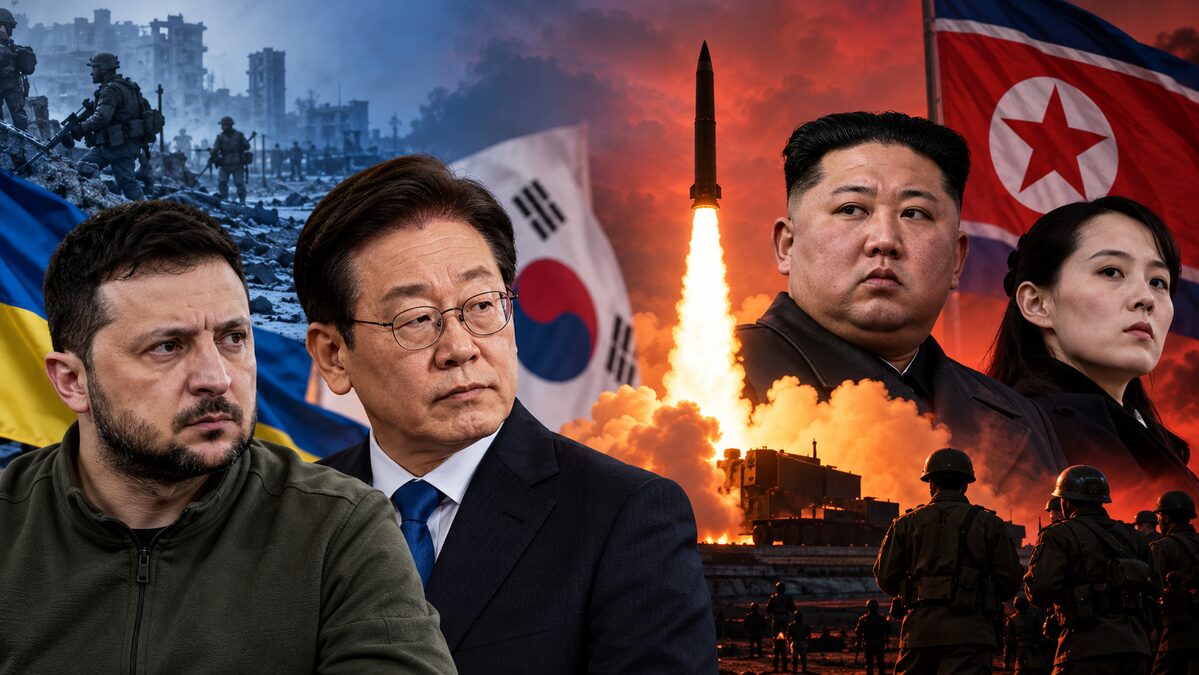
The Ukraine–South Korea row turned dangerous this weekend. Seoul accused Kyiv of stoking war. A day later, Pyongyang sent a missile into the sea. North Korea fired an intermediate-range ballistic missile on 3 October. North Korean leader Kim Jong Un supervised the launch, state media KCNA reported. Pyongyang says the weapon hit a target about 1,000 km away. Seoul’s military tracked the flight for more than 700 km. Kim Yo Jong, the leader’s sister, called the missile strategic. That word implies a nuclear role. She claimed that South Korea and Japan failed to track it. North Korea has run more than 10 missile tests this year.
One day earlier, South Korean President Lee Jae-myung aimed his anger at a different capital. Lee voiced “serious regret” towards Ukraine on X. He accused Kyiv of seeking to bring war to the Korean Peninsula. He also threatened unspecified measures unless Ukraine apologises. Lee’s target appears to be a post by Kyrylo Budanov. Budanov heads the Ukrainian president’s office. He wrote that North Korea is learning from the Ukraine war. He claimed Pyongyang is preparing for combat in its own region.
How a European War Reached Korea
North Korea sent about 15,000 troops to help Russia, South Korean intelligence estimates. About 2,000 of them died. In return, Moscow gives Pyongyang economic and military aid, Seoul and Washington say. Ukraine captured two North Korean soldiers in early 2025. Both men said they wanted to live in South Korea.
Ukrainian President Volodymyr Zelensky told the United Nations on 23 September that Kyiv had sent them south. Seoul says both governments agreed to keep the transfer secret. Kyiv denies any such deal. Seoul summoned Ukraine’s envoy and demanded an apology. Lee had reasons for silence. He wanted to protect the soldiers’ families in the North. He also wants Washington and Pyongyang to talk again. The border was already tense. A landmine blast wounded South Korean soldiers in the Demilitarised Zone last month. Seoul accuses Pyongyang of planting the mines. Kim Yo Jong rejects the charge.
Kyiv is Playing a Dangerous Game
A nation at war has every right to defend itself. It has no right to export its war. Kyiv’s motive looks plain. Ukraine wants South Korean weapons. Seoul refuses to arm countries at war. Some experts say Zelensky wanted to attract more Western help. A crisis in Korea would serve both aims. Budanov’s warning of combat in Korea therefore looks reckless at best. Lee is a liberal, not a conservative. On this point, he defends his nation’s interest. His country would pay the price of any war.
Korea fits a pattern. In 2024, a Ukrainian intelligence spokesman hinted that Kyiv had helped rebels in Mali. Those rebels had killed Malian soldiers and Russian mercenaries. Mali and Niger cut ties with Ukraine. Kyiv denied any role. The pattern continues at sea. Turkey condemned Ukrainian drone strikes on tankers inside its economic zone last year. Kazakhstan protested in July after drones hit ships loading its oil. Reports widely attribute those strikes to Ukraine. In 2025, Ukrainian drones halted Russian oil flows to Hungary and Slovakia.
Each episode has its own excuse. Together, they show a government that gambles with other nations’ stability. Every new front drains goodwill among the taxpayers who fund Ukraine’s defence. Moscow already accuses Kyiv of opening a second front in Africa.
What Prudent Governments Should Do
Seoul should hold its line. If Kyiv broke a confidence, it owes an apology. Lee is right to demand answers. His office is already weighing the recall of Seoul’s ambassador to Ukraine. The two foreign ministers are still talking.
Washington should back him. US President Donald Trump scaled back a military drill to tempt Kim into talks. Kyiv’s megaphone diplomacy cuts across that effort. Western capitals should attach one condition to their aid. Ukraine must keep its war inside its own theatre.