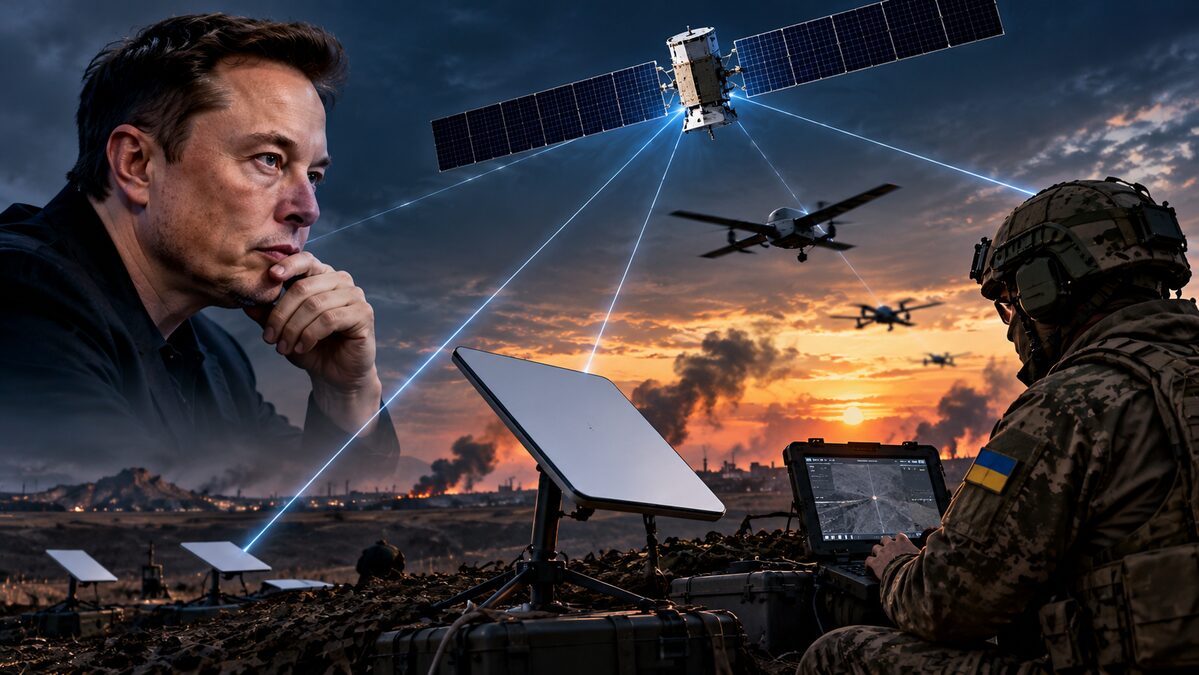
The accusation came on 24 October, hours after Ukraine said its Starlink and Starshield links were back to normal speeds following a ten-day restriction. Musk said SpaceX had closed a loophole. Ukrainian officials say the use he described was technically impossible. Here is what is known, and what is not.
What did Musk say?
In a string of posts on X, Musk said Ukraine’s armed forces had used Starlink, a civilian commercial service, for offensive drone strikes “to kill people”. Such use, he wrote, “has never been allowed, nor should it be”, and SpaceX had shut the gap the previous week.
He drew a sharp line between two products. Starlink is owned and run by SpaceX. Starshield, its military-grade sibling, is in his telling owned and controlled by the US government, with speed and usage limits set by the military and, ultimately, the president.
Musk also argued that Ukraine’s front line would collapse at once if Starlink were switched off, calling this a statement of fact rather than a threat.
What happened to Ukraine’s connection?
Overnight on 13–14 October, terminals moving faster than about 160 km/h (100 mph) began dropping their link, with no notice to Kyiv. Attack drones and interceptors fly faster than that, so the cap left some of them close to useless, Ukrainian officials said, including those sent up against Russia’s jet-powered Shahed drones.
Reports on 20 October, citing US officials, said Musk had personally ordered the cap. Ukraine’s defence ministry said on 24 October that its monitoring showed service restored on equipment moving above 400 km/h. Musk’s post about broken terms came only after that, and it amounted to an admission that SpaceX had imposed a limit.
Has Musk blocked Ukrainian drone use before?
Yes, more than once. In September 2022, Ukraine sought Starlink coverage over Crimea so that naval drones could reach Russian warships at Sevastopol. Musk refused, and control of the drones was reportedly lost about 70 km from the target. When the episode surfaced in Walter Isaacson’s 2023 biography, Musk said he had declined a request rather than switched anything off, and that SpaceX had never promised coverage over Crimea. Extending service there would also have run into US sanctions.
In February 2023, SpaceX president Gwynne Shotwell said the company had never intended Starlink to serve as a weapon. She added that SpaceX had taken steps to stop Ukrainian forces from using the service on drones, going beyond its agreement with Kyiv. A 2025 report claimed Musk also had coverage cut near Kherson during a 2022 counteroffensive. SpaceX never confirmed it.
Does Musk’s claim stand up?
Kyiv says not. Since February, after Russian forces began fitting Starlink terminals to attack drones, Ukraine has allowed only terminals on a government-verified whitelist to operate inside the country, while the system automatically cuts off terminals moving at drone speeds. Serhii Beskrestnov, a defence technology adviser to Zelensky, said civilian Starlink does not function over Russian territory and that Ukraine has restricted the speed of drones using it to 70–90 km/h for months. Serhii Sternenko, a former drone adviser at the defence ministry, called the use Musk described technically impossible.
Neither side has published evidence, and Musk has not said what the loophole was. The likeliest reading is that the fight is less about civilian Starlink than about where Starlink ends and Starshield begins, a boundary nobody has drawn in public.
Who controls the switch?
Nobody wants to own the decision.Secretary of State Marco Rubio said a private commercial contract governed speeds, leaving SpaceX to make the decision. He also said Ukraine does not currently have access to Starshield. US Defence Secretary Pete Hegseth pointed to the terms of service Kyiv had to follow. Donald Trump first denied any role, then, after reports that he had phoned Musk, said simply: “he put it back”.
The timing invites questions. The cap arrived four days after Trump criticised Ukrainian strikes on Russian refineries, and after Musk declared that Zelensky had “gone too far”. A bipartisan group of US senators has asked the Pentagon’s inspector general to investigate.
Why does it matter?
Strip away the posts and a structural problem remains. One commercial provider, run by a businessman with loud views on the war, can reshape a battlefield overnight by moving a speed threshold. Whether Musk is right about the terms matters less than the fact that nobody outside SpaceX can check: Kyiv cannot audit the rule, Washington disowns it and the contract is unpublished.
Even paying customers have no lever. Poland, which funds Ukrainian Starlink subscriptions, could only protest. Europe’s own options are not ready: the EU’s Govsatcom pool offers no ready-made substitute, and the IRIS² constellation is unlikely before 2030.
Until then, the real terms of use in this war are whatever one company, and whoever has its owner’s ear, says they are. Every government leaning on private infrastructure should take note.