TFIGlobal
TFIGlobal
TFIPOST English
TFIPOST हिन्दी
No Result
View All Result
  • Indo-Pacific
  • Americas
  • Canada
  • Indian Subcontinent
  • West Asia
  • Europe
  • Africa
  • The Caribbean
TFIGlobal
  • Indo-Pacific
  • Americas
  • Canada
  • Indian Subcontinent
  • West Asia
  • Europe
  • Africa
  • The Caribbean
No Result
View All Result
TFIGlobal
TFIGlobal
No Result
View All Result
  • Indo-Pacific
  • Americas
  • Canada
  • Indian Subcontinent
  • West Asia
  • Europe
  • Africa
  • The Caribbean

China’s crackdown on Peer-to-Peer companies has caused a massive social unrest and it’s a big headache for CCP

A ticking time-bomb

Akshay Narang by Akshay Narang
December 30, 2020
in Indo-Pacific
stock markets chinese xi jinping

(PC: News Intervention)

Share on FacebookShare on X

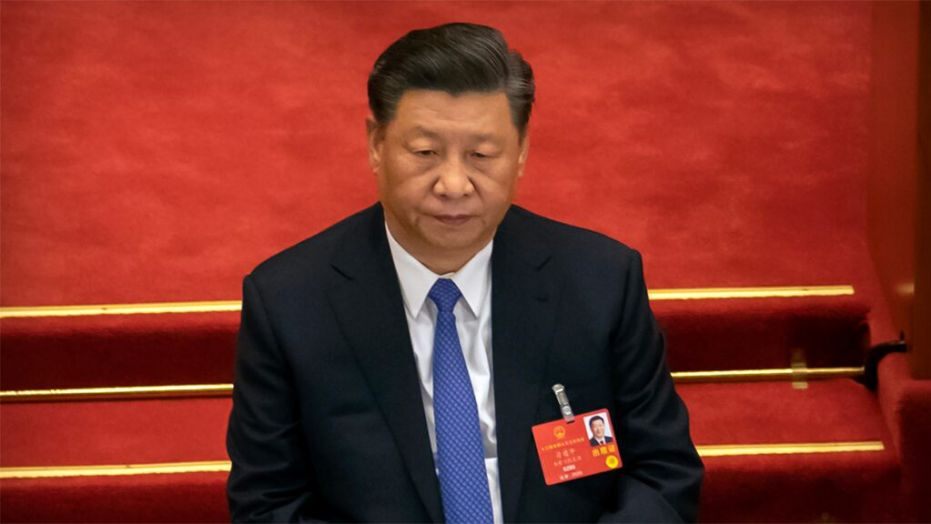
The Chinese Communist Party’s troubles just keep getting bigger. Already hit by a deep economic crisis, the Xi Jinping administration is now also facing massive social unrest. As per SCMP, the Chinese government’s crackdown on peer-to-peer (P2P) lending platforms is causing deep anxiety within the Communist nation. 

P2P lending is a form of money-lending, wherein an online platform matches borrowers with lenders. Many people in China, who weren’t able to find other avenues, have invested their life savings in P2P lending platforms. But now the CCP has purged P2P lending firms. China’s banking regulator has said that it has shut down all such firms across the country. But now millions in China are left wondering if they have lost their life savings. 

Also Read

UN votes to redraw the world map – and Africa finally looks its true size

Wired to a Machine: The Hunt for the Leaker Inside America’s Iran war

Trump Renames Lake Ontario ‘Lake America’, and Google Has Already Redrawn the Map

China’s P2P industry has grown rapidly. The first such platform came into existence 14 years go. But since 2014, there has been an explosive growth in P2P lending firms, particularly because the Chinese government was initially supportive of internet financing. 

P2P lending firms in China were a win-win solution. Small businesses who were otherwise unable to get funding for sustaining or expanding their operations found refuge in P2P lending platforms. Also, many individuals, who were not able to tap into any other source for getting good returns on their life savings, were able to invest their money through such online platforms. 

As per Chinese government data, 10,000 such P2P lending firms came up in China. The annual transactions at such firms reached a high of 3 trillion yuan, that is, US$ 460 billion, showing the level of faith reposed by investors in such platforms. But in late 2017, P2P lending in China was hit by Chinese President Xi Jinping’s de-risking campaign. The Chinese government, therefore, decided to squeeze such lending platforms out of China’s financial system.    

Guo Shuqing, the Chairman of China Banking and Insurance Regulatory Commission and party chief of the People’s Bank of China, led the crackdown against P2P lending. In 2018, Guo said, “You need to question [a product] if its return surpasses 6 per cent. If its return is higher than 8 per cent, the product is dangerous. If its return is above 10 per cent, you should be prepared to lose all of your principal.”

He had also warned that many such P2P lending firms could be illegally raising funds or were simply Ponzi schemes. 

Anyhow, the Xi Jinping administration has gone ahead with shutting P2P lending firms. But the Chinese government is simply refusing to help those who have been left in the lurch. Countless investors are now anxious about future uncertainties. They have tried all means– approaching the police, filing complaints and lawsuits, and what is recognised as the biggest crime in China- protesting on the streets. 

Billions of dollars are at stake in China. In August, the regulator had said that about 800 billion yuan, that is, US$122.7 billion worth of investor funds have not yet been retrieved. SCMP reported that Karen Kong, whose mother had invested her entire life-saving- over 1 million yuan, that is, US$ 153,000, in a little known P2P lending platform, Beijing-based Jieyue United. 

But now the online platform has landed up on the Chinese government’s liquidation list. She said, “No one can give us a clear timetable for the settlement, or even a reply.” As per Kong, local government agencies in Beijing rejected all the evidence, petitions and appeals filed before them. 

The Chinese government has thus imposed a sweeping shutdown on P2P lending platforms across the Communist nation. It has also stepped in and taken over the accounts. But the investors are being told that they would be able to retrieve only 20-30 per cent of their original investments. 

The CCP purge on P2P lending is therefore becoming a ticking time bomb which can explode into a revolution against Beijing if the Chinese government continues to compromise investor interest. 

ShareTweetSend
Akshay Narang

Akshay Narang

Patriot, Political Analyst, International Relations expert

Also Read

A dramatic cyberwarfare illustration showing a shadowy hacker from China launching digital attacks from red-lit servers toward major US government, scientific and industrial facilities, with blue shields marking defended targets and red broken locks indicating compromised systems.

From Victims to Targets: US Quietly Edits Its Chinese Hacking Claims

August 30, 2026
A hooded hacker sits before multiple computer screens as images of the U.S. Capitol, NASA, federal institutions, servers and network data surround them, symbolising a Chinese-linked cyber-espionage hacking campaign targeting American government agencies.

Eight Years in the Dark: Chinese Hacking Campaign Reached NASA, the Fed, and the US Senate

August 27, 2026
A hypersonic glide vehicle streaks through the upper atmosphere as it launches a missile toward a US AWACS radar aircraft, with tanker and support aircraft flying in the distance above dramatic cloud cover.

China’s Hypersonic Gliders Can Now Shoot at Aircraft — And America’s Radar Planes Are the Target

August 25, 2026
A dramatic collage showing Hui Ka Yan in the foreground, Evergrande’s rise symbolised by a luxury skyscraper, car and stacks of cash, and China’s property crisis represented by unfinished buildings, rubble, displaced families and a prison cell. Evergrande founder life sentence

From China’s Richest Man to a Prison Cell: The Evergrande Founder’s Life Sentence Explained

August 24, 2026
A container ship sails through icy Arctic waters toward a snow-covered coastal port, surrounded by floating sea ice and towering mountains under a dramatic sunset.

A Ship Sails North, and the China-Russia Arctic Shipping Route Comes Alive

August 22, 2026
Conceptual illustration of Chinese data infrastructure feeding into a central artificial intelligence system, with glowing data streams spreading toward chatbots and users worldwide, symbolising China’s growing influence over AI training data and information ecosystems.

Explainer: How China Plans to Shape What the World’s AI Knows

August 22, 2026
Youtube Twitter Facebook
TFIGlobalTFIGlobal
Right Arm. Round the World. FAST.
  • About Us
  • Contact Us
  • TFIPOST – English
  • TFIPOST हिन्दी
  • Careers
  • Brand Partnerships
  • Terms of use
  • Privacy Policy

©2026 - TFI MEDIA PRIVATE LIMITED

Welcome Back!

Login to your account below

Forgotten Password?

Retrieve your password

Please enter your username or email address to reset your password.

Log In

Add New Playlist

No Result
View All Result
  • Indo-Pacific
  • Americas
  • Canada
  • Indian Subcontinent
  • West Asia
  • Europe
  • Africa
  • The Caribbean
TFIPOST English
TFIPOST हिन्दी

©2026 - TFI MEDIA PRIVATE LIMITED

This website uses cookies. By continuing to use this website you are giving consent to cookies being used. View our Privacy and Cookie Policy.