TFIGlobal
TFIGlobal
TFIPOST English
TFIPOST हिन्दी
No Result
View All Result
  • Indo-Pacific
  • Americas
  • Canada
  • Indian Subcontinent
  • West Asia
  • Europe
  • Africa
  • The Caribbean
TFIGlobal
  • Indo-Pacific
  • Americas
  • Canada
  • Indian Subcontinent
  • West Asia
  • Europe
  • Africa
  • The Caribbean
No Result
View All Result
TFIGlobal
TFIGlobal
No Result
View All Result
  • Indo-Pacific
  • Americas
  • Canada
  • Indian Subcontinent
  • West Asia
  • Europe
  • Africa
  • The Caribbean

The PLA navy is psychologically incompetent to fight any war, declares top Chinese think tank

Sohil Sinha by Sohil Sinha
January 31, 2021
in India China Latest News, Indo-Pacific
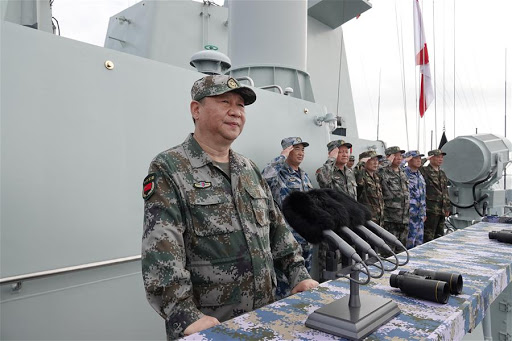
Xi Jinping, PLA, Chinese navy

[PC: Xinhua]

Share on FacebookShare on X

The PLA navy’s submarine division seems to be under immense psychological strain. The pressure of patrolling the contested waters in the South China Sea is getting too hard for them. The pressure has been so extreme that the submariners have developed “serious” psychological disorders.


Also Read

The 1,000-Mile Kill Shot: America’s New Missile Plan Puts China in Its Sights

Dead in the Water: USS Benfold Adrift for Four Days in the South China Sea

Orca XLUUV Completes 1,852km Uncrewed Patrol Across the Pacific

According to a recently published study first reported by Stars and Stripes, Chinese submariners patrolling the contested South China Sea are suffering from “serious” psychological disorders.


Chinese researchers affiliated with the Institute of Military Health Management wrote an article this month in Military Medicine. They said, “One group of military personnel at high risk of mental health problems is the submarine force, especially in the South China Sea.”


The findings were found to be “significantly higher’’ than the Chinese military standards. The study found that 108 out of 511 surveys of Chinese submariners in the South China Sea showed signs of psychological disorders ranging from depression and anxiety to hostility. 


“This study demonstrates for the first time that soldiers and officers in the submarine force in the South China Sea are facing mental health risks and suffering from serious psychological problems,” the researchers concluded.


While the United States maintains no territorial claims there. The U.S. Navy conducts routine freedom of navigation operations in the South China Sea with surface vessels for what it describes as a means of supporting “a free and open Indo-Pacific.” But recognising that life on naval vessels could be tough, the US Navy began embedding psychologists aboard aircraft carriers since the 1990s.


Psychological tests were not included in the military recruiting process of China until 2006, and mental health programs for Chinese soldiers are still in progress.


While being declared psychologically unfit, the navy itself lacks the technology or the men to make it a potent force. The Chinese People’s Liberation Army Navy, according to the latest Department of Defence assessment of the Chinese military, is the largest naval force in the world, but its capabilities still trail behind those of the US Navy.

More: Neither the technology nor the men to understand it, the Chinese Navy is a sorry excuse of a naval force

Furthermore, the analysts have cast a shadow over the fact that China will not be able to train the personnel required to man the warships. The publication quoting military sources said that the PLA navy’s training was still lagging and crews would not be adequately trained by the time the warships were launched.


Unable to properly train personnel and now psychological issues emerging in the submarine division, especially the ones in the South China Sea, a region that China claims to be a part of its territory. Despite being so close to its mainland, the Chinese submariners are still suffering from psychological strains. This puts a major question on the capabilities of the Chinese navy to mount any offensive in other parts of the world. This also puts in perspective that the PLA navy is in a sorry state of affairs as its recruit suffers from psychological “disorders”.


Tags: ChinaPLASouth China Sea
ShareTweetSend
Sohil Sinha

Sohil Sinha

Also Read

A dramatic cyberwarfare illustration showing a shadowy hacker from China launching digital attacks from red-lit servers toward major US government, scientific and industrial facilities, with blue shields marking defended targets and red broken locks indicating compromised systems.

From Victims to Targets: US Quietly Edits Its Chinese Hacking Claims

August 30, 2026
A hooded hacker sits before multiple computer screens as images of the U.S. Capitol, NASA, federal institutions, servers and network data surround them, symbolising a Chinese-linked cyber-espionage hacking campaign targeting American government agencies.

Eight Years in the Dark: Chinese Hacking Campaign Reached NASA, the Fed, and the US Senate

August 27, 2026
A hypersonic glide vehicle streaks through the upper atmosphere as it launches a missile toward a US AWACS radar aircraft, with tanker and support aircraft flying in the distance above dramatic cloud cover.

China’s Hypersonic Gliders Can Now Shoot at Aircraft — And America’s Radar Planes Are the Target

August 25, 2026
A dramatic collage showing Hui Ka Yan in the foreground, Evergrande’s rise symbolised by a luxury skyscraper, car and stacks of cash, and China’s property crisis represented by unfinished buildings, rubble, displaced families and a prison cell. Evergrande founder life sentence

From China’s Richest Man to a Prison Cell: The Evergrande Founder’s Life Sentence Explained

August 24, 2026
A container ship sails through icy Arctic waters toward a snow-covered coastal port, surrounded by floating sea ice and towering mountains under a dramatic sunset.

A Ship Sails North, and the China-Russia Arctic Shipping Route Comes Alive

August 22, 2026
Conceptual illustration of Chinese data infrastructure feeding into a central artificial intelligence system, with glowing data streams spreading toward chatbots and users worldwide, symbolising China’s growing influence over AI training data and information ecosystems.

Explainer: How China Plans to Shape What the World’s AI Knows

August 22, 2026
Youtube Twitter Facebook
TFIGlobalTFIGlobal
Right Arm. Round the World. FAST.
  • About Us
  • Contact Us
  • TFIPOST – English
  • TFIPOST हिन्दी
  • Careers
  • Brand Partnerships
  • Terms of use
  • Privacy Policy

©2026 - TFI MEDIA PRIVATE LIMITED

Welcome Back!

Login to your account below

Forgotten Password?

Retrieve your password

Please enter your username or email address to reset your password.

Log In

Add New Playlist

No Result
View All Result
  • Indo-Pacific
  • Americas
  • Canada
  • Indian Subcontinent
  • West Asia
  • Europe
  • Africa
  • The Caribbean
TFIPOST English
TFIPOST हिन्दी

©2026 - TFI MEDIA PRIVATE LIMITED

This website uses cookies. By continuing to use this website you are giving consent to cookies being used. View our Privacy and Cookie Policy.