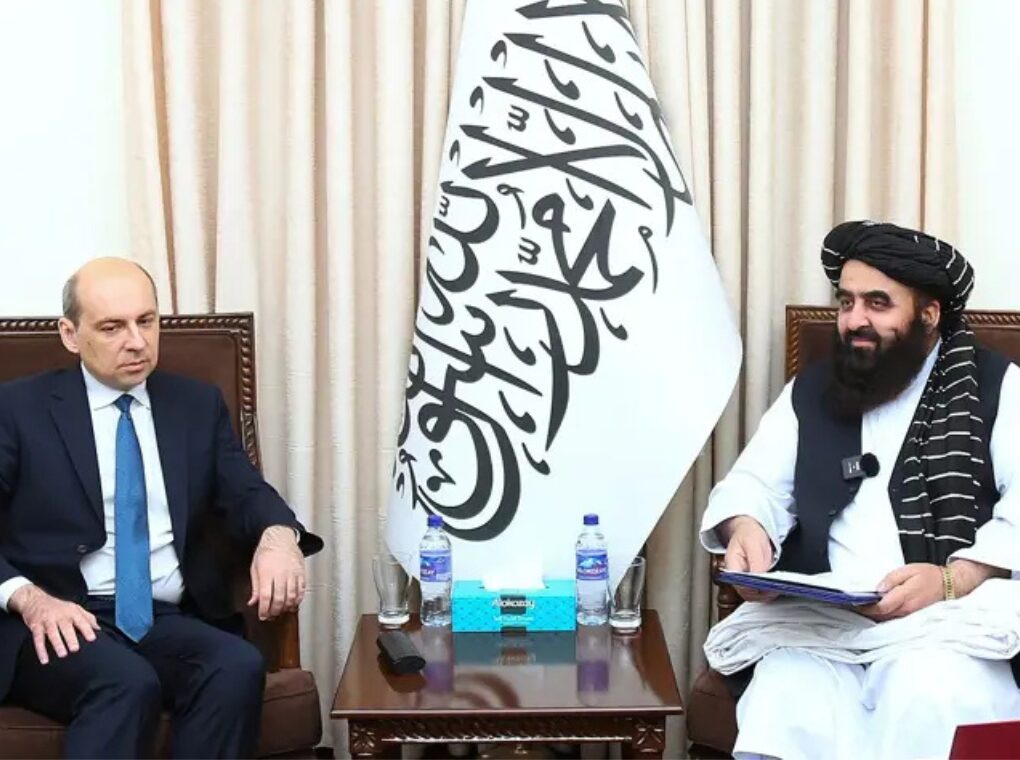
On July 3, 2025, Russia became the first country to officially recognize the Taliban-led government in Afghanistan, a move that marks a pivotal shift in the regional and global political landscape. While many states have maintained informal relations with the Taliban since their return to power in 2021, none had taken the decisive step of full diplomatic recognition.
Russia’s recognition now forces a critical re-examination of global strategies toward Afghanistan and the Taliban regime, raising questions about legitimacy, security, economic interest, and human rights.
From Isolation to Engagement: Russia’s Motivations
Security Calculations and the ISKP Threat
Russia’s foremost concern is regional security. The Islamic State Khorasan Province (ISKP) has emerged as a potent threat, not only within Afghanistan but also in Central Asia and Russia itself. ISKP-linked attacks, including the deadly Crocus City Hall massacre in Moscow in March 2024, have intensified Russian anxieties about unchecked militancy spilling across borders. By engaging with the Taliban—who are also opposed to ISKP—Russia hopes to develop a security framework rooted in realpolitik rather than ideological alignment.
Economic Opportunism in a Vacuum
Afghanistan is rich in untapped mineral resources and presents opportunities in energy, agriculture, and infrastructure. Since the West’s withdrawal in 2021, a vacuum in development assistance and trade partnerships has emerged—one that Russia seeks to fill.
Moscow’s recognition opens the door for formal economic deals, building on previous transactions, such as the 2022 agreement to supply fuel and wheat. In a sanctions-constrained economy, Russia views Afghanistan as a peripheral yet strategic partner that can expand its economic network beyond the Western-led financial order.
Reasserting Influence in the Post-American Order
Russia’s move fits within a broader strategy of projecting influence in regions once dominated by Western intervention. Recognising the Taliban provides Moscow with diplomatic capital among anti-Western governments and bolsters its image as a global power willing to engage where the West withdraws.
The Kremlin is thus positioning itself as a counterweight to U.S. and NATO influence in South and Central Asia.
China’s Calculated Caution
While China has not formally recognised the Taliban, it has maintained high-level engagements, allowed Taliban diplomats to operate in Beijing, and extended development-oriented overtures, including investment possibilities in the Belt and Road Initiative (BRI).
Yet Beijing’s hesitancy stems from the potential reputational cost of endorsing a regime known for human rights abuses—particularly against women—and concerns over regional instability that could spill into Xinjiang.
China, however, welcomed Russia’s move, describing Afghanistan as a traditional friendly neighbor and suggesting it should not remain isolated. This carefully balanced rhetoric reflects Beijing’s intent to shape Afghanistan’s future while avoiding the burden of being the first major power to extend full recognition.
India’s Tightrope Diplomacy
India has resumed diplomatic operations in Kabul and permitted the Taliban to send a Consul General to Mumbai. Though formal recognition remains off the table, New Delhi’s security concerns—especially terrorism emanating from Afghan soil—and competition with China push it toward pragmatic engagement.
India’s recent talks with Taliban officials mark a significant softening of its previously hardline stance, though its position remains officially non-committal.
Implications of Russia’s Recognition
A Step Toward De Facto Legitimacy
While Russia’s recognition does not confer full international legitimacy on the Taliban, it chips away at their diplomatic isolation. The Taliban now hold an officially recognised embassy in Moscow, and their envoy has presented credentials—an act with symbolic and operational consequences. This could embolden the Taliban’s pursuit of recognition from other states, particularly those with strategic or economic interests in Afghanistan.
Pressure on Global Norms and Human Rights
This development comes despite ongoing reports of human rights abuses under the Taliban, especially regarding women’s rights and civil liberties. Opposition voices, including the Afghan Women’s Political Participation Network and former Afghan leaders like Rangin Dadfar Spanta, have sharply criticised the move as legitimising repression.
The Taliban’s harsh policies—such as banning girls from secondary education and restricting women’s employment—have led the UN to describe the regime as practicing “gender apartheid.”
A Precedent for Global South Diplomacy
Russia’s decision could set a precedent for countries disenchanted with the Western-dominated international order. Turkey, Iran, Pakistan, and Gulf states have maintained informal diplomatic ties with the Taliban; some may now consider formal recognition to align with shifting geopolitical tides or secure regional influence.
Obstacles to Broader Recognition
Despite Russia’s recognition, full international legitimacy for the Taliban remains distant. Recognition from the United Nations or a broad coalition of states would require significant reforms, particularly on human rights, counter-terrorism commitments, and inclusivity in governance.
Until such reforms occur, the Taliban’s position in global diplomacy remains fragile, and formal access to frozen international assets and financial institutions remains unlikely.
A Strategic Gamble in a Fragmented World
Russia’s formal recognition of the Taliban marks a bold, controversial step that challenges prevailing norms of state legitimacy and humanitarian accountability. It reflects a pragmatic calculus shaped by security concerns, economic opportunities, and geopolitical rivalry with the West.
While Moscow may gain influence in the short term, the long-term effects on regional stability, global norms, and Afghan civil society remain deeply uncertain.
Whether other nations follow suit depends not just on strategic interests but also on the Taliban’s willingness to evolve. Until then, the international community remains split between those engaging out of necessity and those resisting formal recognition on principle.