TFIGlobal
TFIGlobal
TFIPOST English
TFIPOST हिन्दी
No Result
View All Result
  • Indo-Pacific
  • Americas
  • Canada
  • Indian Subcontinent
  • West Asia
  • Europe
  • Africa
  • The Caribbean
TFIGlobal
  • Indo-Pacific
  • Americas
  • Canada
  • Indian Subcontinent
  • West Asia
  • Europe
  • Africa
  • The Caribbean
No Result
View All Result
TFIGlobal
TFIGlobal
No Result
View All Result
  • Indo-Pacific
  • Americas
  • Canada
  • Indian Subcontinent
  • West Asia
  • Europe
  • Africa
  • The Caribbean

Malaysia responds to China’s air threats by scrapping a $1.8 billion project with China

Abhyoday Sisodia by Abhyoday Sisodia
July 16, 2021
in Indo-Pacific
$1.8 billion project
Share on FacebookShare on X

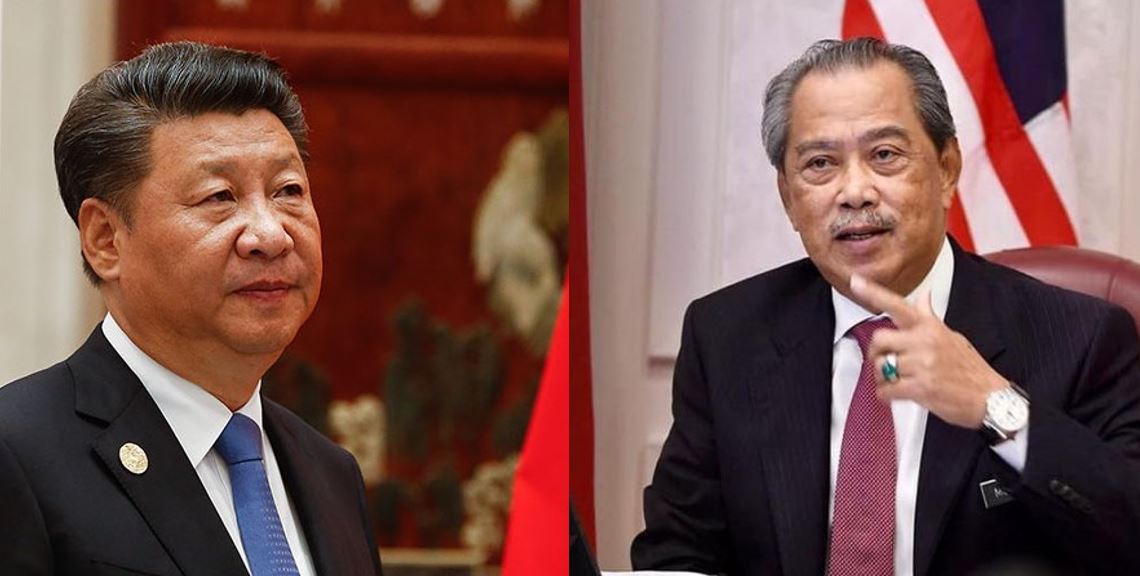
China’s foreign policy looked really strong as it aggressively employed vaccine diplomacy, however, with the latest development, it seems all of it was just a house of cards which is falling as we speak. In the latest fallout of Beijing’s vaccine diplomacy, Malaysia has scrapped a $1.8 billion Singapore- Kuala Lumpur High-speed rail project which was being built with the assistance of China Railway Engineering Corp.

At the same time, following mounting evidence that the vaccines have limited efficacy against the Delta variant currently ravaging Southeast Asia, Malaysia’s Ministry of Health announced yesterday that the country will stop administering the COVID-19 vaccine produced by China’s Sinovac Biotech once current supplies run out. These developments can be considered a response to the recent air threats made by China.

Also Read

The 1,000-Mile Kill Shot: America’s New Missile Plan Puts China in Its Sights

Dead in the Water: USS Benfold Adrift for Four Days in the South China Sea

Orca XLUUV Completes 1,852km Uncrewed Patrol Across the Pacific

As per reports, the government, developer Iskandar Waterfront Holdings (IWH), and its Chinese partner will not proceed with an equity deal for a planned mega-project near Malaysia’s capital, the parties stated in a joint statement. The agreement between IWH and its partner China Railway Engineering Corp (CREC) to acquire 60% equity in the Bandar Malaysia mixed commercial project for RM7.41 billion (US$1.77 billion) lapsed on May 6 due to a failure to meet terms, according to a statement released on Wednesday (Jul 14).

In early June, sixteen aircraft from the People’s Liberation Army Air Force conducted a large-scale transport formation exercise over the South China Sea near Borneo on Monday and entered the airspace of Malaysia’s exclusive economic zone (EEZ).  The Royal Malaysian Air Force (RMAF) said the Chinese aircraft were in a tactical trail formation spanning 60 kilometres, or approximately 37 miles. In response to the blatant incursion, Malaysia dispatched two Hawk 208 fighter aircraft.

By doing so, China had just played with a major Malaysian fault line and most definitely angered the Southeast Asian country. Invisible to the world, China demonstrated to Kuala Lumpur that it could divide Malaysia into two halves, without the country knowing what had hit it.

Read more: China’s long term plan is to split Malaysia into East and West Malaysia

Since then, Malaysia has found itself in a tight spot and while it was expected that some action might follow, the latest steps show that it has had enough of China’s belligerent attitude. According to Malaysian Health Minister Adham Baba, the Malaysian government has acquired around 45 million doses of the Pfizer-BioNTech vaccine, which is enough to cover 70% of the country’s population, compared to 16 million doses of Sinovac’s vaccine.

As Malaysia confronts a spiralling outbreak of COVID-19, the statement came on the third consecutive day of record COVID-19 infections. Malaysia now has 880,782 illnesses and 6,613 deaths, making it the worst-infected country in Southeast Asia per capita. Malaysia’s decision reflects growing concerns about the efficiency of Chinese-made COVID-19 vaccinations against the more easily transmitted Delta form.

In such a situation, Malaysia no longer seems inclined to remain in the good books of China. It wants to show Beijing that taking the Southeast Asian country lightly will lead to considerable consequences. The scrapping of the $1.8 billion project with China as well as stopping the administration of the Chinese Sinovac vaccine are obvious signs of the same.

The low efficacy of Chinese-made vaccinations, along with the country’s assertive military posture, is expected to damage China’s regional prestige in Southeast Asia. Malaysia’s scrapes are the latest result of China’s failed vaccine diplomacy. $1.8 billion China Railway Engineering Corp. is assisting in the construction of the Singapore-Kuala Lumpur high-speed rail project.

Tags: ChinaMalaysiaSinovacSouth China SeaVaccine Diplomacy
ShareTweetSend
Abhyoday Sisodia

Abhyoday Sisodia

M.A. in East Asian Studies, Department of East Asian Studies, the University of Delhi, India. Deep interest in geopolitics, foreign policy and world affairs.

Also Read

A dramatic cyberwarfare illustration showing a shadowy hacker from China launching digital attacks from red-lit servers toward major US government, scientific and industrial facilities, with blue shields marking defended targets and red broken locks indicating compromised systems.

From Victims to Targets: US Quietly Edits Its Chinese Hacking Claims

August 30, 2026
A hooded hacker sits before multiple computer screens as images of the U.S. Capitol, NASA, federal institutions, servers and network data surround them, symbolising a Chinese-linked cyber-espionage hacking campaign targeting American government agencies.

Eight Years in the Dark: Chinese Hacking Campaign Reached NASA, the Fed, and the US Senate

August 27, 2026
A hypersonic glide vehicle streaks through the upper atmosphere as it launches a missile toward a US AWACS radar aircraft, with tanker and support aircraft flying in the distance above dramatic cloud cover.

China’s Hypersonic Gliders Can Now Shoot at Aircraft — And America’s Radar Planes Are the Target

August 25, 2026
A dramatic collage showing Hui Ka Yan in the foreground, Evergrande’s rise symbolised by a luxury skyscraper, car and stacks of cash, and China’s property crisis represented by unfinished buildings, rubble, displaced families and a prison cell. Evergrande founder life sentence

From China’s Richest Man to a Prison Cell: The Evergrande Founder’s Life Sentence Explained

August 24, 2026
A container ship sails through icy Arctic waters toward a snow-covered coastal port, surrounded by floating sea ice and towering mountains under a dramatic sunset.

A Ship Sails North, and the China-Russia Arctic Shipping Route Comes Alive

August 22, 2026
Conceptual illustration of Chinese data infrastructure feeding into a central artificial intelligence system, with glowing data streams spreading toward chatbots and users worldwide, symbolising China’s growing influence over AI training data and information ecosystems.

Explainer: How China Plans to Shape What the World’s AI Knows

August 22, 2026
Youtube Twitter Facebook
TFIGlobalTFIGlobal
Right Arm. Round the World. FAST.
  • About Us
  • Contact Us
  • TFIPOST – English
  • TFIPOST हिन्दी
  • Careers
  • Brand Partnerships
  • Terms of use
  • Privacy Policy

©2026 - TFI MEDIA PRIVATE LIMITED

Welcome Back!

Login to your account below

Forgotten Password?

Retrieve your password

Please enter your username or email address to reset your password.

Log In

Add New Playlist

No Result
View All Result
  • Indo-Pacific
  • Americas
  • Canada
  • Indian Subcontinent
  • West Asia
  • Europe
  • Africa
  • The Caribbean
TFIPOST English
TFIPOST हिन्दी

©2026 - TFI MEDIA PRIVATE LIMITED

This website uses cookies. By continuing to use this website you are giving consent to cookies being used. View our Privacy and Cookie Policy.