TFIGlobal
TFIGlobal
TFIPOST English
TFIPOST हिन्दी
No Result
View All Result
  • Indo-Pacific
  • Americas
  • Canada
  • Indian Subcontinent
  • West Asia
  • Europe
  • Africa
  • The Caribbean
TFIGlobal
  • Indo-Pacific
  • Americas
  • Canada
  • Indian Subcontinent
  • West Asia
  • Europe
  • Africa
  • The Caribbean
No Result
View All Result
TFIGlobal
TFIGlobal
No Result
View All Result
  • Indo-Pacific
  • Americas
  • Canada
  • Indian Subcontinent
  • West Asia
  • Europe
  • Africa
  • The Caribbean

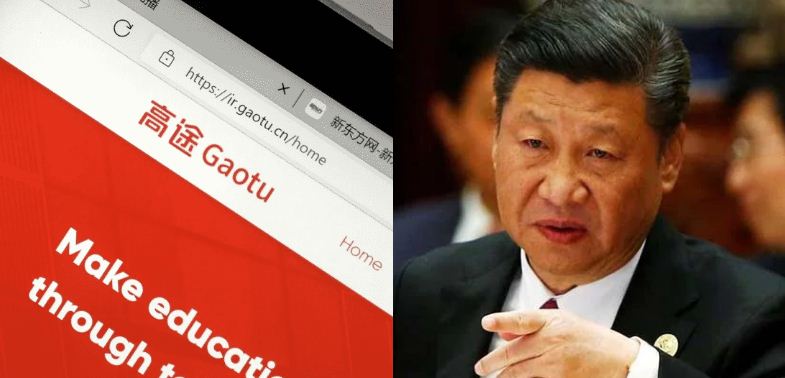
China’s EduTech sector had begun challenging Jinping’s hegemony. So Jinping made it disappear

Sanbeer Singh Ranhotra by Sanbeer Singh Ranhotra
August 4, 2021
in China, East Asia
Edtech, Xi Jinping China
Share on FacebookShare on X

China’s EdTech sector has been hammered down. The hammer and sickle have been brought down heavily on the bustling sector. At the core of China’s rather gigantic and unprecedented crackdown on the EdTech sector is Xi Jinping’s insecurity of losing his grip over the Chinese populace. The youth in China are not big fans of the Chinese Communist Party (CCP), and many among them have launched a “Do Nothing” movement against the Chinese regime. Others, meanwhile, are promising to remain single and not procreate – a severe setback for the CCP as it desperately attempts to revive China’s declining birth rates.

Banking on the Coronavirus driven lockdowns and social distancing measures, the Chinese EdTech sector experienced extraordinary growth and allured some 84,000 new operators last year alone. The technology-driven education stocks bagged investments totalling 106 billion Yuan in the period. Xi Jinping’s latest restrictions on the EdTech sector ban companies that teach school curriculums from making profits, raising capital or going public. This has shut all doors for these companies to make any form of capital and for investors to get their desired exits.

Also Read

Stealth Secrets in Beijing’s Grip: China Holds F-35 Parts After Mystery Hong Kong Detour

Xi Purges His Last Two Top Generals As Nuclear Leak Claims Return

“Crown jewels” for Riyadh? US clears $24.3bn F-35 sale despite China spying fears

So, the Chinese EdTech sector’s story is over just when it was beginning to blossom. Larry Chen, the former school teacher who became one of the world’s richest people, has lost his billionaire status as China cracks down on its private education sector. The tycoon’s net worth tumbled from $16 billion to just about $230 million in a matter of six months – a wealth evaporation of 99 per cent. This came after Xi Jinping dealt a massive $800 billion blow to China’s tech giants in the last few months with his anti-market practices.

Read more: Jinping has reduced China’s EduTech billionaires to millionaires within weeks

What Xi Jinping fears the most is the immense influence enjoyed by these EdTech giants over millions of young learners. These operators hold the power to sway millions of Chinese students away from the official CCP mandate. Now, Jinping plans to create a specialised agency that would not only restructure their day-to-day operations but also guide operators on setting up a Communist Party chapter within their organizations. Thus, the agency will ensure that CCP’s grip on the online learners is tightened through non-traditional channels of education as well.

China’s EdTech sector was private, and largely out of government purview. What we mean to say here is that the sector was as out of the regime’s control as any sector can be in China – which is not much. However, even a bit of a freedom for any sector can have catastrophic consequences for the CCP. A large portion of those who benefitted from the EdTech sector’s growth in China were those who could afford such online education.

Therefore, China’s EdTech sector had the ability of creating an entire class of young Chinese people who would have an exposure to information which the usual Chinese students, still heavily dependent on traditional modes of teaching would not have. The traditional curriculum in China propagates subservience to the CCP, while the private EdTech sector did not really fulfil this objective. Therefore, the sickle of the CCP has been used to clip the sector’s wings.

Read more: After destroying China’s finance sector, Paranoid Jinping begins an unprecedented crackdown on EduTech sector

Officially, the CCP’s excuse for doing so is that the excessive tutoring via online modes not only torments youth, but also burdens parents with expensive fees. Bloomberg has reported that he EdTech segment has been accused of causing social inequalities. “Edtech is allegedly triggering a social inequality among urban and rural citizens of China by providing additional coaching to those who can afford it. This especially has a greater impact in tutoring students for China’s university entrance exam, gaokao,” it said.

The reality, however, is that the EdTech sector, much like the Tech sector of China, was growing too big and too powerful for the CCP to handle. Therefore, Xi Jinping drove both the sectors to the ground while he still could.

Tags: ChinaEdTech SectorXi Jinping
ShareTweetSend
Sanbeer Singh Ranhotra

Sanbeer Singh Ranhotra

।। Political Enthusiast ।।Compulsively Opinionated ।। Aspiring Journalist ।। ਮਨ ਨੀਵਾਂ ਮੱਤ ਉੱਚੀ ।।

Also Read

Xi Jinping flanked by two Chinese military generals in a dark, tense political-military scene, with the Chinese flag, PLA troops, a missile launcher and shadowy US-China imagery in the background, symbolising a leadership purge and allegations of nuclear espionage.

Xi Purges His Last Two Top Generals As Nuclear Leak Claims Return

September 22, 2026
Kim Jong Un watches missiles launches as U.S., Japanese and South Korean warships patrol the sea, with Trump and Iran's leadership depicted amid a backdrop of military escalation and conflict.

North Korea Fires Missiles Into the Sea as Washington’s War on Iran Grinds On

September 13, 2026
South Korean, US and Japanese flags fly aboard warships as a multinational naval fleet, including an aircraft carrier and destroyers, conducts operations at sea beneath fighter jets and dramatic storm clouds.

Freedom Edge 2026: US, South Korea and Japan to Hold North Korea nuclear Missile Drill from 7 September

August 31, 2026
A dramatic cyberwarfare illustration showing a shadowy hacker from China launching digital attacks from red-lit servers toward major US government, scientific and industrial facilities, with blue shields marking defended targets and red broken locks indicating compromised systems.

From Victims to Targets: US Quietly Edits Its Chinese Hacking Claims

August 30, 2026
A hooded hacker sits before multiple computer screens as images of the U.S. Capitol, NASA, federal institutions, servers and network data surround them, symbolising a Chinese-linked cyber-espionage hacking campaign targeting American government agencies.

Eight Years in the Dark: Chinese Hacking Campaign Reached NASA, the Fed, and the US Senate

August 27, 2026
A hypersonic glide vehicle streaks through the upper atmosphere as it launches a missile toward a US AWACS radar aircraft, with tanker and support aircraft flying in the distance above dramatic cloud cover.

China’s Hypersonic Gliders Can Now Shoot at Aircraft — And America’s Radar Planes Are the Target

August 25, 2026
Youtube Twitter Facebook
TFIGlobalTFIGlobal
Right Arm. Round the World. FAST.
  • About Us
  • Contact Us
  • TFIPOST – English
  • TFIPOST हिन्दी
  • Careers
  • Brand Partnerships
  • Terms of use
  • Privacy Policy

©2026 - TFI MEDIA PRIVATE LIMITED

Welcome Back!

Login to your account below

Forgotten Password?

Retrieve your password

Please enter your username or email address to reset your password.

Log In

Add New Playlist

No Result
View All Result
  • Indo-Pacific
  • Americas
  • Canada
  • Indian Subcontinent
  • West Asia
  • Europe
  • Africa
  • The Caribbean
TFIPOST English
TFIPOST हिन्दी

©2026 - TFI MEDIA PRIVATE LIMITED

This website uses cookies. By continuing to use this website you are giving consent to cookies being used. View our Privacy and Cookie Policy.