TFIGlobal
TFIGlobal
TFIPOST English
TFIPOST हिन्दी
No Result
View All Result
  • Indo-Pacific
  • Americas
  • Canada
  • Indian Subcontinent
  • West Asia
  • Europe
  • Africa
  • The Caribbean
TFIGlobal
  • Indo-Pacific
  • Americas
  • Canada
  • Indian Subcontinent
  • West Asia
  • Europe
  • Africa
  • The Caribbean
No Result
View All Result
TFIGlobal
TFIGlobal
No Result
View All Result
  • Indo-Pacific
  • Americas
  • Canada
  • Indian Subcontinent
  • West Asia
  • Europe
  • Africa
  • The Caribbean

South Korea obliterates China’s biggest economic weapon

Vishwas Makkar by Vishwas Makkar
July 23, 2022
in China
South Korea obliterates China’s biggest economic weapon
Share on FacebookShare on X

World politics has been long dominated by the geographical presence of oil supplies. However, the arrival of cleaner sources of energy has initiated a drop in the popularity of the former. Oil has ruled the markets for more than five decades but that is about to change.

All major economies of the world are on a spree to develop their semiconductor manufacturing capabilities to compete in an increasingly competitive world. Semiconductors are used in almost everything and the nation that will be controlling its majority supply would eventually end up leading the 21st century. To put it in other words, the semiconductor is the new oil in this digital age.

Also Read

One Man, 14 Break-Ins: Anthropic’s Report on How AI Became a Weapon for Hire

The 1,000-Mile Kill Shot: America’s New Missile Plan Puts China in Its Sights

Ten Missiles, One Message: North Korea Rebuffs Trump as Joint Drills End

Read More: South Korea declares China “the biggest threat to its economy”

The World Picks up Pace

The semiconductor industry reportedly would be one of the biggest generators of employment in the future owing to high demand. In the U.S, recent analysis shows that jobs in the semiconductor industry have a 6.7x multiplier on overall job creation.

Both the US and the EU have even passed legislation to support domestic semiconductor firms in response to a worldwide chip shortage and growing geopolitical worries around global supply chains.

The CHIPS for America Act features a generous $52 billion package to support the research, development, and production of semiconductors in the United States, whereas the European Chips Act is a multibillion-euro project to boost the European semiconductor ecosystem. Both pieces of legislation have been passed at a vital time for chip makers as a result of the forced reduction or even halting of production in a variety of industries, including consumer electronics, healthcare, and automotive.

South Korea tarnishes Chinese dreams

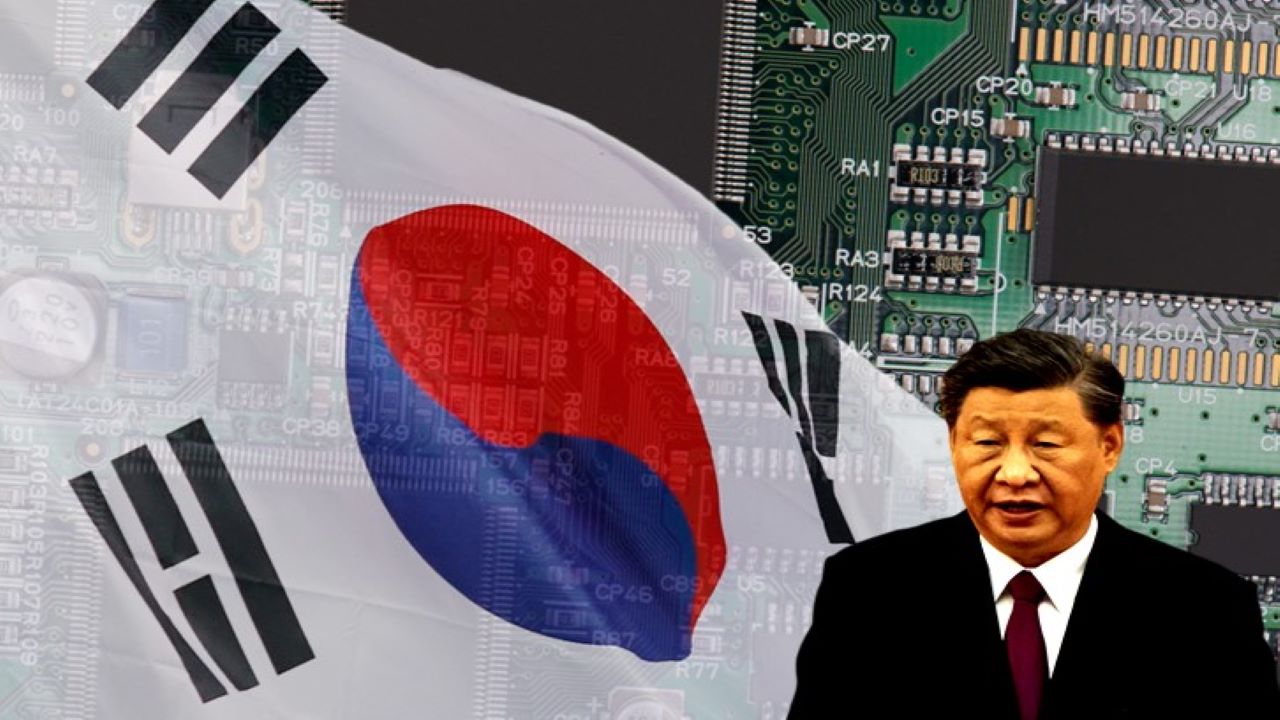
According to analysts and media reports, China is fearful of losing essential supplies amid a US-initiated chip alliance with Asian economies, particularly South Korea. The Chip 4 Alliance, is a partnership envisioned by the US to include South Korea, Japan and Taiwan. All three countries included by the US are pioneers in the semiconductor industry with a Taiwanese technology giant TMSC (Taiwan Semiconductor Manufacturing Company)  accounting for over 50 per cent of the market share of global chip manufacturing.

According to data from the Korea International Trade Association, China is South Korea’s largest trading partner, and in 2021, 48% of the US$69 billion in chipset exports from South Korea went to China.

You see, Beijing views South Korea as the perfect place to outsource chip manufacturing. South Korea, which already has a dedicated semiconductor manufacturing industry, is considered by China to be a major partner in achieving self-sufficiency in semiconductor imports.

Read More: South Korea and Japan brace for a massive ruble strike by Putin

China feels threatened by the US initiative because of China’s over-reliance on South Korea for its semiconductor needs. South Korean technology giants including Samsung Electronics have dedicated manufacturing in China that are assisting Beijing to ramp up their production levels.

 “From China’s point of view, Korea is not only a semiconductor supplier but also a country where semiconductor manufacturing technology can be transferred in the long term,” said Kim Yang-paeng, senior researcher at the Korea Institute for Industrial Economics and Trade.

Make no mistake, the Chinese dream to become the Semiconductor mafia has been destroyed. China already has ongoing disputes with Japan and Taiwan and is now on the way to having a falling out with South Korea, thereby quashing China’s hopes to dominate the Semiconductor industry.


Tags: Anti-China PolicyChinaSouth Korea
ShareTweetSend
Vishwas Makkar

Vishwas Makkar

Columnist at TFI Media, Political Enthusiast.

Also Read

A dramatic cyberwarfare illustration showing a shadowy hacker from China launching digital attacks from red-lit servers toward major US government, scientific and industrial facilities, with blue shields marking defended targets and red broken locks indicating compromised systems.

From Victims to Targets: US Quietly Edits Its Chinese Hacking Claims

August 30, 2026
A hooded hacker sits before multiple computer screens as images of the U.S. Capitol, NASA, federal institutions, servers and network data surround them, symbolising a Chinese-linked cyber-espionage hacking campaign targeting American government agencies.

Eight Years in the Dark: Chinese Hacking Campaign Reached NASA, the Fed, and the US Senate

August 27, 2026
A hypersonic glide vehicle streaks through the upper atmosphere as it launches a missile toward a US AWACS radar aircraft, with tanker and support aircraft flying in the distance above dramatic cloud cover.

China’s Hypersonic Gliders Can Now Shoot at Aircraft — And America’s Radar Planes Are the Target

August 25, 2026
A dramatic collage showing Hui Ka Yan in the foreground, Evergrande’s rise symbolised by a luxury skyscraper, car and stacks of cash, and China’s property crisis represented by unfinished buildings, rubble, displaced families and a prison cell. Evergrande founder life sentence

From China’s Richest Man to a Prison Cell: The Evergrande Founder’s Life Sentence Explained

August 24, 2026
A container ship sails through icy Arctic waters toward a snow-covered coastal port, surrounded by floating sea ice and towering mountains under a dramatic sunset.

A Ship Sails North, and the China-Russia Arctic Shipping Route Comes Alive

August 22, 2026
Conceptual illustration of Chinese data infrastructure feeding into a central artificial intelligence system, with glowing data streams spreading toward chatbots and users worldwide, symbolising China’s growing influence over AI training data and information ecosystems.

Explainer: How China Plans to Shape What the World’s AI Knows

August 22, 2026
Youtube Twitter Facebook
TFIGlobalTFIGlobal
Right Arm. Round the World. FAST.
  • About Us
  • Contact Us
  • TFIPOST – English
  • TFIPOST हिन्दी
  • Careers
  • Brand Partnerships
  • Terms of use
  • Privacy Policy

©2026 - TFI MEDIA PRIVATE LIMITED

Welcome Back!

Login to your account below

Forgotten Password?

Retrieve your password

Please enter your username or email address to reset your password.

Log In

Add New Playlist

No Result
View All Result
  • Indo-Pacific
  • Americas
  • Canada
  • Indian Subcontinent
  • West Asia
  • Europe
  • Africa
  • The Caribbean
TFIPOST English
TFIPOST हिन्दी

©2026 - TFI MEDIA PRIVATE LIMITED

This website uses cookies. By continuing to use this website you are giving consent to cookies being used. View our Privacy and Cookie Policy.