Majority of Palestinians in both the West Bank and Gaza continue to support Hamas, with nearly 75% endorsing the tragic events of October 7th, which resulted in the loss of 1,200 lives in southern Israel.
The widespread Palestinian backing for such actions underscores a profound disregard for the grueling peace negotiations that would require compromises over fragmented territories. Instead, Palestinians appear to be rallying around a more grandiose vision—an empire. This perspective is amplified by global marches in major Western cities and on college campuses, advocating not just for a state but for a more significant ideological shift against their perceived adversaries.
This movement reached a climax with the October 7th incident, now seen as a pinnacle in their prolonged conflict, drawing international attention and support.
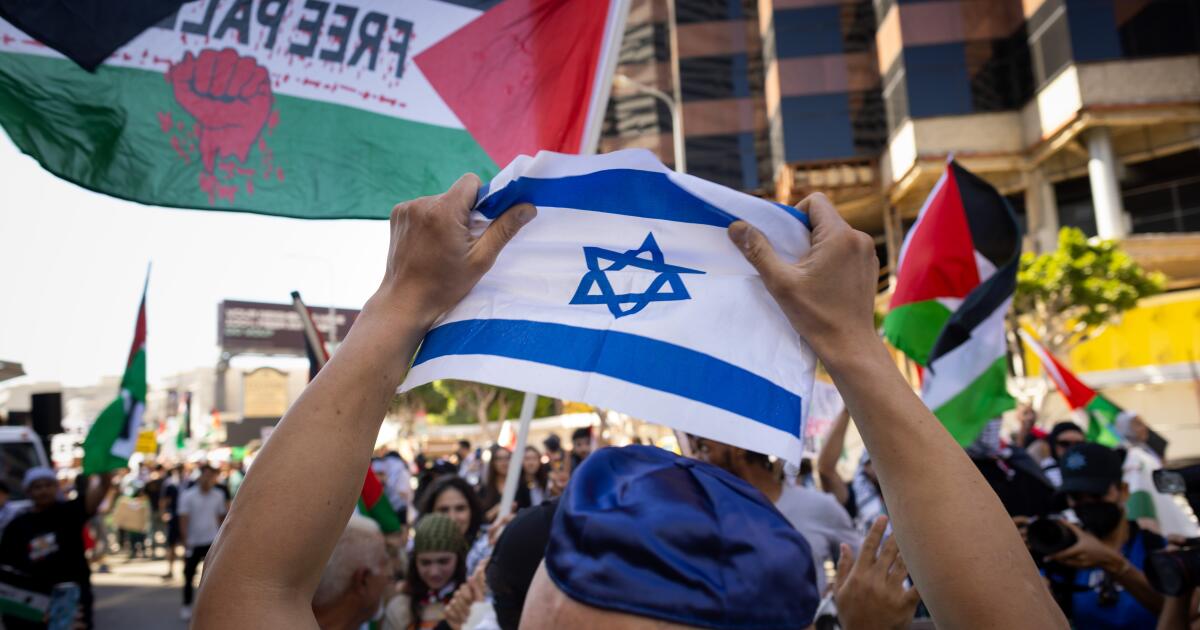
The consequences of this support are visible on the streets of cities across Europe and North America, where pro-Palestinian protests have grown in scale and intensity. These events often disrupt daily life, as seen with a recent incident in Glasgow and ongoing disruptions at prestigious universities like Harvard.
This phenomenon has evolved into a global intifada, drawing in support from various corners of the world, including unlikely places like Scandinavia and the Southern Hemisphere. The character of these protests, often violent and disruptive, suggests that the goal is less about achieving a peaceful two-state solution and more about continuing the struggle against Israel by any means available.
The prevailing support for Hamas and its actions among Palestinians poses a significant barrier to any potential peaceful resolution. It raises questions about the viability of any agreements or peace plans, especially in light of the longstanding and deep-seated animosities and the recent intensification of these sentiments.
Europe’s response to events involving the Palestinians, particularly those linked to acts of violence, exposes deep contradictions in its moral and political stances. After the Munich massacre, which occurred less than a generation after the Holocaust, the reaction—or lack thereof—of European leaders underscored a disturbing leniency towards acts of terrorism when they are aligned with certain political narratives. This event vividly illustrated that despite publicly espoused principles, there can be a startling absence of moral consistency in international politics.
The European support for the Palestinian cause has evolved into a complex interplay of guilt, strategic interests, and identity politics, intertwining Western elites with the ambitions of the decolonized world. This alignment often manifests as support for the Palestinians, perceived as underdogs, against what is seen as Israeli aggression. Such dynamics are further complicated by the geopolitical maneuvers of global powers like the U.S. and the former Soviet Union, who have historically used regional conflicts to influence broader international balances of power.
The tragic events in Sudan, where American diplomats were murdered, highlight a stark reality: geopolitical strategies often overshadow the pursuit of justice, especially when larger diplomatic goals are at stake, such as shifting alliances from one superpower to another. The U.S., under the Nixon administration, showcased this when it prioritized strategic gains over direct responses to the murders, illustrating how national interests can trump moral considerations.
This pattern of behavior has not only perpetuated violence but also enabled a problematic status quo where acts of terror are indirectly encouraged through lack of accountability. The Palestinians’ use of violence has been repeatedly overlooked or downplayed by international bodies and states, partly because it serves broader political narratives and partly due to a complex web of guilt and historical responsibility that many Western nations grapple with.
The recognition of the PLO by the U.N. and the subsequent designation of Zionism as racism are examples of how international discourse can be skewed by political interests and historical biases. These decisions were shaped by a narrative that prioritizes certain political agendas over a balanced and consistent application of international law and moral standards.
Ultimately, this complex interplay of history, politics, and morality has fostered a global environment where double standards regarding terrorism and political violence are all too common. This has profound implications not only for Israeli-Palestinian relations but for global peace and security, perpetuating cycles of violence and undermining the prospects for a genuine and lasting peace.