TFIGlobal
TFIGlobal
TFIPOST English
TFIPOST हिन्दी
No Result
View All Result
  • Indo-Pacific
  • Americas
  • Canada
  • Indian Subcontinent
  • West Asia
  • Europe
  • Africa
  • The Caribbean
TFIGlobal
  • Indo-Pacific
  • Americas
  • Canada
  • Indian Subcontinent
  • West Asia
  • Europe
  • Africa
  • The Caribbean
No Result
View All Result
TFIGlobal
TFIGlobal
No Result
View All Result
  • Indo-Pacific
  • Americas
  • Canada
  • Indian Subcontinent
  • West Asia
  • Europe
  • Africa
  • The Caribbean

Jamaat-e-Islami: How a fundamentalist group behiend Bangladesh’s Turbulent Politics

TFIGLOBAL News Desk by TFIGLOBAL News Desk
August 7, 2024
in Geopolitics
Jamaat-e-Islami: How a fundamentalist group behiend Bangladesh’s Turbulent Politics
Share on FacebookShare on X

Jamaat-e-Islami—a party that has shaped the political landscape of Bangladesh and left a troubling legacy that echoes across South Asia.

Founded in 1941 by Syed Ab’ul Ala Maududi in British India, Jamaat-e-Islami was envisioned as a movement to promote Social and Political Islam. Maududi’s vision was clear: he opposed the partition of India, believing it would fragment the Muslim ummah. This ideological stance set the stage for a legacy marked by controversy and conflict.

Also Read

Political Vendetta or Justice? Bangladesh International Crimes Tribunal sentences Ex-PM Sheikh Hasina to six months ‘ Jail

Bangladesh: Islamists threaten Hindus against publicly celebrating Durga Puja; asks them to display ‘anti-India’ statements outside temples among 15 other demands

Massive protests erupt in New York against Muhammed Yunus

When East Pakistan sought independence in 1971, Jamaat-e-Islami’s East Pakistan wing, under leaders like Ghulam Azam, became infamous for its role in collaborating with the Pakistani military. Their paramilitary forces, including Razakar, Al-Shams, and Al-Badr, were responsible for horrendous war crimes. They systematically targeted pro-liberation intellectuals, leading to the brutal massacre of over 200 scholars, artists, and writers.

Following Bangladesh’s independence, the party was initially banned. However, the ban was lifted in 1975, and Jamaat-e-Islami Bangladesh was formed. Despite its reformation, the party continued to push for an Islamic state governed by Sharia law, clashing with the secular ideals of the new nation.

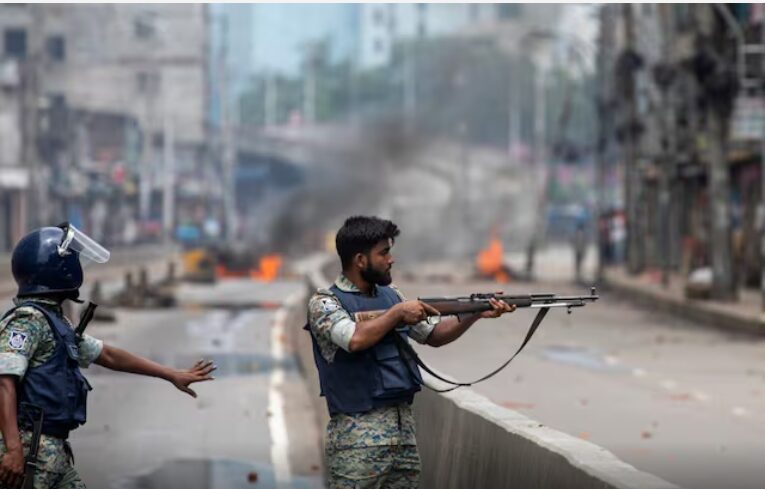
In recent years, Jamaat-e-Islami’s actions have been marred by violence and controversy. The party was a key player in the 2013 protests against the International Crimes Tribunal, which were marked by deadly clashes and widespread destruction. The government’s response was swift: on August 1, 2013, the Bangladesh Supreme Court canceled Jamaat’s registration, ruling it unfit for elections. The ban was later reinforced on August 1, 2024, citing national security concerns.

The party’s influence didn’t stop with its ban. In a dramatic turn of events, Jamaat-e-Islami’s controversial history contributed to the recent political turmoil in Bangladesh. The resignation of Prime Minister Sheikh Hasina and the ensuing chaos can be linked to the broader unrest fueled by Jamaat’s legacy of divisive politics and its role in fueling extremism.

The recent unrest, including student-led protests over job quotas, saw Jamaat-e-Islami accused of exploiting these movements. This contributed to the violence that prompted the government’s decision to ban the party and its student wing, Islami Chhatra Shibir, under anti-terrorism laws.

One of the most perplexing aspects of Jamaat-e-Islami’s international ties is its relationship with the U.S. Some argue that U.S. support was part of a broader strategy to counterbalance regional influences. However, this association has drawn significant criticism, especially given the party’s controversial actions and their impact on regional stability.

In conclusion, Jamaat-e-Islami’s legacy is a stark reminder of how ideological extremism can destabilize a nation. Its role in Bangladesh’s political upheaval and its controversial international relationships underline the dangerous potential of extremist movements in shaping national and regional politics.
As Bangladesh navigates its turbulent political landscape, the impact of Jamaat-e-Islami’s past actions continues to reverberate, shaping the country’s present and future.

Tags: Bangladesh IndependenceBangladesh PoliticsExtremist MovementsGhulam AzamInternational Crimes TribunalIslami Chhatra ShibirJamaat-e-IslamiSharia LawSheikh HasinaSyed Ab'ul Ala MaududiU.S. RelationsWar crimes
ShareTweetSend
TFIGLOBAL News Desk

TFIGLOBAL News Desk

Right Arm. Round the World. Fast.

Also Read

President Donald Trump signs an order in the foreground as Lake Ontario and the Toronto skyline appear behind him, with American and Canadian flags symbolising the escalating dispute over the lake's name and US-Canada relations.

Trump Renames Lake Ontario ‘Lake America’, and Google Has Already Redrawn the Map

August 31, 2026
A dramatic nighttime scene showing a US warship facing a large oil terminal engulfed in flames, with explosions, thick black smoke, fighter jets, and missiles streaking across the sky above the sea after strikes

Trump Posts AI Video of Kharg ‘Blown to Smithereens’ as US and Iran Trade Fire

August 31, 2026
A dramatic scene showing the flags of Turkey, Saudi Arabia and Pakistan above military aircraft, soldiers and air-defence systems, as a large Saudi-style oil refinery burns in the background. Three leaders stand in the foreground watching the unfolding crisis.

Turkey, Saudi Arabia and Pakistan Open First Defence Pact Talks as Saudi Refineries Burn

August 31, 2026
A nighttime protest riot in Jakarta, with demonstrators facing riot police amid tear gas and water cannon spray as a guard post and motorcycles burn nearby.

Fire, Tear Gas, and 322 Detained: Jakarta’s Anti-Corruption Protest Ends in a Riot

August 31, 2026
A dramatic geopolitical oil scene showing an oil refinery and pumpjack, the US Capitol, Venezuelan mountains and flag imagery, and a large oil tanker at sea, symbolising the US–Venezuela oil deal.

Trump’s Venezuela Oil Deal: 65 Billion Barrels, a 100-Year Lease, and a Country Divided

August 30, 2026
A hypersonic glide vehicle streaks through the upper atmosphere as it launches a missile toward a US AWACS radar aircraft, with tanker and support aircraft flying in the distance above dramatic cloud cover.

China’s Hypersonic Gliders Can Now Shoot at Aircraft — And America’s Radar Planes Are the Target

August 25, 2026
Youtube Twitter Facebook
TFIGlobalTFIGlobal
Right Arm. Round the World. FAST.
  • About Us
  • Contact Us
  • TFIPOST – English
  • TFIPOST हिन्दी
  • Careers
  • Brand Partnerships
  • Terms of use
  • Privacy Policy

©2026 - TFI MEDIA PRIVATE LIMITED

Welcome Back!

Login to your account below

Forgotten Password?

Retrieve your password

Please enter your username or email address to reset your password.

Log In

Add New Playlist

No Result
View All Result
  • Indo-Pacific
  • Americas
  • Canada
  • Indian Subcontinent
  • West Asia
  • Europe
  • Africa
  • The Caribbean
TFIPOST English
TFIPOST हिन्दी

©2026 - TFI MEDIA PRIVATE LIMITED

This website uses cookies. By continuing to use this website you are giving consent to cookies being used. View our Privacy and Cookie Policy.