The assassination of two senior Iranian Supreme Court judges, Ali Razini and Mohammad Moghiseh, in Tehran has drawn both domestic and international attention. Both judges were known for presiding over high-profile cases involving crimes against national security, espionage, and terrorism reportedly linked to Israel. The Iranian authorities describe the incident as a “planned assassination.” The shocking incident once again shows the vulnerability of the internal security apparatus in the Islamic regime as high profile assassinations have now become a modus operandi against Tehran.
The Incident
On January 18, an armed individual entered the judges’ chambers and fatally shot Razini and Moghiseh. The report says the killer was a janitor who had worked at the Palace of Justice for a decade. Local media reports vary, with some suggesting that the attacker stabbed a security guard to seize a weapon, while others claim the assailant used a handgun he had concealed. After carrying out the attack, the gunman committed suicide. Judiciary spokesman Asghar Jahangir confirmed that several individuals connected to the incident have been arrested, and investigations into their roles are ongoing.
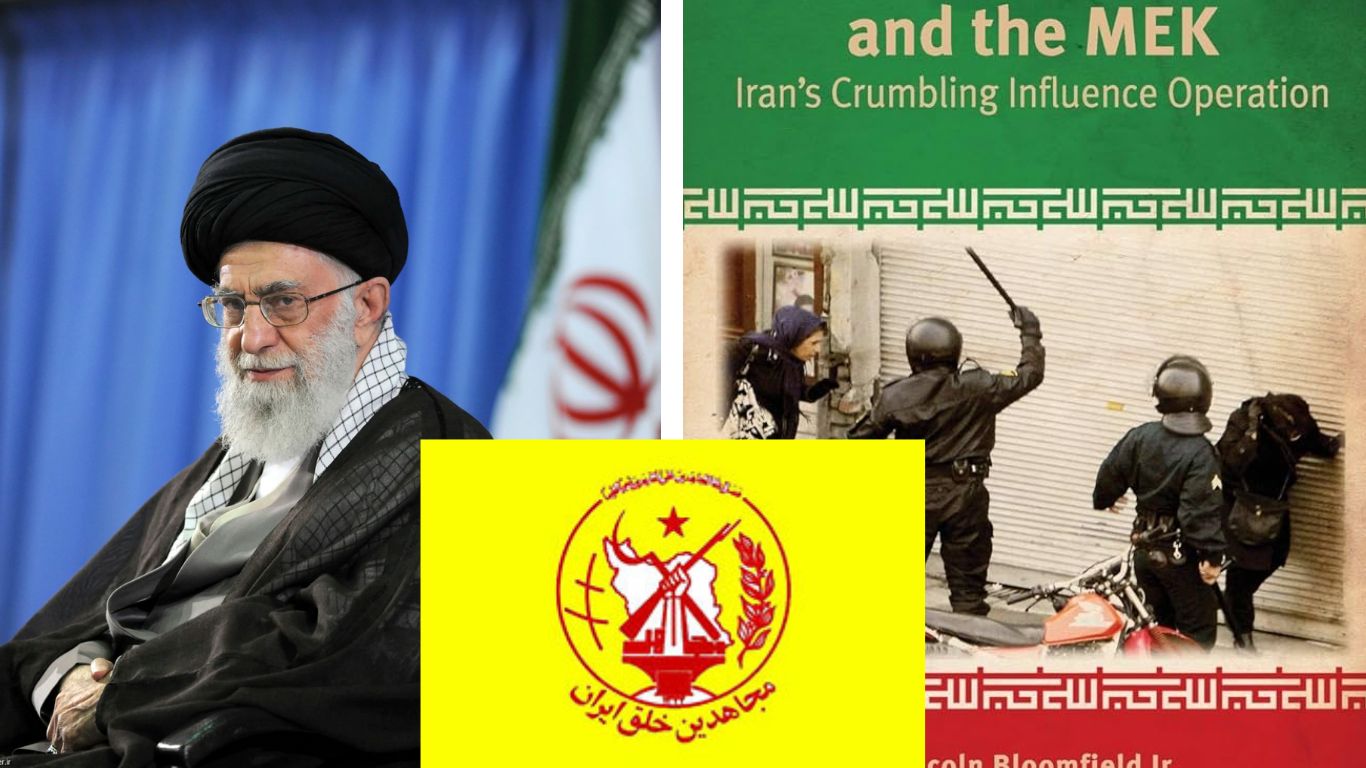
Iranian authorities have accused the exiled Mojahedin-e Khalq Organization (MEK) of directing the attack. The MEK, a group long opposed to the Islamic Republic, has neither confirmed nor denied involvement. Statements from various Iranian officials suggest potential foreign interference, referencing alleged ties between the MEK and Western powers, including the U.S. and Israel.
Regional Implications
The assassination is bound to have larger regional implications, particularly given Iran’s fraught relations with Western powers and its regional adversaries. The MEK’s alleged connections to Israel and the U.S. have been highlighted by Iranian officials, who view the attack as part of a larger strategy to damage the Islamic Republic. This perspective is bolstered by the MEK’s history of receiving support from prominent Western politicians and its active lobbying for regime change in Iran.
Internationally and regionally, the killings occur at a time of heightened tension between Iran and Israel, a US ally in the region. Iran is already facing security threats from potential attacks on nuclear facilities. Regionally, the Iranian dominance in the region has not been challenged by Israel but also destroyed Iranian forward defence. At the same time, Iran is witnessing a series of assassinations of political and military leaders on Iranian soil. This has created a leadership crisis in Iran and its proxies.
Iran has witnessed numerous assassinations of prominent figures over the years, but attacks on judges are rare. The MEK, once a supporter of Ayatollah Khomeini, turned against the Islamic Republic in the early 1980s, launching an insurgency and later aligning with Iraq’s Saddam Hussein during the Iran-Iraq War. Accused of killing thousands of Iranians, the MEK remains a polarizing force in Iranian politics.
The assassinations of Razini and Moghiseh also reflect broader patterns of violence targeting figures associated with Iran’s judicial and security apparatus. Similar incidents, such as the killing of Friday prayer imams and other officials, have underscored the ongoing tensions within the country. These events often serve as flashpoints. It amplifies the existing divisions between the government and its opponents.
Judicial Investigation
Iran’s judiciary has launched extensive investigations to locate the perpetrators and motives behind the assassination. Asghar Jahangir announced that arrests had been made, including individuals allegedly linked to specific groups.
He added, “Among those arrested, at least three individuals have confirmed ties to specific groups. Investigations into their roles, their connections to the perpetrator, and the support they provided are ongoing.
The MEK’s potential involvement has been a focal point of concern. The group has a long history of opposing the Iranian regime, including engaging in insurgent activities during the 1980s. Iranian officials have labelled the MEK a “terrorist organization” and accuse it of collaborating with Israel and the United States. This narrative aligns with broader accusations of foreign interference aimed at destabilizing Iran.
Conflict in the Middle East
The two judges in question Ali Razini, 71, was a senior cleric named Hujjat al-Islam. He gained notoriety for his involvement in the 1988 mass executions of political dissidents, an event that remains a contentious chapter in Iran’s history. Razini survived a previous assassination attempt in 1998, allegedly for his role in these executions.
Mohammad Moghiseh, 68, was also prominent in Iran’s judiciary. Sanctioned by the U.S. in 2019 and the EU in 2011 for human rights abuses, he was accused of presiding over numerous unfair trials. Moghiseh’s cases often targeted journalists, internet users, and members of the Baha’i religious minority. His rulings were seen as emblematic of the Iranian judiciary’s harsh stance on political dissent.
Both judges were significant figures within Iran’s legal system and had become symbols of the Islamic Republic’s uncompromising approach to opposition. Their deaths are being celebrated by people who are against the regime. Their assassination is directly linked to his decisions and involvement in the 1988 mass executions of the MEK’s political dissidents.
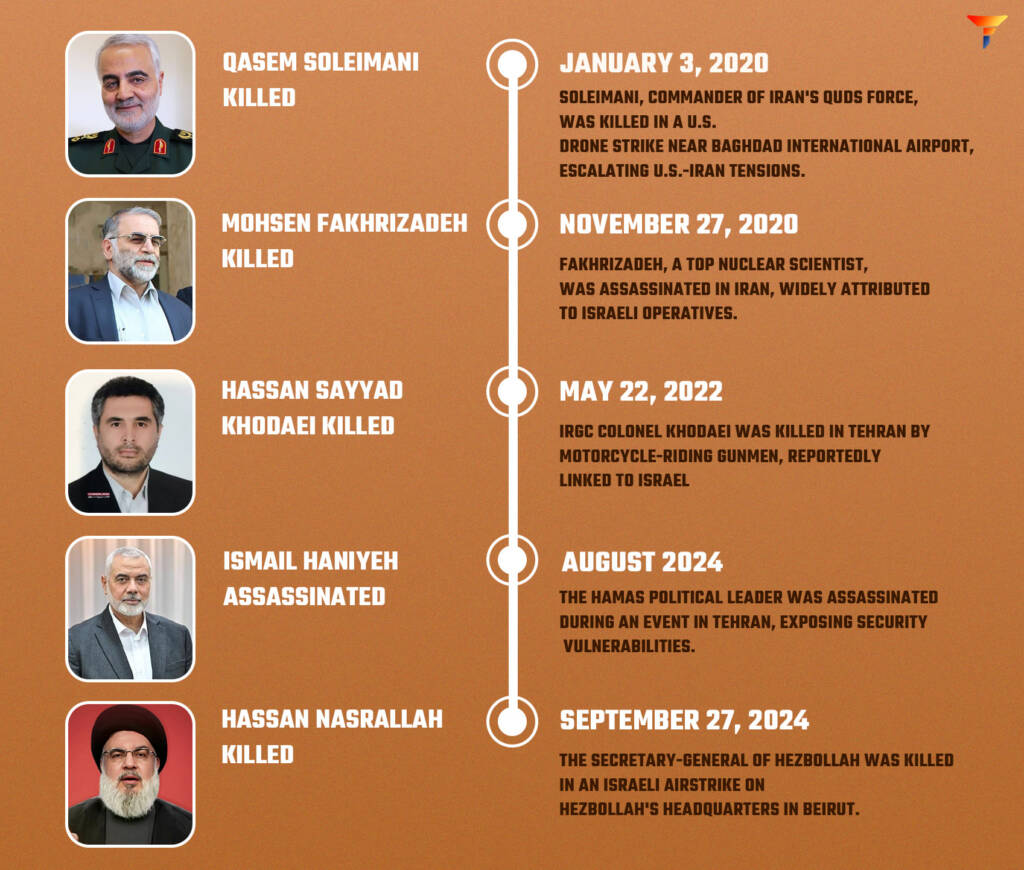
Iran has suffered through a number of high profile assassinations over the past few years. Key Iranian commander Qasem Soleimani was killed on January 3, 2020, in a U.S. drone strike. His death significantly escalated tensions between the U.S. and Iran. A leading nuclear scientist, Mohsen Fakhrizadeh was also assassinated on November 27, 2020. He was instrumental in Iran’s nuclear program, and his death was widely attributed to Israeli operatives.
Iran’s proxies too have suffered heavy losses. The political leader of Hamas, Ismail Haniyeh was assassinated in Tehran five months ago during the inauguration of Iran’s new president, Masoud Pezeshkian. This incident heightened regional tensions and exposed security vulnerabilities within Iran. The Secretary-General of Hezbollah, Hassan Nasrallah was assassinated on September 27, 2024, in an Israeli airstrike on Hezbollah’s headquarters in Beirut.
The Iranian President Ebrahim Raisi also died in a tragic helicopter crash in 2024. These setbacks have had a huge impact on not only Iran’s politics but also the geopolitical situation of the region. With the friendly regime of Assad falling in Syria and Hamas and Hezbollah largely neutralized, Israel has managed to assert its influence across the region. The tensions give no signs of abating with the middle east clashes sure to flare up further as the confrontation continues.