TFIGlobal
TFIGlobal
TFIPOST English
TFIPOST हिन्दी
No Result
View All Result
  • Indo-Pacific
  • Americas
  • Canada
  • Indian Subcontinent
  • West Asia
  • Europe
  • Africa
  • The Caribbean
TFIGlobal
  • Indo-Pacific
  • Americas
  • Canada
  • Indian Subcontinent
  • West Asia
  • Europe
  • Africa
  • The Caribbean
No Result
View All Result
TFIGlobal
TFIGlobal
No Result
View All Result
  • Indo-Pacific
  • Americas
  • Canada
  • Indian Subcontinent
  • West Asia
  • Europe
  • Africa
  • The Caribbean

Putin slams ‘Neo-Nazi’ Ukrainians for destroying Russian world war monuments

Jyotirmay Kaushal by Jyotirmay Kaushal
May 22, 2025
in Geopolitics
Putin slams ‘Neo-Nazi’ Ukrainians for destroying Russian world war monuments
Share on FacebookShare on X

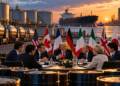
Russian President Vladimir Putin has sharply criticized Ukraine’s ongoing efforts to dismantle Soviet-era monuments, labeling these actions as the work of “neo-Nazis” and accusing Kyiv of erasing historical memory. This rhetoric aligns with Moscow’s broader narrative that the invasion of Ukraine is a campaign to “de-Nazify” the country—a claim widely disputed by historians and international observers.

Radical Ukrainians are idiots for targeting Soviet monuments to World War II heroes, Russian President Vladimir Putin has said.

Also Read

North Korea Readies More Soldiers for Russia, but Seoul Says Nothing Has Moved Yet

A borrowed satellite and 400 missiles: how Beijing and Moscow are keeping Iran in the fight

Musk blocks Ukraine’s Starlink access for deep strikes inside Russia — what it means

This behavior alone “gives us reasons to say that these people have a neo-Nazi ideology,” he stated during a visit to Kursk Region, which borders Ukraine, on Tuesday.

” If they participated in a competition for idiots, they would have finished in second place. Why? Because they are idiots,” he added, paraphrasing a popular joke. “By doing what they are doing, they show their nature.”

Ukraine’s Narrative Campaign

Since 2015, Ukraine has implemented a series of decommunization laws aimed at removing Soviet symbols and monuments. These laws mandate the renaming of streets and the removal of statues associated with the communist regime, including those commemorating World War II victories. Proponents argue that these measures are necessary to break free from Soviet-era influences and to promote a Ukrainian national identity. However, critics contend that the laws selectively honor certain historical figures while overlooking others who may have been involved in controversial actions during the same period.

In regions like Lviv, many Soviet monuments have been removed, raising questions about how to preserve or repurpose these historical artifacts. Some have been stored in museums, while others have been destroyed or left abandoned. This ongoing process has sparked debates within Ukrainian society about the balance between acknowledging the past and fostering a new national identity.

Russia’s Response

The Russian government has consistently condemned Ukraine’s actions, framing them as part of a broader effort to erase the Soviet Union’s role in defeating Nazi Germany. Russian officials, including President Putin and Foreign Ministry spokesperson Maria Zakharova, have characterized the removal of Soviet monuments as “anti-human” and a violation of historical truth. They argue that such actions dishonor the sacrifices made by Soviet soldiers during World War II.

Putin’s rhetoric often invokes the Soviet victory over Nazi Germany as a central element of Russian identity and pride. He has warned that attempts to revise this history equate to justifying the crimes of Nazism and open the way for the revival of its deadly ideology.

Historians and scholars have widely rejected Putin’s characterization of Ukraine as a neo-Nazi state. While acknowledging the presence of right-wing extremist groups in Ukraine, experts assert that these do not represent the country’s broader political landscape. They argue that Putin’s claims distort historical facts and serve as a pretext for aggression. The Auschwitz-Birkenau State Museum, for instance, has condemned Putin’s accusations, emphasizing the importance of accurate historical representation.

The controversy over the removal of Soviet monuments in Ukraine underscores the complex interplay between history, national identity, and international relations. While Ukraine seeks to redefine its identity post-independence, Russia and Putin view these actions as an affront to shared history and a challenge to their narrative of World War II. As the long-drawn-out Russia-Ukraine war rages on, the animosity between the two nations continues to deepen, and such a narrative of aggression is now becoming a part of the strategic warfare the two nations are conducting on each other.


Tags: PutinRussiaUkraine
ShareTweetSend
Jyotirmay Kaushal

Jyotirmay Kaushal

Dreaming of a reality that is a dream. A scribbler in the current incarnation with an avid interest in global affairs.

Also Read

Narendra Modi sits between Vladimir Putin and Xi Jinping at a BRICS summit table, with Iranian President Masoud Pezeshkian beside them and national flags in the background.

One Table, Two Wars: Modi Seats Putin and Xi as Delhi Opens BRICS

September 11, 2026
A dramatic political montage showing Germany’s AFD rise, with Alice Weidel and German political figures in front of the Reichstag, a fractured barrier symbolising Germany’s political firewall, and Xi Jinping against a Beijing backdrop.

AfD Storms Saxony-Anhalt: Germany’s Firewall Shakes, and Beijing Quietly Cheers

September 10, 2026
President Donald Trump signs an order in the foreground as Lake Ontario and the Toronto skyline appear behind him, with American and Canadian flags symbolising the escalating dispute over the lake's name and US-Canada relations.

Trump Renames Lake Ontario ‘Lake America’, and Google Has Already Redrawn the Map

August 31, 2026
A dramatic nighttime scene showing a US warship facing a large oil terminal engulfed in flames, with explosions, thick black smoke, fighter jets, and missiles streaking across the sky above the sea after strikes

Trump Posts AI Video of Kharg ‘Blown to Smithereens’ as US and Iran Trade Fire

August 31, 2026
A dramatic scene showing the flags of Turkey, Saudi Arabia and Pakistan above military aircraft, soldiers and air-defence systems, as a large Saudi-style oil refinery burns in the background. Three leaders stand in the foreground watching the unfolding crisis.

Turkey, Saudi Arabia and Pakistan Open First Defence Pact Talks as Saudi Refineries Burn

August 31, 2026
A nighttime protest riot in Jakarta, with demonstrators facing riot police amid tear gas and water cannon spray as a guard post and motorcycles burn nearby.

Fire, Tear Gas, and 322 Detained: Jakarta’s Anti-Corruption Protest Ends in a Riot

August 31, 2026
Youtube Twitter Facebook
TFIGlobalTFIGlobal
Right Arm. Round the World. FAST.
  • About Us
  • Contact Us
  • TFIPOST – English
  • TFIPOST हिन्दी
  • Careers
  • Brand Partnerships
  • Terms of use
  • Privacy Policy

©2026 - TFI MEDIA PRIVATE LIMITED

Welcome Back!

Login to your account below

Forgotten Password?

Retrieve your password

Please enter your username or email address to reset your password.

Log In

Add New Playlist

No Result
View All Result
  • Indo-Pacific
  • Americas
  • Canada
  • Indian Subcontinent
  • West Asia
  • Europe
  • Africa
  • The Caribbean
TFIPOST English
TFIPOST हिन्दी

©2026 - TFI MEDIA PRIVATE LIMITED

This website uses cookies. By continuing to use this website you are giving consent to cookies being used. View our Privacy and Cookie Policy.