In a significant development, Russian President Vladimir Putin has confirmed that Moscow is actively establishing a “buffer zone” in Ukraine’s northeastern Kharkiv region. This move, initiated in May 2024, aims to protect Russian territory from cross-border attacks, particularly from Ukrainian shelling targeting Russia’s Belgorod region.
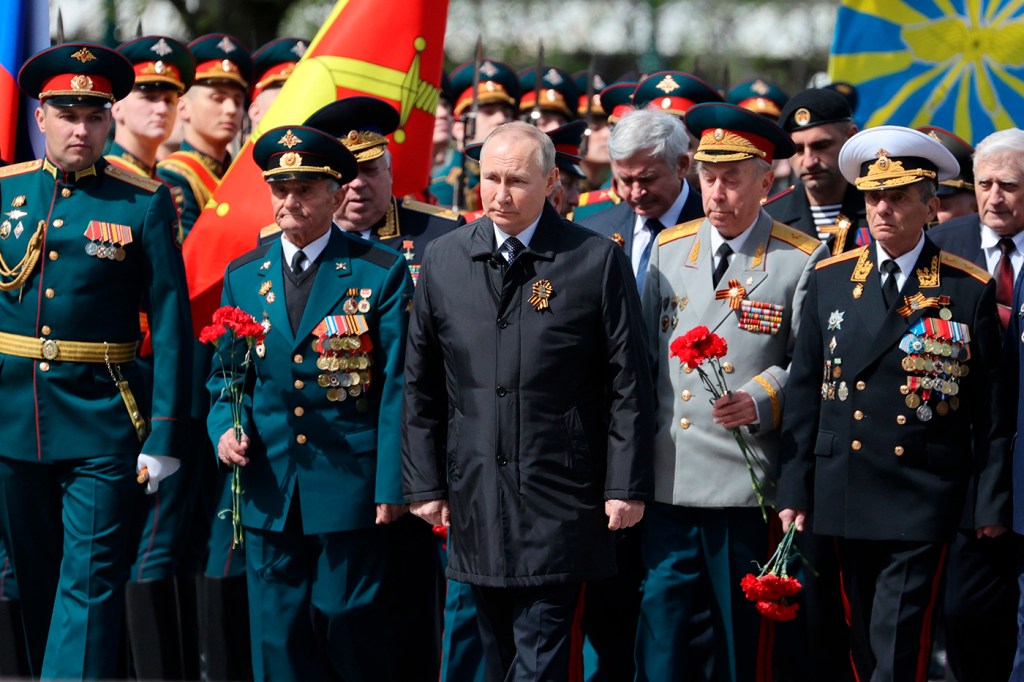
During a visit to Harbin, China, on May 17, 2024, President Putin addressed the ongoing military operations in Kharkiv. He stated that the Russian offensive was a direct response to Ukrainian artillery fire on Belgorod, emphasizing that the establishment of a “sanitary zone” was necessary to safeguard Russian civilians and infrastructure. Putin clarified that the current objectives do not include capturing Kharkiv city itself, focusing instead on creating a protective perimeter along the border.
The Russian military has been tasked with creating a “security buffer zone” along the border with Ukraine, Russian President Vladimir Putin said on Thursday.
The president made the remarks during a government meeting dedicated to the situation in Russia’s border regions, including Kursk, Belgorod and Bryansk. Additional measures to support their residents were also discussed.
“It has been decided to create the necessary security buffer zone along the border. Our armed forces are actively solving this task now. The enemy’s firing positions are suppressed, the work is going on,” Putin stated.
The idea to create “a certain cordon sanitaire” in Ukrainian-controlled territory along the border was first floated by Putin last March. The president said Moscow could ultimately be “forced” to create such a zone in order to protect civilians in the border regions from Ukrainian long-range strikes. Russian troops would create a “security zone that would be quite difficult for the adversary to overcome with its weapons, primarily of foreign origin,” if and “when we consider it appropriate,” Putin stated at the time.
Since the onset of the offensive, Russian forces have made notable advances, recapturing several settlements in Kharkiv Oblast. By late May 2024, Russia had reoccupied 13 villages and settlements, pushing up to the northern bank of the Vovcha River in Vovchansk. These movements have expanded the zone of active hostilities by nearly 70 kilometers, compelling Ukraine to redeploy troops from other fronts to bolster defenses in the region.
Ukraine Response
Ukrainian officials have expressed skepticism regarding Russia’s intentions, interpreting the establishment of the buffer zone as a potential precursor to further territorial ambitions. Kharkiv’s mayor, Ihor Terekhov, voiced concerns, stating that while Putin claims no interest in capturing the city, the ongoing military activities suggest otherwise.
Internationally, the United States and European nations have reiterated calls for a ceasefire and renewed peace negotiations. However, as of late May 2025, no new direct talks have been scheduled, and the conflict persists with no clear resolution in sight.
Strategic Implications
The creation of a buffer zone underscores Russia’s strategic objective to secure its borders from external threats. While the immediate goal is to prevent further Ukrainian attacks on Russian territory, the long-term implications remain uncertain. The ongoing military activities in Kharkiv Oblast continue to shape the dynamics of the conflict, influencing both regional stability and international diplomatic efforts.
Over the past two days, Kiev has conducted a massive long-range drone attack even deeper into Russia. According to the Russian Defense Ministry, a total of 485 Ukrainian fixed-wing UAVs were downed across the country in the past 48 hours. At least 63 of the drones were intercepted in Moscow Region, while the largest number were stopped over Orel Region, the military said.
As the situation develops, the international community watches closely, with hopes for a peaceful resolution as the prolonged Russia Ukraine conflict continues.