As the Israel Iran clash heats up there are a number of questions surrounding the entire confrontation, including what exactly the aims and objectives of Israel and the West are. The clear and present reasons seem to be stopping Iran from becoming a nuclear power, bombarding its nuclear bases and killing off its scientists, but in the long run is the West pushing for a regime change operation in Iran to bring by the Shah dynasty?
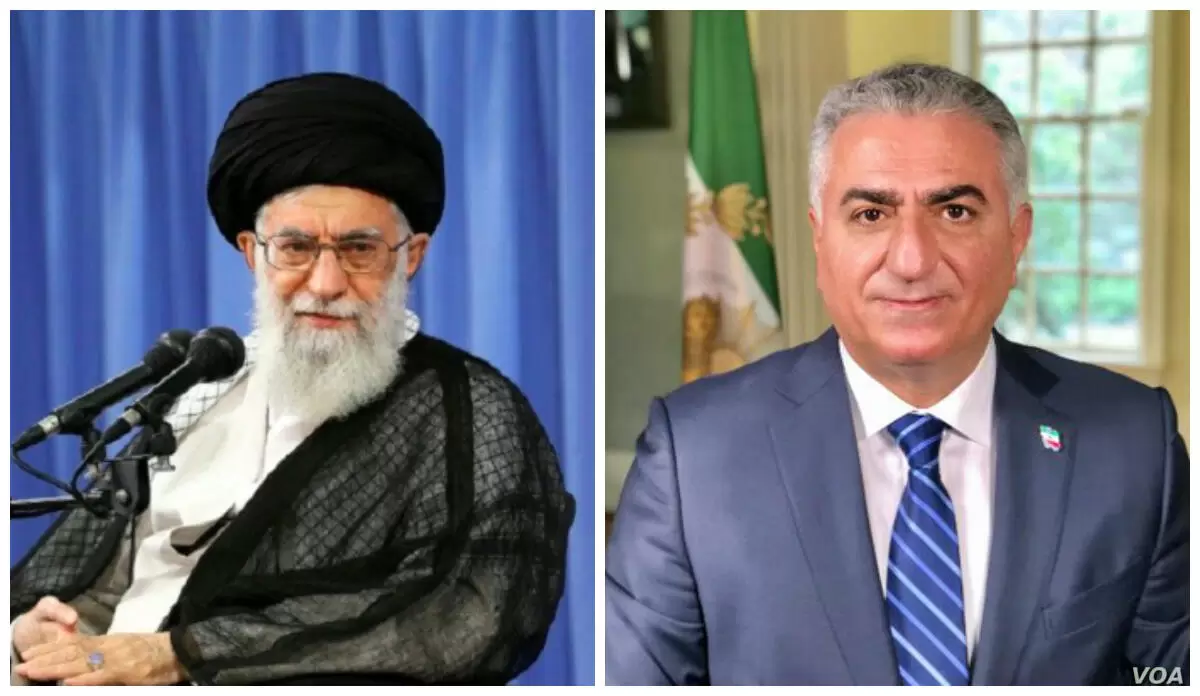
In a post written in Persian and shared across his official social media platforms, Pahlavi the son of the ousted royal family of Iran, accused Supreme Leader of Iran Ayatollah Ali Khamenei of forcing the Iranian people into a war that does not represent their will.
“Ali Khamenei, the reckless leader of the anti-Iranian Islamic Republic regime, has once again involved our country in a war,” Pahlavi wrote. “This is not Iran’s war, nor the war of the Iranian people. It is Khamenei’s war and the Islamic Republic’s war.”
“This regime and its corrupt, incompetent leaders do not value your lives or the future of our Iran,” he said.
He described the current moment as “a battle between the Iranian nation and the destructive Islamic Republic,” and called for regime change through mass protests and a general strike.
The Pahlavi Family
Before the current Iranian regime rook power, Iran was under the control of Mohammad Reza Pahlavi, the Shah or the ruler of Iran from 1941 to 1979. Until he and his Pahlavi dynasty were overthrown by the Iranian Revolution, which abolished the Iranian monarchy to establish the present-day Islamic Republic of Iran. Reza Pahlavi his son, has lived in exile since the 1979 Islamic Revolution and currently resides in the United States.
The Shahs when in power in Iran had a good relationship with the West and had a modernized and industrialized vision of their nation imbibed with a Western mindset. This was countered by the Iranian revolution that instead pushed for a cut off from the West and having an insular controlled traditionalist state. Many in the revolution believed that the Shah was a mere puppet of the West and had knocked back the sovereignty of Iran in the process. This though was further cemented when the Shah and his family fled to the West post the revolution.
The man in question currently is Reza Pahlavi, the son of Mohammad Reza Shah Pahlavi. Born in 1960, Reza Pahlavi has lived in exile since he was 17, following the overthrow of his father’s regime. Over the past four decades, he has emerged as a vocal critic of the Islamic Republic of Iran, advocating for a secular, democratic Iran. He has called for regime change through nonviolent means, emphasizing international support for Iranian protesters and the application of pressure on the regime. Despite his royal lineage, Pahlavi has stated he does not seek to restore the monarchy but aims to facilitate a peaceful transition to democracy.
The Western governments are actively in a clash with Iran for quite some time now ans it won’t be surprising if they have planned out an alternate rule for the country. With plans to replace Iran’s Supreme Leader, Ayatollah Ali Khamenei, with Reza Pahlavi. Pahlavi has garnered attention in Western media and among some policymakers due to his advocacy for democratic reforms and his criticism of the current regime.
He has also criticized Western diplomatic efforts with Iran, viewing them as ineffective. While he has met with Western officials and has been featured in international news outlets, these engagements appear to be more about discussing Iran’s future and the possibility of democratic change rather than a concerted effort to install him as a leader.
Impact of such a move
Attempting a regime change in Iran is not something without major geopolitical impact for not just the region but also for global geopolitics. The current regime has its own worldview, allies and adversaries it has maintained its policies accordingly for decades, to reverse them in such an aggressive manner would upend the working of the country completely.
1. Political Transition: A shift from theocratic rule to a secular democracy could lead to significant political changes in Iran. This might involve the establishment of a parliamentary system, the protection of individual rights, and the separation of religion from state affairs. Such a transition would require broad consensus among various political factions within Iran.
2. Social Reforms: Under a secular government, there could be reforms aimed at improving women’s rights, freedom of expression, and access to education. These changes might be met with resistance from conservative elements within Iranian society, but they could also lead to greater social freedoms and modernization.
3. Regional Dynamics: A change in leadership could alter Iran’s foreign policy, potentially leading to improved relations with the West and neighboring countries. However, this shift might also cause unease among Iran’s allies, such as Hezbollah and the Syrian government, who benefit from the current regime’s support.
4. Internal Challenges: The process of transitioning to a new political system could be fraught with challenges, including potential unrest from hardline factions, economic instability, and the need to rebuild institutions. The success of such a transition would depend on the ability to manage these challenges and establish a stable governance framework.
While Reza Pahlavi has become a prominent figure advocating for change in Iran, the current Iranian regime has been strong and steady for years and has its own geopolitical power. Any potential transition in Iran would involve complex political, social, and regional considerations. The outcomes to attempt such a change is bpund to trigger something far greater which may change the geopolitics of the middle east completely.