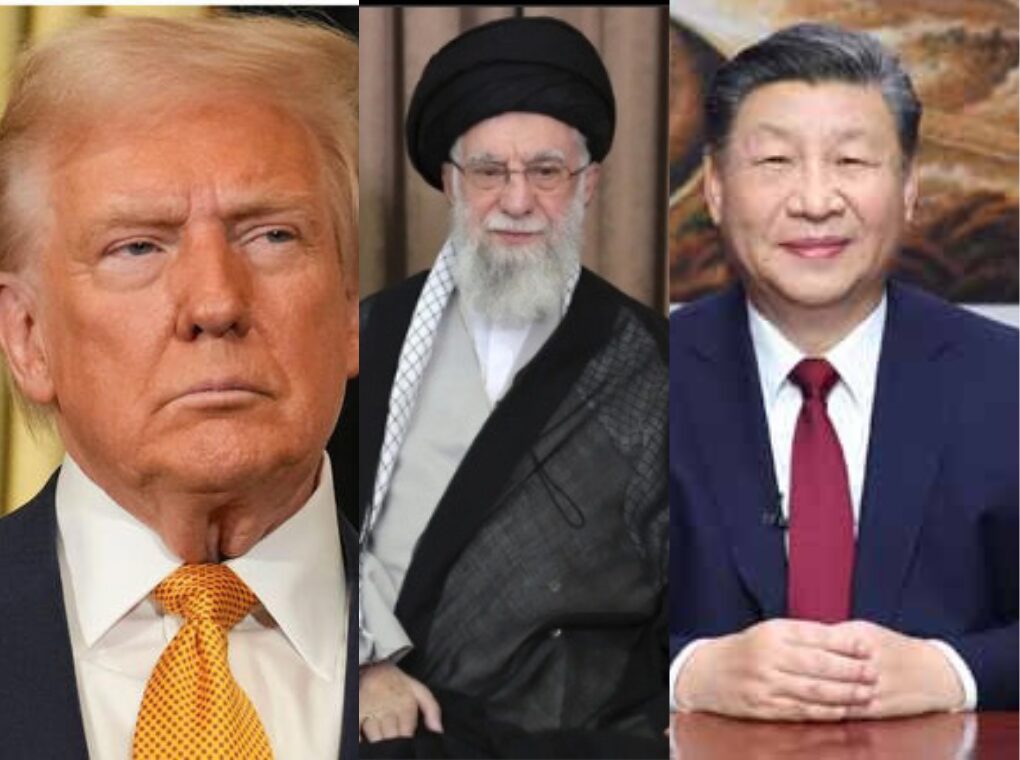
As the Iran economic landscape remains resilient despite concerted efforts by the United States under President Donald Trump to cripple its economy through stringent sanctions. The primary reason for this failure, analysts suggest, is the unwavering support and economic engagement from China, Iran’s largest trading partner.
Trump’s Strategy: Maximum Pressure on Iran
Upon assuming office, President Trump adopted a policy of “maximum pressure” against Iran, aiming to force the country back to the negotiating table over its nuclear program. This strategy involved reinstating and intensifying economic sanctions that had been lifted under the 2015 Joint Comprehensive Plan of Action (JCPOA).
The sanctions targeted Iran’s oil exports, financial sector, and key industries, with the explicit goal of reducing Iran’s oil exports to zero and isolating it economically.
Trump’s administration believed that by cutting off Iran’s primary revenue source—oil exports—and restricting its access to international financial markets, the Iranian government would be compelled to concede to U.S. demands.
The policy was underpinned by a series of executive orders and diplomatic pressures, including secondary sanctions that penalized countries and companies continuing to do business with Iran.
China’s Countervailing Influence
However, China’s robust economic relationship with Iran has proven to be a significant stumbling block to Trump’s plan. China, as Iran’s largest trading partner, has continued to purchase Iranian oil despite U.S. sanctions, often through a “dark fleet” of vessels that evade detection. This trade is crucial for Iran, providing a lifeline that mitigates the impact of American sanctions.
Recent data indicates that China’s imports of Iranian oil have not only persisted but have even increased in some periods. For instance, in June 2025, China’s crude oil imports rebounded to their highest daily rate since August 2023, with significant volumes coming from Iran. This resilience is partly due to China’s strategic interest in maintaining a stable supply of oil and partly due to its broader geopolitical strategy of countering U.S. influence in the Middle East.
Economic Resilience of Iran
The continued economic engagement from China has allowed Iran to weather the storm of U.S. sanctions. Despite a contraction in GDP following the reimposition of sanctions in 2018, Iran’s economy has shown signs of recovery and adaptation.
The country has diversified its export markets, increased barter trade, and developed domestic industries to reduce reliance on imported goods. Additionally, Iran’s membership in organizations like the Shanghai Cooperation Organization and BRICS has provided alternative avenues for economic cooperation and investment.
Geopolitical Ramifications
The failure of Trump’s plan to destroy Iran’s economy has significant geopolitical ramifications. It underscores the limitations of unilateral U.S. action in a multipolar world where other major powers, like China, can counteract American policies. This dynamic has strained U.S.-China relations further, with Beijing viewing Washington’s sanctions as an overreach that threatens global trade norms.
Moreover, the situation has highlighted the enduring alliance between China and Iran, forged not only by economic necessity but also by a shared distrust of U.S. hegemony. This alliance was visibly strengthened during the BRICS summit in Russia, where Chinese President Xi Jinping welcomed Iranian President Masoud Pezeshkian, reaffirming China’s commitment to developing friendly cooperation with Iran.
Domestic and International Reactions
Domestically, Trump’s failure to achieve his economic objectives against Iran has been a point of contention. Critics argue that the “maximum pressure” campaign has not only failed to bring Iran to the negotiating table but has also alienated U.S. allies and undermined the credibility of American diplomacy.
The European Union, for instance, has expressed frustration over the extraterritorial nature of U.S. sanctions, which have impacted European companies doing business with Iran.
Internationally, the resilience of Iran’s economy despite U.S. sanctions has been noted by other nations, particularly those in the Global South, who see it as a testament to the effectiveness of diversifying economic partnerships away from Western dominance. This shift is part of a broader trend where countries are increasingly looking to China and other emerging powers for economic and political support.
President Donald Trump’s plan to destroy Iran’s economy through sanctions has ultimately failed due to the countervailing influence of China. The continued economic engagement between China and Iran has provided the latter with a critical lifeline, allowing it to adapt and survive despite immense pressure. This outcome reflects the complexities of modern geopolitics, where unilateral actions by one superpower can be mitigated by the actions of another.
As the world watches, the Iran-China partnership stands as a significant factor in the ongoing tug-of-war over global economic and political influence.