Syrian interim President Ahmed al-Sharaa’s latest statement that “Trump stops his war on Israel” arrives amid fresh turmoil along Syria’s southern frontier and a rare, combustible intersection of US, Israeli, Syrian, and Druze community interests.
To fully understand the meaning and implications of Sharaa’s remarks, it is vital to examine the perspectives and tensions of all these players in the context of the violence in southern Syria, shifting US policy, and the position of the embattled Druze minority.
US: From Strategic Ambiguity to Crisis De-escalation
The United States, under President Trump, recently intervened diplomatically to halt escalating hostilities between Israeli forces and both Syrian government and militia entities in southern Syria.
Secretary of State Marco Rubio emphasized securing immediate commitments from all parties for a ceasefire. The US publicly urged both Israel and Syria to withdraw their forces from the region to de-escalate, signaling a shift from earlier tendencies to indirectly back Israeli military initiatives in Syria.
Washington’s new messaging insisting on restraint from both sides reflects wariness of regional instability, exhaustion from protracted Middle East entanglements, and concern about being drawn into Israel-Syria clashes with unpredictable consequences.
By facilitating a truce and pressuring Israel to pause further strikes, the US has, in effect, “stopped the war” dynamic in which American power seemed aligned with relentless Israeli escalation.
Israel: Calculated Intervention and the Druze Imperative
Israel’s position is complex; its military struck deep into Syrian territory, including targets in Damascus, claiming to defend the Druze minority during their deadly clashes with Syrian government and Bedouin forces in Suwayda.
Post-October 2023 trauma from attacks by Hamas, combined with recent wins over Hezbollah and Iran, have made Israel both more risk-averse and aggressive. This undercurrent drives a willingness to use force preemptively, but softness in US support has created new uncertainty.
Internal pressure from Israel’s Druze community many of whom have family and religious ties to Syria’s Druze also played heavily into Israeli decision-making, amplifying calls for cross-border intervention.
Despite these asserted motives, Israeli strikes have imperiled tentative backchannel diplomacy with Syria, leading to skepticism about the long-term viability of a nonaggression pact or normalization.
Syria: National Security, Legitimacy, and the Sharaa Narrative
President Ahmed al-Sharaa denounced Israeli actions as another chapter in Israel’s long pattern of “sowing discord” in Syria. He accused Israel of exploiting minority issues to legitimize military intervention and destabilize his government.
Simultaneously, Sharaa pledged renewed protection for the Druze community, seeking to shore up his regime’s legitimacy and counter narratives that Assad’s fall has left minorities defenseless.
The administration’s acquiescence to a US-brokered withdrawal carries both practical gains short-term civilian respite and longer-term vulnerabilities. It exposes Syrian sovereignty to American and Israeli pressure, yet temporarily reduces the risk of open Israeli-Syrian war.
The Druze Caught at the Crossroads
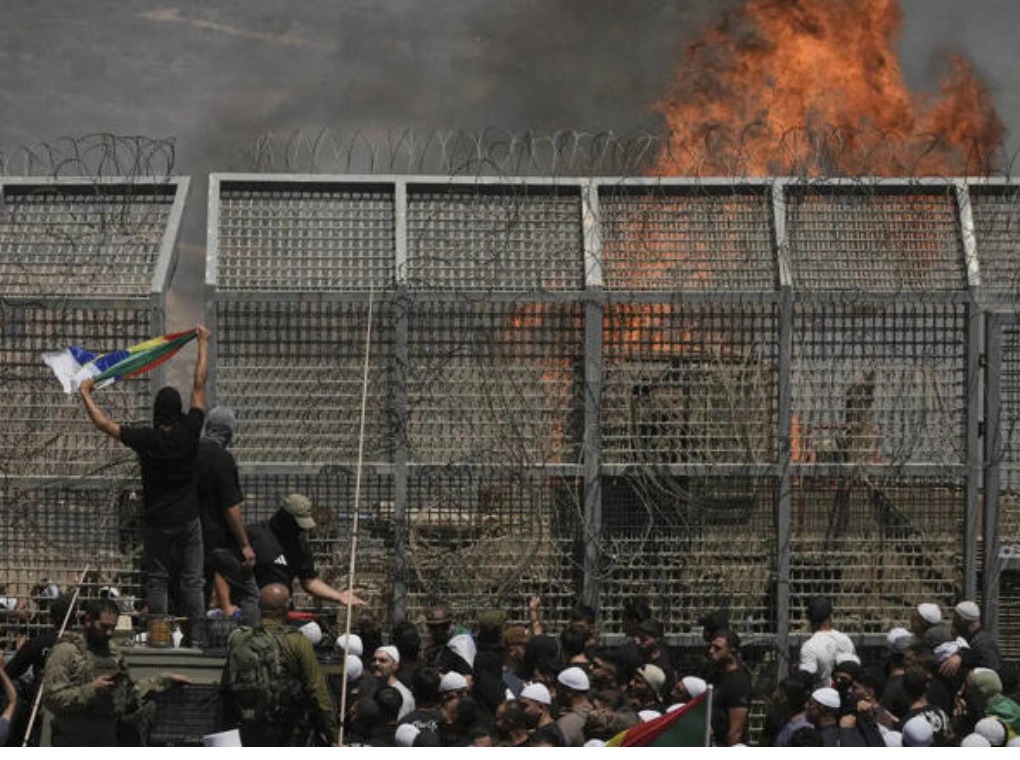
The Druze, a cohesive minority in southern Syria centered on Suwayda, have become the immediate trigger for the latest round of violence. Facing attacks from both government and Bedouin forces, the Druze have mobilized unprecedented militias for self-defense.
Many Druze leaders inside Syria and within Israel have appealed for external protection, leading to unique cross-border solidarity. Reports confirmed that some Israeli Druze crossed into Syria to aid their co-religionists, straining Syrian government authority and underlining the community’s transnational identity.
The violence documented by viral videos of atrocities against Druze clerics and reprisals by Druze fighters carried the risk of genocide or mass expulsion, fueling a humanitarian and political crisis.
What’s Next
American Dilemma: The US, eager to avoid further escalation but reluctant to alienate Israel or let Syria collapse, exercises precarious balancing—bringing both sides to pause but leaving the root disputes unresolved. The truce is fragile and may not last in the absence of structural settlement or genuine security arrangements for minorities.
Israeli Ambivalence: Israel’s dual strategy using force while courting diplomacy is both its strength and weakness. The intervention “to protect Druze” won public sympathy but undermined international mediation and antagonized Damascus, complicating future normalization.
Syrian Calculations: Sharaa reclaims nationalist credentials by criticizing Israel, but acquiescence to US pressure signals uneasy constraint. He remains sandwiched between domestic pressures, Iranian ambitions, and the reality of Israeli and US intrusion.
Druze Precarity: The Druze community, though briefly protected and symbolically empowered by international attention, faces existential insecurity as regional powers vie for influence. Their fate remains a bellwether for the stability or continuing fracturing of Syria and a test of Israeli and American regional strategies.
Ahmed al-Sharaa’s assertion that “Trump stops his war on Israel” encapsulates more than a simple ceasefire; it signals a moment where US diplomacy overrides Israeli escalation, Druze suffering temporarily mitigates state rivalries, and Syria’s fragmentation becomes both a cause and product of outside intervention.
But this moment is less a resolution than a pause: absent a political pathway for Druze security, Syrian sovereignty, and credible Israeli-Syrian accommodation, the seeds of renewed conflict remain scattered across southern Syria’s battered frontier