With a defence budget surpassing $1 trillion, the United States Air Force leads the world in developing sophisticated fighter jets loaded with cutting-edge radar systems, stealth features, and avionics. American jets like the F-35 Lightning II and the F-15EX can cost anywhere between $80 million to $100 million per unit, making them more expensive than some private islands.
But in an actual dogfight scenario, where split-second manoeuvres and firepower matter more than stealth and code, Russian fighter jets often hold their ground — and sometimes, they even dominate.
A Tale of Two Philosophies
At the heart of the US-Russia fighter jet rivalry lies a fundamental difference in military doctrine and engineering philosophy.
American jets prioritize stealth, sensor fusion, and advanced radar systems. The F-22 Raptor, for instance, runs on 8 million lines of code — managing everything from radar invisibility to infrared and acoustic masking.
Russian jets, on the other hand, focus on agility, ruggedness, and mass production. Aircraft like the Su-30MKI, Su-35, and MiG-29 boast excellent thrust-to-weight ratios, superior maneuverability, and battlefield durability.
While the US builds its fighter platforms like flying supercomputers, Russia builds them like tanks with wings — ready to be deployed in harsh environments with minimal logistical support.
Why Are Russian Jets So Much Cheaper?
The average Russian fighter jet is significantly cheaper than its American counterpart — not because it’s underpowered, but because:
Russian defence firms like Sukhoi and Mikoyan operate under state subsidies, not profit-driven models.
Russian jets are designed with modular, mechanically simple systems, allowing for faster repairs and mass production.
The Cold War-era mindset still permeates their production lines — build more, fix quickly, and fly often.
During the 1980s, the Soviet Union produced nearly 40% of the world’s military aircraft. That legacy still lingers in modern Russian export strategy.
Performance vs. Perception: Who Wins in a Dogfight?
In Beyond Visual Range (BVR) combat, Western jets dominate. With stealth, radar-evading profiles, and advanced targeting systems, jets like the F-35 can strike without ever being seen.
But in within-visual-range (WVR) combat, Russian fighters like the Su-27, Su-35, and MiG-29 can often outmanoeuvre Western jets, thanks to:
Thrust-vectoring nozzles
Helmet-Mounted Cueing Systems (HMCS)
High angle-of-attack performance
In short: The US shoots first. Russia dogfights better.
What About Long-Term Costs?
Western jets often come with higher upfront costs — but they also bring superior after-sales service, higher sortie rates, and interoperability with allied systems.
As former Air Marshal Anil Chopra told the Economic Times,
“While Russian jets are cheaper upfront, lifecycle costs and operational availability often tilt the balance toward Western platforms in certain mission profiles.”
India: The Perfect Case Study
India’s Air Force offers a real-world example of balancing both worlds:
It operates 272 Su-30MKIs, a joint production with Russia — offering affordability and volume.
It also invested in 36 French Rafale jets, which cost more but bring next-gen radar, electronic warfare suites, and greater interoperability with allies like France and the US.
This dual strategy allows India to retain volume for deterrence, while gaining high-tech precision platforms for strategic strikes.
However, the rise of cheap drones, AI-guided missile systems, and electronic warfare may shift future preferences toward rugged, low-cost fighter platforms that can survive modern digital battlefields.
Changing Market Dynamics
Russia’s dominance in the global fighter jet market has declined. According to the SIPRI 2024 report, Russia now lags behind the US, France, and South Korea in fighter exports.
The F-16 Falcon, developed decades ago, remains the world’s most popular jet, with over 2,000 active units in 21 air forces worldwide. Its relative affordability, modular upgrades, and battle-tested record make it a preferred choice even today.
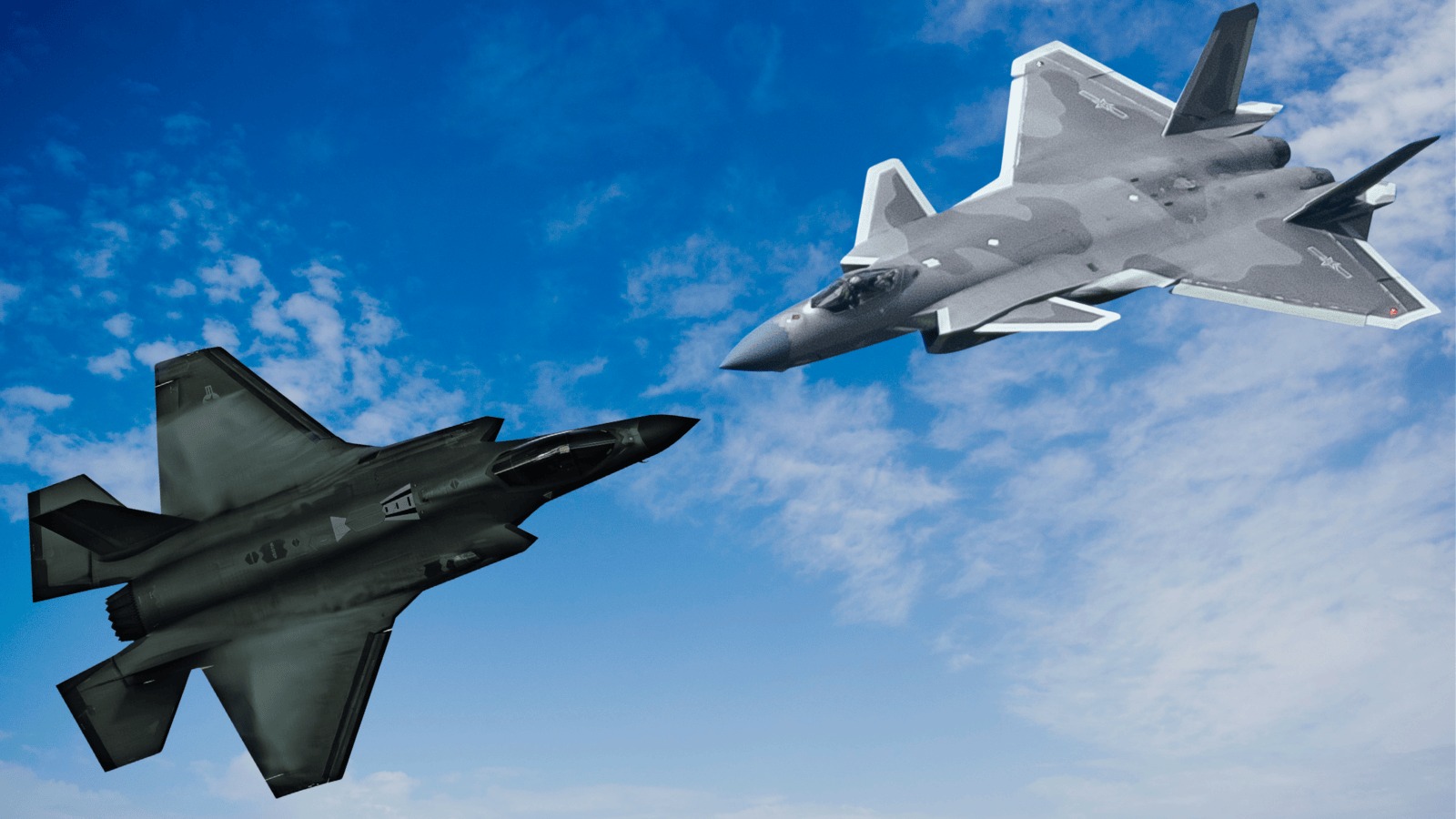
Meanwhile, China’s J-20, Turkey’s Kaan, and South Korea’s KF-21 are also reshaping the market with new-generation fighters aimed at the affordability-performance balance.
Different Strengths for Different Wars
In the end, the US and Russia are not just building jets — they’re building very different warfighting philosophies.
The US bet: Win the war before the enemy even sees you.
Russia’s bet: Survive, strike, and stay flying no matter the conditions.
With air combat evolving rapidly — thanks to AI, drones, and hypersonics — the next big winner in the fighter jet market may be the one that can blend cost-efficiency with survivability in real-world combat, not just test ranges.
Until then, the skies remain divided — by technology, doctrine, and dollars.