Russian President Vladimir Putin’s recent engagement with BRICS leaders following his Alaska summit with U.S. President Donald Trump highlights a clear shift in Moscow’s diplomatic playbook. The outreach was not merely a courtesy call but a calculated effort to underline the growing significance of the BRICS bloc for Russia’s strategic positioning in a deeply polarized world.
The Alaska Summit: A Moment of Symbolism
The Alaska summit between Putin and Trump marked the first face-to-face interaction between the two leaders in years. Although the meeting did not yield a breakthrough in ending the Ukraine conflict, it carried strong symbolic weight. Putin projected confidence, reasserted Russia’s demand for recognition of its security concerns, and positioned himself as an indispensable voice in global diplomacy.
For Moscow, the real value of the summit was less about immediate results and more about optics. Simply sitting across the table from an American president allowed Putin to present himself as a power player who cannot be ignored. But once the summit ended, Putin quickly moved to consolidate this momentum—not in the West, but in the Global South.
Calls to BRICS Leaders: Beyond Diplomacy
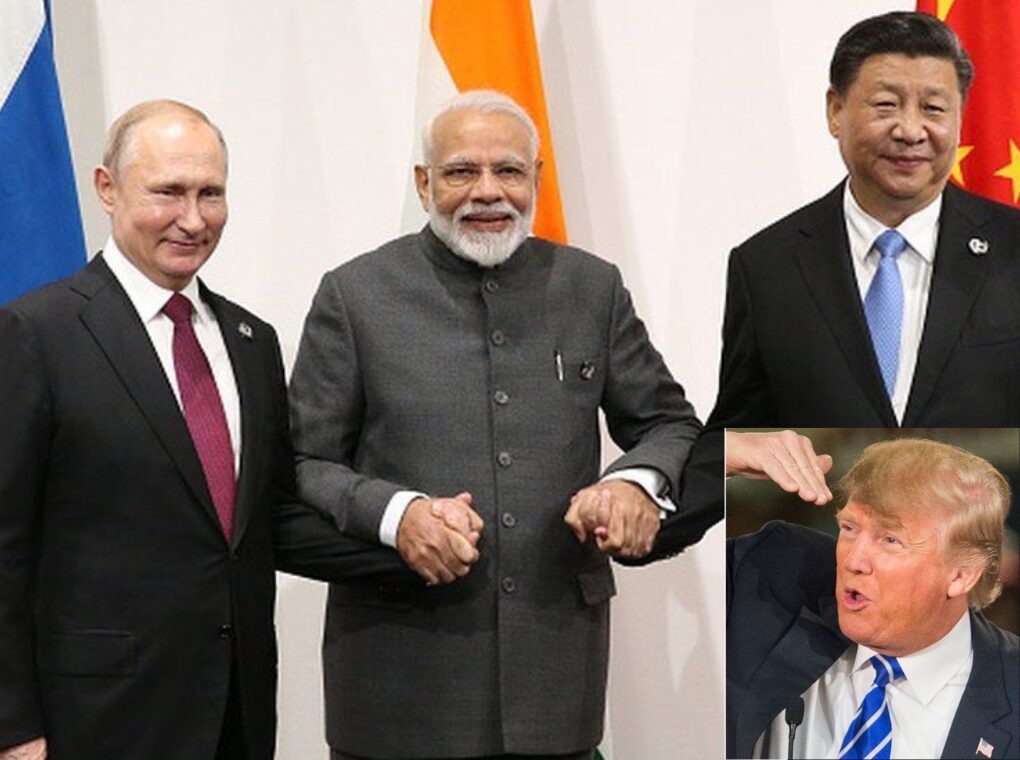
In the days following the Alaska talks, Putin personally reached out to leaders of key BRICS members—India, Brazil, South Africa, and China. Each call carried a similar purpose: to share his perspective on the summit, to emphasize the need for multipolarity, and to keep BRICS aligned as a counterbalance to Western influence.
For India, the outreach reinforced Moscow’s recognition of New Delhi’s unique role as both a BRICS pillar and a bridge with the West. With Brazil, Putin focused on deepening economic and trade ties while framing BRICS as a shield against Western-dominated globalization.
South Africa, long a vocal supporter of dialogue over confrontation, was reassured of Russia’s commitment to diplomacy. And with China, the outreach signaled continuity in the strategic partnership, though with recognition of Beijing’s rising dominance within the bloc.
This was not limited to the BRICS core either. Putin also engaged smaller partners aligned with Moscow’s vision of a multipolar world order, showing that the BRICS network extends into a wider orbit of emerging economies and strategic allies.
Why BRICS Is Russia’s Lifeline
Since 2022, when the Ukraine war triggered sweeping sanctions from the U.S. and Europe, Russia has faced financial restrictions, trade barriers, and diplomatic isolation. In response, Moscow accelerated its pivot to the Global South, with BRICS at the heart of this strategy.
BRICS offers Russia several advantages:
Economic Markets – With nearly half of the world’s population, the BRICS nations provide vast markets for Russian energy, agricultural products, and defense exports.
Financial Resilience – By promoting trade in national currencies, BRICS reduces Russia’s vulnerability to dollar-dominated systems and Western sanctions.
Political Cover – BRICS provides diplomatic legitimacy at a time when Moscow is shunned in Western forums.
Strategic Balance – For Russia, BRICS acts as a counterweight to NATO and G7 influence, allowing it to argue for multipolar governance rather than a Western-led global order.
In many ways, BRICS is to Russia what the West is to Ukraine. Just as Kyiv relies on the U.S. and Europe for survival—through weapons, aid, and political backing—Moscow depends on BRICS for markets, legitimacy, and alternative partnerships. The parallels are striking both sides are tethered to blocs that ensure their survival and influence in a fractured global system.
The Symbolism of Equivalence
Putin’s decision to brief BRICS leaders after meeting Trump underscores a symbolic equivalence. Ukraine turns to Washington, Brussels, and European capitals for reassurance and support. Russia, in turn, rallies BRICS to demonstrate that it, too, has a powerful support system. Each bloc mirrors the other’s importance to its respective side of the conflict.
This dynamic is not just about immediate war strategy but about the long-term structure of global politics. If Ukraine sees its future tied to the European Union and NATO, Russia envisions its survival and prosperity tied to BRICS and other emerging coalitions.
A Multipolar World in the Making
The Alaska summit and Putin’s subsequent calls reveal an evolving global order. The West, anchored by the U.S. and Europe, continues to back Ukraine. Russia, increasingly marginalized in those circles, doubles down on BRICS. The Global South becomes the stage where Moscow asserts its legitimacy, defends its policies, and promotes multipolarity.
Yet challenges remain. BRICS is far from unified, with internal tensions between its members and differing national priorities. India’s cautious stance toward Russia, China’s growing dominance, and Brazil’s balancing act all complicate Moscow’s vision. Even so, the bloc remains Russia’s most reliable platform to counterbalance the West.
Putin’s outreach to BRICS leaders after the Alaska summit was more than a diplomatic routine—it was a statement of intent. For Russia, BRICS now plays the role that the U.S. and Europe play for Ukraine: a source of support, legitimacy, and survival in a hostile world.
In this symmetry lies the defining truth of today’s geopolitics: the Ukraine war is not merely a battle between two nations but a proxy struggle between two blocs, each vital to the survival of its side. The Alaska summit may not have resolved the conflict, but it highlighted the world’s deepening divide—and BRICS’ growing weight in shaping what comes next.