
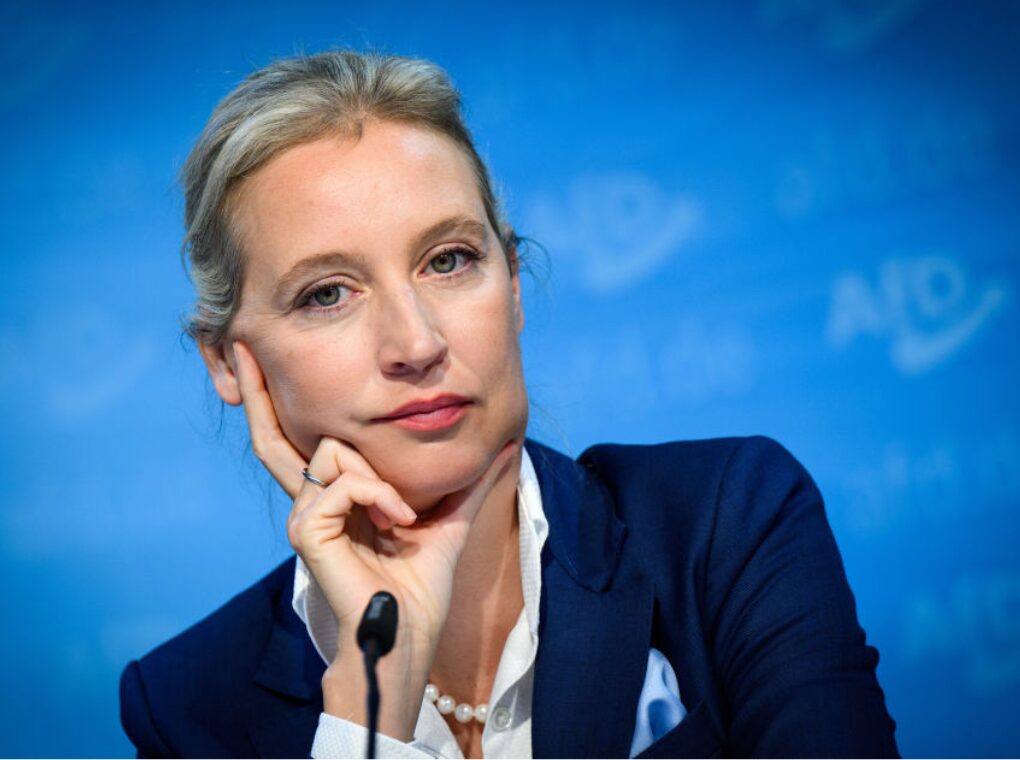
Germany may be on the verge of a political earthquake. For the first time in modern history, the right-wing populist Alternative für Deutschland (AfD) has surged ahead in national polls, overtaking the long-dominant CDU/CSU bloc. With between 23 to 26 percent support, the AfD now stands as Germany’s most popular party.
At the center of this dramatic shift is Alice Weidel, the party’s co-leader, who has thrust a controversial idea into the mainstream: “Dexit” – Germany’s exit from the European Union.
Who is Alice Weidel?
Alice Weidel, 46, is not the stereotypical nationalist leader. With a background in economics, she studied in Switzerland, worked at Goldman Sachs, and later built a career in finance before entering politics. In 2017, she became the AfD’s co-leader and its first openly lesbian chancellor candidate.
Her free-market outlook distinguishes her from other populists. She argues that Germany’s sovereignty and economic strength are being undermined by the EU’s bureaucracy. For years, Weidel has criticized Brussels’ influence on migration, bailouts, and trade. Now, she says Germany must either reform the EU into a simple free-trade zone or leave it altogether.
The AfD’s Rise
Founded in 2013 by economists opposing eurozone bailouts, the AfD has transformed into a nationalist-populist force. It has made immigration, border security, and sovereignty its central themes.
The party’s electoral momentum has been building steadily. In 2024, it won historic victories in Thuringia and Saxony. By early 2025, it secured nearly 20 percent in federal elections, finishing second behind the CDU. Now, it has achieved a milestone once thought impossible: becoming Germany’s number one party in the polls.
What is “Dexit”?
“Dexit” mirrors Britain’s Brexit but with a German twist. Weidel envisions a Europe of sovereign nations trading freely without central diktats from Brussels. “If a country wants to leave the EU, why not fall automatically into a free-trade zone?” she argued recently.
Supporters see this as a cleaner, more orderly alternative to Brexit, designed to preserve economic ties while regaining national decision-making power.
Why Germans Support It?
AfD’s message resonates with millions for three main reasons:
Economics – Critics say EU regulations and bailouts drain Germany’s competitiveness. A study by the MIWI Institute claims Germany could boost GDP by nearly 6 percent outside EU constraints.
Migration – EU refugee quotas and open-border policies remain deeply unpopular among AfD’s base, who link them to crime, cultural tensions, and taxpayer burdens.
National Sovereignty – Many Germans believe their country, as Europe’s largest economy, should not be micromanaged by unelected officials in Brussels.
Critics Warn of Disaster
The German establishment, however, warns that Dexit would be catastrophic. Studies suggest it could cost the country up to €670 billion and millions of jobs. Finance Minister Christian Lindner called the idea “ruinous,” while Vice Chancellor Robert Habeck accused the AfD of threatening democracy itself.
The Greens and Social Democrats have labeled the AfD extremist, with some voices even calling for the party to be banned. Yet, attempts to discredit or sideline it appear to have backfired—strengthening its anti-system image.
The Coalition Dilemma
Despite leading in polls, the AfD remains politically isolated. All mainstream parties uphold a “firewall” policy, refusing to cooperate with the AfD in government. This means that even if it wins the largest share of votes, it may be locked out of power.
But cracks are emerging. Some CDU members, like Jens Spahn, suggest at least allowing AfD influence in parliamentary committees. Others warn that ignoring one in four German voters is unsustainable.
What Lies Ahead?
The coming years may prove decisive. Regional elections in 2026 could see the AfD taking control of state governments for the first time—a political shock to the German system. If the fragile CDU-SPD coalition falters before 2029, the AfD could find itself within striking distance of national power.
Alice Weidel has summed up her movement’s mission simply:
“We are patriots. We fight for free speech, secure borders, and the safety of our children. Let’s make Europe great again.”
Love her or hate her, one thing is clear: the Dexit debate has begun, and Germany’s political future may never be the same.