China has begun deploying the FK-3000 anti-drone defense system, a state-of-the-art platform designed to counter the rapidly growing threat of unmanned aerial vehicles (UAVs) and drone swarms that are reshaping modern warfare. The deployment marks a significant step in the People’s Liberation Army’s (PLA) efforts to strengthen its short-range air defense (VSHORAD) capabilities against low-cost but highly disruptive aerial threats.
Answering the Drone Swarm Challenge
In recent years, conflicts in Ukraine and the Middle East have demonstrated the destructive potential of drones. Iranian-made Shahed drones and similar platforms, despite being relatively cheap, have inflicted severe damage on energy facilities, logistics hubs, and military positions. Mass drone swarm attacks have exposed a weakness in traditional air defense systems, which were primarily built to counter aircraft and cruise missiles.
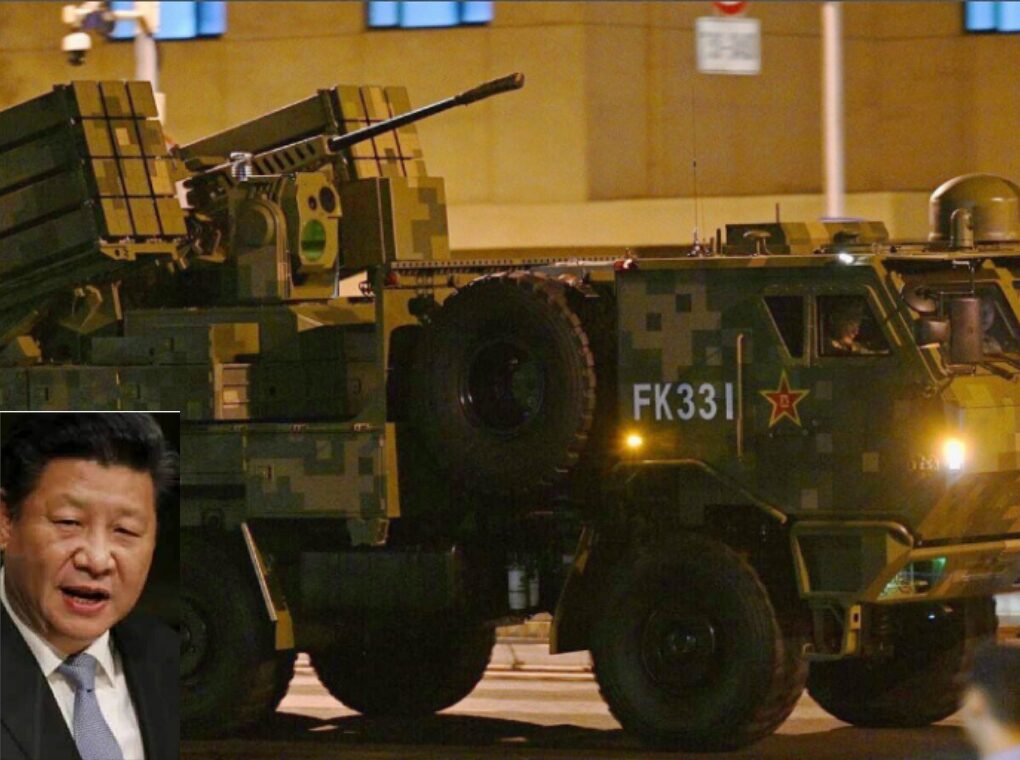
The FK-3000 is Beijing’s answer to this evolving challenge. Designed specifically for counter-drone operations, the system can carry up to 96 mini air defense missiles, making it one of the most heavily armed anti-drone platforms in service worldwide. This firepower allows it to engage dozens of small drones simultaneously, preventing swarms from overwhelming defenses.
Multi-Layered Architecture
The system combines a 30mm automatic cannon, short-range surface-to-air missiles, and advanced fire-control radars capable of operating in all weather conditions. This multi-layered approach provides redundancy, allowing operators to engage multiple types of threats—from tiny quadcopters at close range to larger UAVs flying at higher altitudes.
Unlike conventional air defense systems that may exhaust their limited ammunition quickly when faced with swarms, the FK-3000’s large missile loadout and cannon-based defenses enable it to sustain prolonged engagements against persistent drone attacks.
Range and Flexibility
The FK-3000 can intercept aerial targets at distances ranging from 300 meters to 12 kilometers, creating overlapping defensive zones around high-value assets. Each vehicle carries two missile pods with 12 interceptors each, offering 24 ready-to-fire missiles.
The system’s modular design allows operators to swap in different missile types, including specialized micro-missiles optimized for engaging small and agile drones. This adaptability ensures long-term effectiveness against evolving UAV designs and tactics.
Mobility and Deployment Strategy
Mounted on a three-axle, armored, all-terrain vehicle, the FK-3000 combines heavy firepower with mobility. Its armored cab protects operators in contested environments, while its all-wheel-drive platform allows rapid repositioning across diverse terrain.
This mobility is crucial in modern warfare, where drone threats can emerge unpredictably. Commanders can use the FK-3000 to establish flexible defensive perimeters, quickly adjusting deployments to match changing battlefield conditions.
Protecting Critical Infrastructure
China’s deployment strategy emphasizes the defense of critical infrastructure and frontline military assets. Facilities such as power plants, communication hubs, and command centers are especially vulnerable to drone swarms, which can cripple operations with relatively little investment.
By fielding the FK-3000, Beijing aims to harden its defenses around these vital nodes, ensuring both economic continuity and battlefield command resilience in the event of drone-based attacks.
Lessons from Recent Wars
Defense analysts say the system reflects China’s study of recent wars, where drones have consistently outmaneuvered traditional defenses. In Ukraine, cheap drones have been used for reconnaissance, artillery targeting, and direct strikes on infrastructure. In the Middle East, swarm attacks on oil facilities have disrupted global energy supplies.
“These conflicts show that even advanced militaries are vulnerable to low-cost, expendable drones,” said one Beijing-based defense analyst. “The FK-3000 is designed specifically to address that gap.”
A Global Race in Counter-Drone Technology
China is not alone in investing in counter-drone systems. Russia has been upgrading its Pantsir-SM air defense units, NATO members are experimenting with directed-energy weapons, and Ukraine has developed improvised anti-drone defenses.
The FK-3000, however, distinguishes itself with its large missile capacity, modularity, and high mobility, which give China an edge in the global race to adapt to drone warfare.
Built for Future Wars
Beyond its immediate capabilities, the FK-3000 has been designed with future upgrades in mind. Engineers highlight its ability to integrate new sensor systems, networked command links, and even AI-driven engagement algorithms. This ensures the platform remains effective as drones become faster, stealthier, and more autonomous.
Strategic Implications
The deployment underscores Beijing’s recognition that modern warfare increasingly relies on asymmetric tactics. Instead of investing solely in advanced jets or long-range missiles, adversaries are turning to drone swarms as cost-effective force multipliers.
By deploying the FK-3000, China is signaling its intent to maintain a defensive edge against this evolving threat. Analysts suggest it could also serve as a deterrent, complicating any adversary’s calculations when planning drone-based attacks on Chinese infrastructure or military forces.