
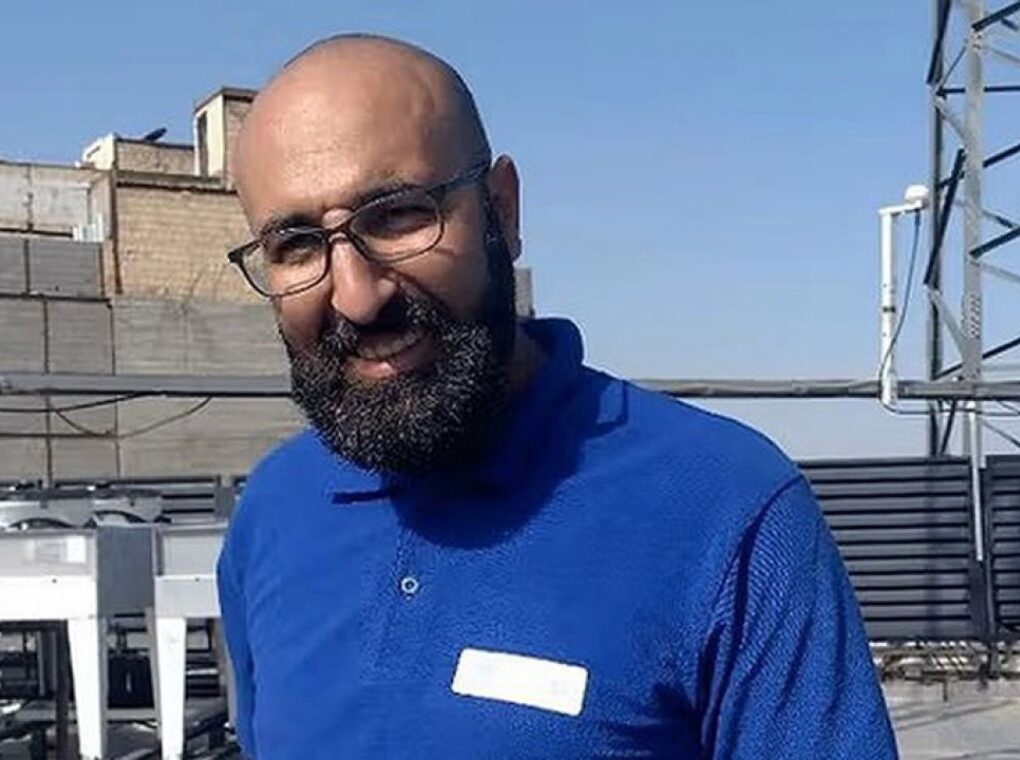
In yet another grim reminder of the human rights crisis in Iran, the Islamic Republic has executed Babak Shahbazi, a man accused of espionage and treason, after he allegedly wrote a letter to Ukrainian President Volodymyr Zelensky. Rights groups, however, say the case was built on coerced confessions, fabricated charges, and a deeply flawed judicial process.
A Letter Turned into a Death Sentence
The story begins in the aftermath of Russia’s full-scale invasion of Ukraine. Shahbazi, by all accounts a civilian with technical knowledge, wrote a personal letter to Ukrainian President Volodymyr Zelensky offering his assistance. What might have been interpreted elsewhere as an act of solidarity was quickly transformed by Iranian authorities into a capital offense.
Iran’s intelligence services claimed that Shahbazi’s outreach to Kyiv was a cover for espionage. In a particularly bizarre allegation, they insisted that Israel’s Mossad agents had trained him in Microsoft Word to help him communicate secretly. To Tehran, the simple act of drafting a letter was not an expression of political sympathy but rather “proof” of collaboration with foreign intelligence.
A Show Trial Under a Notorious Judge
The trial was overseen by Judge Abolqasem Salavati, a figure well known inside Iran and abroad for his harsh rulings in political cases. Often referred to as the “Judge of Death”, Salavati has built a reputation for delivering severe sentences against dissidents, activists, and anyone accused of undermining the state.
Under his supervision, Shahbazi was convicted of espionage for Israel and the sweeping charge of “spreading corruption on earth” (Mofsed-e-filarz). This vague but powerful legal category is frequently used by Iran’s judiciary to silence opposition and carries the death penalty.
Solitary Confinement, Torture, and Coercion
According to reports from Iran Human Rights (IHR), Shahbazi was subjected to months of brutal treatment before his execution. He spent at least seven months in solitary confinement, denied access to legal representation, and forced to endure repeated interrogations.
IHR and other rights groups say his televised “confessions” were obtained under torture and psychological threats. His interrogators allegedly used his 16-year-old daughter as leverage, warning that she could face punishment if he did not comply. At the same time, his father was subjected to relentless pressure, eventually suffering a heart attack from the stress of the ordeal.
Despite this, Shahbazi reportedly continued to assert his innocence, maintaining that his only crime was writing a letter.
Part of a Larger Pattern
Shahbazi’s execution is not an isolated case. It marks at least the eighth reported execution in 2025 in Iran for alleged espionage on behalf of Israel. Observers note that such cases often follow a disturbing pattern: secret investigations, coerced confessions, summary trials, and swift hangings.
For Tehran, these executions serve multiple purposes. They are intended as a deterrent to domestic dissent, a warning to citizens not to engage with foreign governments, and a show of defiance against adversaries such as Israel, the United States, and their allies. By framing ordinary Iranians as spies, the government also attempts to project an image of strength in the face of international isolation.
International Silence and Growing Alarm
Human rights organizations have condemned Shahbazi’s execution, calling it another example of judicial murder. Yet, international reaction has so far been muted. Analysts argue that geopolitical priorities—such as ongoing negotiations on Iran’s nuclear program and the war in Ukraine—often overshadow the plight of individuals caught in the Islamic Republic’s crackdown.
The silence, however, carries grave consequences. Without external pressure, Iran’s judiciary continues to act with impunity, tightening its grip on society and normalizing the use of the death penalty against political prisoners.
A Chilling Precedent
Babak Shahbazi’s case highlights the fragility of basic freedoms in Iran. A letter that might elsewhere be dismissed or ignored became, in the eyes of the state, a crime worthy of death. It is a chilling precedent that demonstrates how far Iran’s leadership is willing to go to maintain its authority and suppress any perceived threat.
For Shahbazi’s family, his execution is not just a personal tragedy but also a symbol of the broader struggle faced by countless Iranians living under fear of arbitrary arrest and state-sanctioned violence. For the international community, his death should serve as a wake-up call: without accountability, the cycle of torture, forced confessions, and executions will only continue.