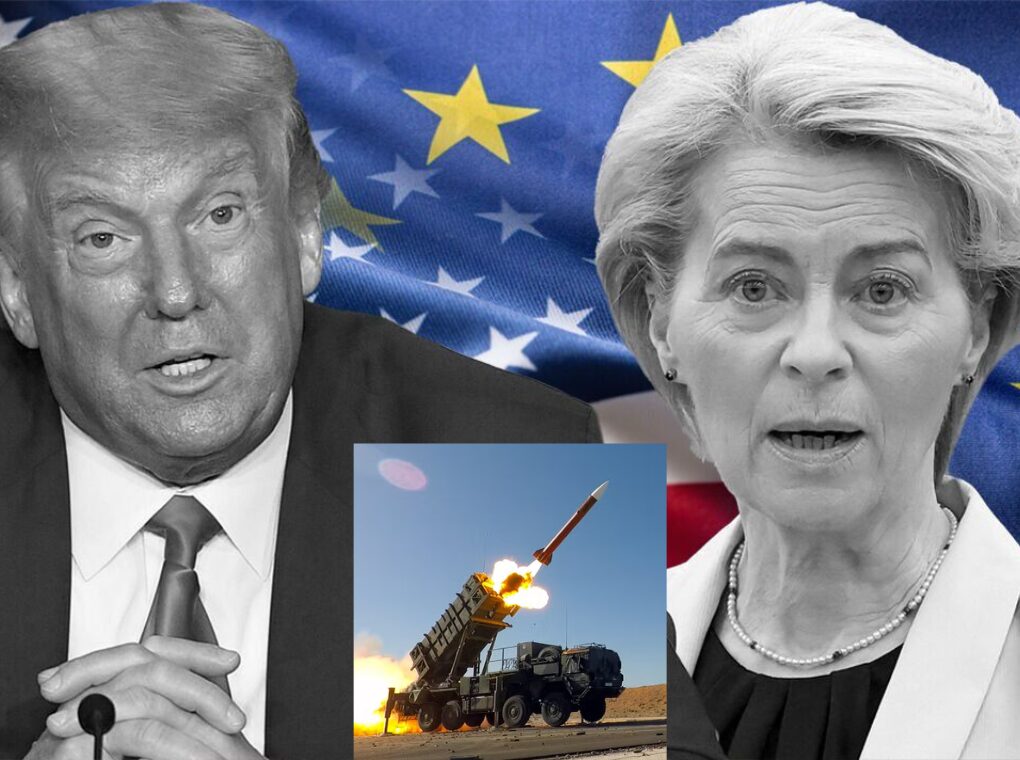
In a dramatic shift in U.S. foreign and defense policy, the United States has quietly begun blocking certain high-demand weapons sales to its European allies, including the highly coveted Patriot missile defense system.
The move, driven by reported shortages and a strategic “America First” agenda under President Donald Trump’s second administration, is raising concerns across NATO about Europe’s ability to defend itself against growing threats.
A Sudden Shift
The first signs emerged in Denmark. Copenhagen had been preparing to finalize a multibillion-dollar deal for the Patriot system—designed to intercept ballistic missiles and protect cities from aerial strikes. With both U.S. and French negotiators competing for the contract, Washington appeared to have the upper hand.
But unexpectedly, the Pentagon pulled back. According to The Atlantic, Elbridge Colby, U.S. Under Secretary of Defense for Policy stated in a recent call that he opposed exporting Patriots, arguing that the weapons were in short supply and should be reserved for U.S. needs. Soon after, multiple European governments were informed that their own requests for Patriots and other advanced systems were also on hold.
Why Patriots Matter?
The Patriot missile system, officially known as the MIM-104, is one of the most advanced and combat-tested air defense platforms in the world. It has been crucial in protecting Ukrainian skies from Russian missile barrages, shielding Israel from Iranian and Hamas strikes, and strengthening NATO’s integrated air defense.
Europe lacks a true equivalent. While systems such as France and Italy’s SAMP/T or Germany’s IRIS-T exist, none match the Patriot’s interoperability or proven battlefield record. Denying Europe access, therefore, creates what defense analysts describe as a “critical gap” in NATO’s defense posture.
America First, Europe Last?
Pentagon officials insist the move is a matter of necessity. Stockpiles are running low, with the U.S. reportedly holding just 25 percent of the interceptors needed for its own warfighting plans. Meanwhile, global demand has surged—Ukraine continues to burn through systems, Israel is consuming interceptors at record rates, and U.S. production has lagged.
The Trump administration’s message is clear: American security comes first. Colby and other senior officials argue that China, not Russia, represents the primary strategic challenge to the United States. That view has driven a pivot toward the Indo-Pacific, even if it means leaving Europe more vulnerable to Russian threats.
Fallout in Europe
The consequences have already been felt. Denmark, denied Patriots, signed a record-breaking $9.1 billion deal for French-Italian long-range defense systems instead. Other European states are expected to explore alternatives, including Israeli and domestic systems, though experts warn that interoperability with NATO forces could suffer.
The shift has shaken confidence in Washington’s reliability. “If America won’t sell us the tools to defend ourselves, can we still count on them in a crisis?” one European diplomat asked privately.
Leaders such as French President Emmanuel Macron may use the moment to push harder for European defense autonomy, but analysts caution that building indigenous capabilities will take years—leaving Europe exposed in the meantime.
Cracks in NATO
For decades, U.S. arms sales have been more than commerce; they have been a cornerstone of alliance politics. By supplying Patriots, fighter jets, and tanks, Washington ensured not only military readiness but also political loyalty and interoperability.
Now, that bond is fraying. Defense officials warn that the suspension could undermine NATO’s deterrence posture, particularly in Eastern Europe, where Poland, Romania, and the Baltic states face immediate threats from Russia.
Why the Shortages Exist?
Behind the policy shift lies a complex mix of global demand and industrial strain.
Ukraine war: Massive consumption of Western-supplied systems.
Middle East conflicts: Heavy use of Patriots by Israel.
Industrial bottlenecks: Complex supply chains for interceptors, electronics, and rocket motors have slowed production.
Indo-Pacific pivot: U.S. strategic planners are prioritizing potential conflict with China in the Taiwan Strait.
These pressures have forced Washington to make hard choices, with Europe now taking the back seat.
Economic and Political Costs
The freeze could also hit America’s own defense industry. Foreign military sales reached nearly $118 billion in 2024, fueling research, sustaining production lines, and creating jobs. Blocking sales risks pushing European nations toward French, Italian, German, or Israeli alternatives—markets the U.S. may struggle to reclaim later.
Politically, the move widens the transatlantic divide. Trump has long criticized NATO allies for “not pulling their weight.” Now, by denying them weapons, Washington is effectively saying: defend yourselves—but without American systems.
The Big Picture
The key question is whether this is a temporary pause or the start of a long-term reorientation of U.S. foreign policy. On one hand, the shortages and China’s rise make the policy understandable. On the other hand, European allies feel abandoned just as Russian jets violate NATO airspace with increasing frequency.
For decades, America’s commitment to European defense was underpinned not only by troops but by weapons sales that made NATO a cohesive, interoperable force. That commitment is now in doubt.
As one analyst put it: “America First may well mean Europe last.”