
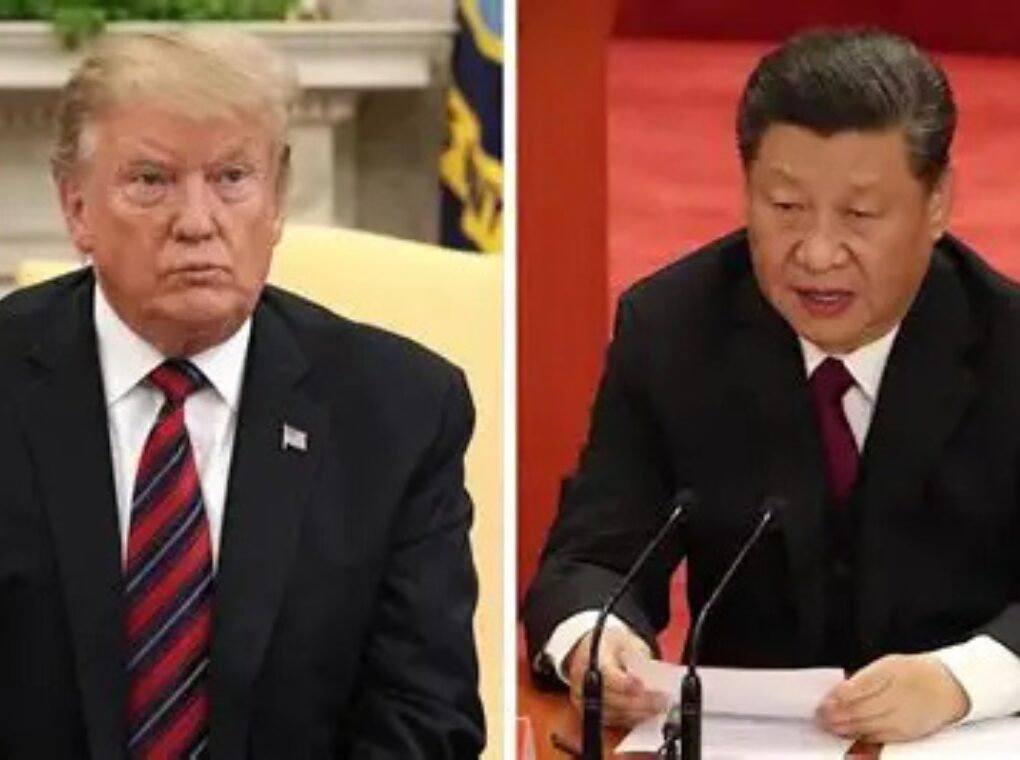
In a move that highlights growing tensions in the Indo-Pacific, the Pentagon has directed U.S. defense contractors to double the production of critical missile systems, signaling Washington’s concern over a possible future conflict with China.
According to officials, military leaders have urged the rapid assembly of at least 12 priority weapons systems that would be central to U.S. warfighting strategy in the region.
Building Lessons from Ukraine into the Pacific
The Pentagon’s directive comes against the backdrop of lessons drawn from the ongoing war in Ukraine, where Kyiv’s heavy dependence on U.S. and NATO-supplied munitions revealed the limitations of America’s defense industrial base. Ukrainian forces burned through stockpiles of precision-guided missiles, artillery shells, and air-defense interceptors faster than Western defense manufacturers could replenish them.
This wartime experience has deeply influenced U.S. military planners, who worry that in a direct clash with a peer adversary like China, the opening weeks of conflict could rapidly deplete U.S. inventories. Unlike Russia, China possesses a massive industrial capacity of its own, making sustained competition even more dangerous if the U.S. is unprepared.
“Deterrence is about credibility,” one senior defense official explained. “If Beijing doubts our ability to fight and sustain operations in the Pacific, that could tempt them into miscalculation. We must ensure we have the weapons we need not only to start a fight, but to finish one.”
The Defense Industry Under Pressure
Defense giants such as Lockheed Martin, Raytheon Technologies, Northrop Grumman, and General Dynamics are expected to play leading roles in the production surge. The Pentagon has identified a range of systems — from long-range precision strike missiles and anti-ship weapons to air defense interceptors and hypersonic prototypes — as top priorities for acceleration.
However, scaling up production is not without hurdles. Supply chain bottlenecks remain a persistent issue, particularly with rocket motors, microelectronics, and rare earth materials — many of which ironically come from China itself. Additionally, skilled labor shortages and limited manufacturing capacity could slow the Pentagon’s ambitious goals.
To counter this, the U.S. Department of Defense is weighing multi-year procurement contracts and direct federal investment in production lines to incentivize defense firms to expand capacity. Unlike the short-term funding models of the past, such agreements would give companies financial certainty to build new facilities and hire additional workers.
A Shift in Strategic Focus
For decades, U.S. defense planning was oriented around counterterrorism campaigns in Iraq and Afghanistan, where advanced missile stockpiles were rarely stressed. Today, the Pentagon’s strategic compass has shifted firmly toward great-power competition, with China identified as the “pacing threat.”
Beijing has invested heavily in its People’s Liberation Army Rocket Force (PLARF), fielding thousands of conventional and nuclear-capable missiles designed to deter or defeat U.S. intervention in a Taiwan contingency. These include long-range anti-ship ballistic missiles that threaten U.S. aircraft carriers, as well as hypersonic glide vehicles that challenge existing missile defenses.
Against this backdrop, Washington’s decision to double missile production is intended not only to prepare for war but also to reinforce deterrence. “The signal is clear: the United States will not be caught flat-footed,” said a defense analyst at the Center for Strategic and International Studies (CSIS). “By ramping up production now, the Pentagon aims to convince Beijing that any attempt to seize Taiwan or push the U.S. out of the Pacific would face overwhelming resistance.”
Balancing Global Commitments
The push to expand missile output comes as the U.S. military juggles multiple global obligations. In Europe, American stockpiles are still being drained by the war in Ukraine. In the Middle East, U.S. forces continue to provide support for Israel and deter Iranian aggression. These simultaneous commitments stretch American capacity, raising concerns among lawmakers about whether the U.S. defense base can truly “arm the world” while preparing for its own wars.
Critics also warn that an aggressive arms buildup could fuel an Asian arms race, prompting China — and possibly regional players like North Korea — to accelerate their own missile programs. Others argue that without parallel diplomatic initiatives, Washington risks hardening a cycle of escalation with Beijing.
Still, supporters of the Pentagon’s move insist that the risks of inaction are greater. “The reality is that China’s missile arsenal already outnumbers ours in the region,” noted a former Pentagon strategist. “If we fail to expand production, we risk ceding the initiative to Beijing. Peace is best preserved when deterrence is ironclad.”
What next?
The Pentagon’s decision to push the U.S. defense industry toward near–war–time production levels marks one of the most significant strategic shifts since the Cold War. The success of this effort will depend not only on defense contractors but also on political will in Congress, where budget battles over defense spending are intensifying.
For now, the order represents a clear recognition: America’s military advantage cannot be taken for granted. By doubling missile production, Washington hopes to shore up its ability to deter China, reassure allies, and prepare for the unthinkable — a high-intensity conflict in the Pacific that could reshape the global order.