In a move that stunned Washington and military circles alike, Admiral Alvin Holsey, head of the U.S. Southern Command (SOUTHCOM), announced his resignation at the end of 2025 — less than a year after assuming the post.
Holsey’s departure comes at a time when the United States has intensified military activities across the Caribbean, ostensibly to crack down on “drug trafficking,” but in reality, the mission’s focus seems to be shifting toward Venezuela and its embattled president, Nicolás Maduro.
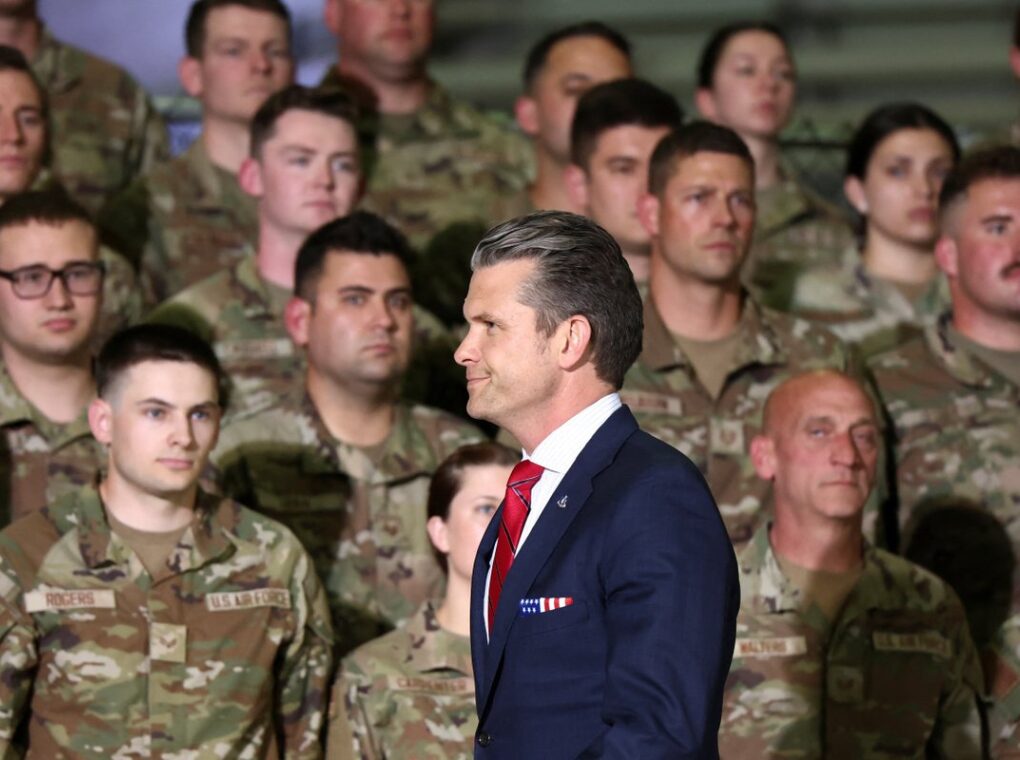
While the Pentagon attributed Holsey’s retirement to “personal reasons,” the timing has fueled speculation of deep internal disagreement within the ranks. The announcement followed a fiery speech by Defense Secretary Pete Hegseth, a close Trump ally, who told officers:
“If you don’t like how we fight, do the honorable thing — resign.”
Many observers now see Holsey’s exit as exactly that — a quiet protest against the increasingly aggressive and ideologically charged tone coming from the top of America’s defense establishment.
Trump’s Hardline Shift in Military Policy
Since returning to the White House, President Donald Trump and Defense Secretary Pete Hegseth have embarked on a sweeping overhaul of U.S. defense priorities. Hegseth has promised to restore a “warrior ethos” to the military, purging what he calls “woke weakness” and focusing on offensive operations rather than “bureaucratic diplomacy.”
This shift aligns with Trump’s long-standing skepticism toward multilateralism and his preference for decisive, unilateral military action. In this context, the Caribbean and South America are emerging as the new theaters of confrontation.
SOUTHCOM — responsible for overseeing U.S. operations across Latin America — is at the heart of this renewed strategy. But the timing of Holsey’s resignation, coinciding with reports of covert CIA operations inside Venezuela, suggests there may be internal resistance to how far the White House is willing to go.
Covert Operations and the Venezuela Flashpoint
Multiple reports have surfaced indicating that President Trump recently authorized the CIA to conduct “lethal covert actions” inside Venezuela, including sabotage operations and targeted strikes against regime figures.
This represents a dangerous escalation in an already volatile region. While the Trump administration publicly frames these actions as part of a “war on narcotrafficking,” analysts and critics see a different picture — a renewed push for regime change in Caracas.
In October 2025, the U.S. began maritime and aerial operations against alleged Venezuelan drug boats. Yet official U.S. data reveals Venezuela is not a significant cocaine producer — cultivation there is negligible compared to Colombia, the world’s largest source. Instead, Venezuela serves mainly as a transit corridor for drugs moving north, accounting for just 10–15% of global flows.
This inconsistency has led many to believe the “drug war” narrative is merely a cover for military pressure and possibly a prelude to intervention.
The U.S. Military Buildup Around Venezuela
The scale of U.S. deployments has alarmed both regional governments and global observers.
As of October 2025, more than 10,000 American troops have been stationed across the Caribbean, primarily in Puerto Rico and on U.S. Navy vessels.
Among the assets in the region are:
Guided-missile destroyers USS Gravely, USS Jason Dunham, and USS Sampson.
A nuclear-powered attack submarine.
B-52 bombers and F-35 fighter jets on rotation.
Special operations forces equipped with Little Bird helicopters and stealth “Ghost” vessels.
Pentagon insiders describe the mission as “training and readiness exercises,” but the assembled firepower clearly exceeds what would be required for counter-drug patrols. The force is capable of capturing airfields, ports, and key infrastructure — a classic preparation for regime-change scenarios.
Venezuela’s Countermove: Militia Mobilization and Alliances
President Nicolás Maduro, facing what he calls “imperial aggression,” has ordered a massive mobilization of 4.5 million militia members — a hybrid civilian-military force trained to defend national sovereignty.
These militias, backed by the Venezuelan armed forces, are being deployed along the country’s coastline and borders. In fiery speeches, Maduro declared:
“Venezuela will not kneel to any empire. We will defend every inch of our homeland.”
At the same time, Caracas is deepening its ties with China and Russia, both of which have condemned U.S. military buildup near Venezuela’s waters.
China, a key investor in Venezuela’s oil industry, has supplied drones, radar systems, and advanced communications technology.
Russia has hinted at sending air defense systems and military advisors, similar to its intervention model in Syria.
This growing alignment between Venezuela, Russia, and China transforms the crisis into a potential proxy conflict, where U.S. aggression could ignite a global standoff.
Trump’s Strategic Calculus
So what’s really at stake?
Analysts suggest three possible strategic motives driving Washington’s escalation:
Regime Change:
Using CIA operations, special forces, and local opposition to dismantle Maduro’s government and install a pro-U.S. leadership.
Resource Control:
Venezuela holds some of the largest oil, gold, and lithium reserves in the world. Securing access would benefit U.S. energy interests and weaken BRICS influence in the region.
Geopolitical Pressure:
Countering the growing presence of China and Russia in the Western Hemisphere, which Trump’s administration views as a direct security threat.
But these goals come with high risks. Direct confrontation could lead to regional instability, mass migration, and a humanitarian crisis worse than before — all while pushing Latin America closer to Beijing and Moscow.
A Military Divided?
Holsey’s resignation exposes what many insiders describe as “a moral rift” within the U.S. military hierarchy. Some commanders reportedly question the legality and purpose of escalating conflicts under vague justifications like “anti-narcotics.”
The fact that Holsey walked away — after just months in command — signals that not everyone within the Pentagon is willing to participate in Trump’s increasingly politicized military agenda.
As one former defense analyst put it,
“When admirals start resigning, you know something bigger is happening behind closed doors.”
What next?: A Region on Edge
With tensions climbing and U.S. warships closing in on Venezuela, the Caribbean could soon become the next flashpoint of great power confrontation.
For now, Washington insists its goal is regional stability. But history tells a different story — from Panama to Grenada, U.S. interventions in Latin America often begin under the banner of “freedom” and end in regime change.
Admiral Holsey’s quiet departure may be the first visible crack in a much larger and more dangerous plan — one that could reshape not just Venezuela’s fate, but the entire geopolitical map of the Western Hemisphere.