Tensions between China and Japan have entered a sharper and more dangerous phase after a close military encounter near Okinawa and Japan’s decision to deploy new air-defence capabilities on its westernmost island, barely 110 kilometres from Taiwan. Together, the two developments show the fast-changing security dynamics of East Asia and the growing risk of confrontation around Taiwan in the South China Sea.
The Trigger
The immediate trigger was a tense aerial incident over the weekend. Japan accused Chinese military aircraft of locking fire-control radar onto Japanese fighter jets during operations south-east of Okinawa. The area lies near crucial sea lanes and is increasingly witnessing Chinese naval and air activity.
According to Japan’s defence ministry, Chinese J-15 fighter jets launched from the aircraft carrier Liaoning targeted Japanese Air Self-Defence Force F-15 fighters twice on Saturday (December 6). The radar lock reportedly occurred once in the late afternoon and again about two hours later. Although no physical damage or injuries were reported, the act itself is widely considered highly provocative.
A fire-control radar lock is not a routine manoeuvre. Instead, it signals activation of targeting systems, often viewed as the last step before an attack. As a result, such actions force pilots to take evasive measures and raise the probability of miscalculation. Notably, this is the first time Japan has formally disclosed such behaviour by Chinese fighter aircraft. It was like Japanese aircraft were just a click of the button away from attack.
In response, Prime Minister Sanae Takaichi struck a firm but restrained tone. She stated that Japan would respond “calmly and resolutely” while strengthening maritime and airspace surveillance. At the same time, Tokyo summoned China’s ambassador to register a formal protest.
Beijing, however, rejected the accusations and countered by lodging its own diplomatic complaints. Chinese officials maintained that the PLA was conducting legitimate “far-sea training” operations, a formulation increasingly used by China to normalise military deployments far from its coastline.
Also Read: China Simulates Starlink Shutdown Over Taiwan as U.S.–Japan Step In
Japan is Preparing its Defence
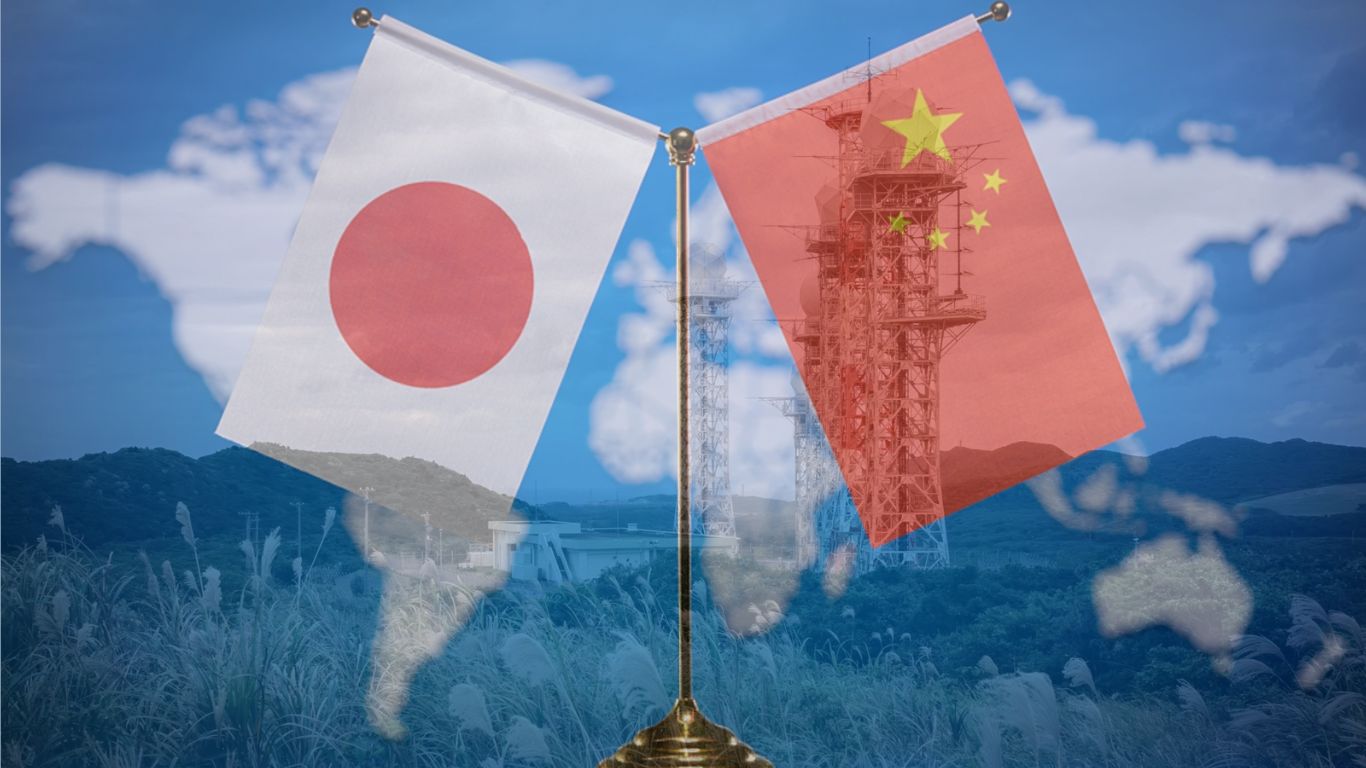
However, the incident comes at a politically sensitive moment. Japan is actively reinforcing its western defence line, particularly islands located close to Taiwan. Earlier this month, reports confirmed that Japan plans to station an anti-aircraft electronic warfare unit on Yonaguni Island by 2026.
Yonaguni occupies a critical strategic position. It lies closer to Taiwan than to mainland Okinawa and sits astride routes that would be vital in any Taiwan contingency. During a recent town hall meeting with local residents, Japanese defence officials emphasised that the deployment is defensive in nature and aimed at strengthening surveillance and protection of isolated islands.
Officials also sought to counter local concerns, stating that the electronic signals used by the unit would pose no health risks. The unit will function under Japan’s electronic warfare command headquartered in Tokyo.
Significantly, this move follows Defence Minister Shinjiro Koizumi’s recent announcement that Type-03 medium-range surface-to-air missile systems will also be deployed on Yonaguni. These missiles can intercept aircraft and air-to-surface threats, forming a critical layer in Japan’s expanding island defence network.
Chinese Aggression and Military Dominance Creating an Environment of Fear
Taken together, these deployments reflect Japan’s growing alarm over China’s military expansion and aggressive behaviour. China now fields the world’s largest navy by the number of active ships and has dramatically increased air and naval patrols in waters surrounding Taiwan and Japan. Chinese military aircraft regularly enter Taiwan’s Air Defence Identification Zone, forcing constant responses from Taiwanese forces and raising regional alert levels.
Meanwhile, Chinese coast guard and naval activity near Japanese territorial waters has risen steadily, contributing to an atmosphere of persistent pressure. As air and maritime encounters become more frequent, the margin for error continues to shrink.
The wider implications extend well beyond Japan and China. Any conflict involving Taiwan would disrupt major shipping lanes, energy flows, and global semiconductor supply chains. For Indo-Pacific nations, including India, the situation reinforces concerns about freedom of navigation and the growing militarisation of key maritime chokepoints.
China’s closer strategic alignment with Russia and North Korea further complicates the security environment, while Japan’s defence moves are likely to accelerate military modernisation across the region.
For now, diplomacy remains active. However, as forward deployments increase and military aircraft operate in closer proximity, the risk of a single incident spiralling into a larger crisis cannot be dismissed. The Japan–China rivalry, once managed largely through a cautious posture, is fast becoming a front-line test of stability in the Indo-Pacific.