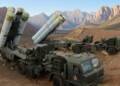

Russian President Vladimir Putin has announced that Russia’s newly developed medium-range missile system, known as Oreshnik, will formally enter combat service before the end of this year, underscoring Moscow’s continued emphasis on advanced weapons as a pillar of its strategic deterrence.
Speaking during a keynote address to the Russian Defense Ministry, Putin reviewed military developments over the past year and outlined future priorities in defense research and modernization. He described Oreshnik as one of several cutting-edge systems designed to “ensure the strategic parity, security, and global positions of Russia for decades to come.”
Part of a Broader Strategic Arsenal
Alongside Oreshnik, Putin highlighted two other strategic weapons projects: the Burevestnik nuclear-powered cruise missile and the Poseidon nuclear-powered underwater drone. Both systems, he said, achieved significant development milestones this year.
“We will keep working on those systems, fine-tuning and improving them, but we already have them,” Putin stated, signaling that the projects have moved beyond experimental stages.
The mention of these systems reflects Russia’s long-standing strategy of investing in unconventional and advanced weapons to counter Western missile defense systems and maintain nuclear deterrence parity.
First Revealed in Ukraine Strike
Russia first publicly revealed the Oreshnik missile system in November 2024, following what Moscow described as a successful “combat test” during a strike on a Ukrainian weapons manufacturing facility. According to Russian statements, the missile used in the strike was a conventional variant of the system.
However, Oreshnik is widely understood to be capable of carrying multiple independently targetable reentry vehicles (MIRVs) with nuclear capability. Putin has previously compared the destructive power of its conventional version to that of a low-yield nuclear weapon, highlighting its potential battlefield impact even without a nuclear payload.
Deployment Plans and Belarus Factor
Russian officials have also announced plans to deploy some Oreshnik systems in Belarus, Russia’s closest military ally. Such a deployment would place the missile closer to NATO’s eastern flank, likely raising concerns among Western defense planners and neighboring countries.
While specific deployment timelines and numbers were not disclosed, the announcement aligns with broader Russian efforts to deepen military integration with Belarus amid heightened tensions with the West.
Modernization and Warnings to the West
Beyond weapons development, Putin addressed progress in modernizing the Russian armed forces and instructed military planners to closely study lessons learned from the ongoing Ukraine conflict when developing new systems. He also touched on non-combat issues, including medical rehabilitation and social support for servicemen.
In a pointed message to Western leaders, Putin warned that efforts to escalate tensions with Russia were “irresponsible.” He argued that Moscow had consistently sought diplomatic solutions to conflicts as long as there was “the slimmest hope of success.”
“Those who convinced themselves that Russia can be spoken to in the language of force are fully responsible for those missed opportunities,” he said.
Strategic Significance
The planned entry of the Oreshnik missile system into service marks another step in Russia’s push to showcase advanced military capabilities amid a protracted conflict in Ukraine and strained relations with NATO. Whether intended primarily as a deterrent, a battlefield weapon, or a political signal, the system is likely to feature prominently in future assessments of Europe’s security landscape.