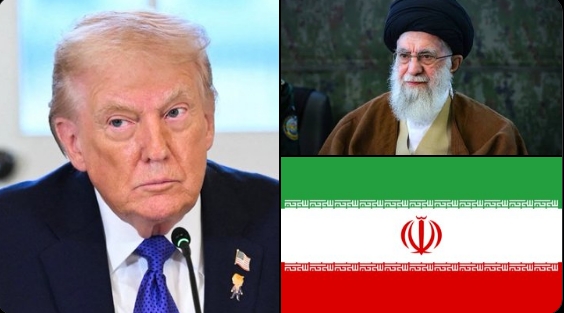
Tensions between the United States and Iran are once again escalating, fueling fears of a possible military confrontation in the Middle East. Former U.S. President Donald Trump has issued a direct warning to Tehran: agree to a new nuclear deal or face an attack that he says would be “far worse” than previous American strikes. His statement comes as the United States strengthens its military presence in the region, raising global concerns about the risk of war.
The warning marks a significant moment in the ongoing U.S.–Iran conflict, which has centered for years on Iran’s nuclear program, regional influence, and sanctions pressure. With military forces now repositioning and political rhetoric intensifying, analysts say the situation has entered one of its most dangerous phases in recent years.
U.S. Military Build-Up Signals Serious Intent
The United States has deployed a powerful naval presence in the Middle East, including a carrier strike group led by the USS Abraham Lincoln. Aircraft carriers serve as mobile airbases, capable of launching sustained air operations without relying on foreign land bases. This gives Washington strategic flexibility and sends a strong message that military options are not just theoretical.
Such deployments are often used as a deterrent, but they also increase the stakes. The visible presence of advanced aircraft, missile defense systems, and naval escorts suggests that the U.S. wants Iran to take the warning seriously. Trump described the force as ready to act “with speed and strength” if Iran refuses to negotiate.
The U.S. position remains focused on preventing Iran from developing nuclear weapons. Washington argues that Tehran’s nuclear advances pose a direct threat to regional and global security. Trump’s demand is clear: Iran must permanently halt any pathway to a nuclear weapon.
Iran Responds with Defiance
Iranian officials have rejected the ultimatum, saying their country will not negotiate under threats or military pressure. Tehran maintains that its nuclear program is peaceful and intended for civilian energy and research purposes, not weapons development.
At the same time, Iranian leaders have warned that any military strike would be met with a strong response. Iran has invested heavily in missiles, drones, and regional alliances that could make any conflict costly and unpredictable. Rather than backing down, Iran appears determined to show resilience in the face of outside pressure.
This exchange of threats has heightened fears of miscalculation. When both sides adopt hardline positions and move military assets into the region, the risk of an unintended clash increases significantly.
Regional Powers Caught in the Middle
Countries across the Middle East are watching developments with growing unease. Gulf states share concerns about Iran’s military capabilities and regional influence, but they are also wary of a full-scale war. A major conflict could expose their cities, oil facilities, and infrastructure to retaliation.
The Strait of Hormuz is a particular concern. This narrow waterway is one of the most critical oil transit routes in the world. Any disruption — whether from direct military action or escalating tensions — could drive oil prices sharply higher, affecting global markets and economic stability.
Turkey and other neighboring countries are also on alert for potential humanitarian consequences. Conflict in Iran could lead to refugee flows and broader regional instability, further complicating an already fragile geopolitical landscape.
Trump’s Strategy: Pressure to Force a Deal
Trump’s approach mirrors his previous “maximum pressure” strategy, which combines economic sanctions, diplomatic isolation, and military threats to push Iran toward concessions. The belief behind this approach is that sustained pressure will leave Tehran with no choice but to return to negotiations.
However, critics argue that this strategy carries high risks. Iran’s leadership may see giving in under pressure as a sign of weakness, making compromise politically difficult. Instead of forcing talks, pressure could harden positions and push both sides closer to confrontation.
Diplomacy or Escalation?
Despite the harsh rhetoric, diplomatic options have not disappeared entirely. International actors continue to call for negotiations and de-escalation, stressing that a peaceful resolution is the only sustainable outcome.
Still, the situation remains volatile. Military forces are in place, warnings have been issued, and trust between Washington and Tehran is extremely low. Any incident — at sea, in the air, or through regional proxy groups — could trigger a rapid escalation.
For now, the world is watching a high-stakes standoff unfold. Whether this crisis ends with renewed diplomacy or a new conflict in the Middle East may depend on decisions made in the coming days and weeks. The margin for error is shrinking, and the consequences of miscalculation could be severe not only for the region, but for global security and energy markets as well.