
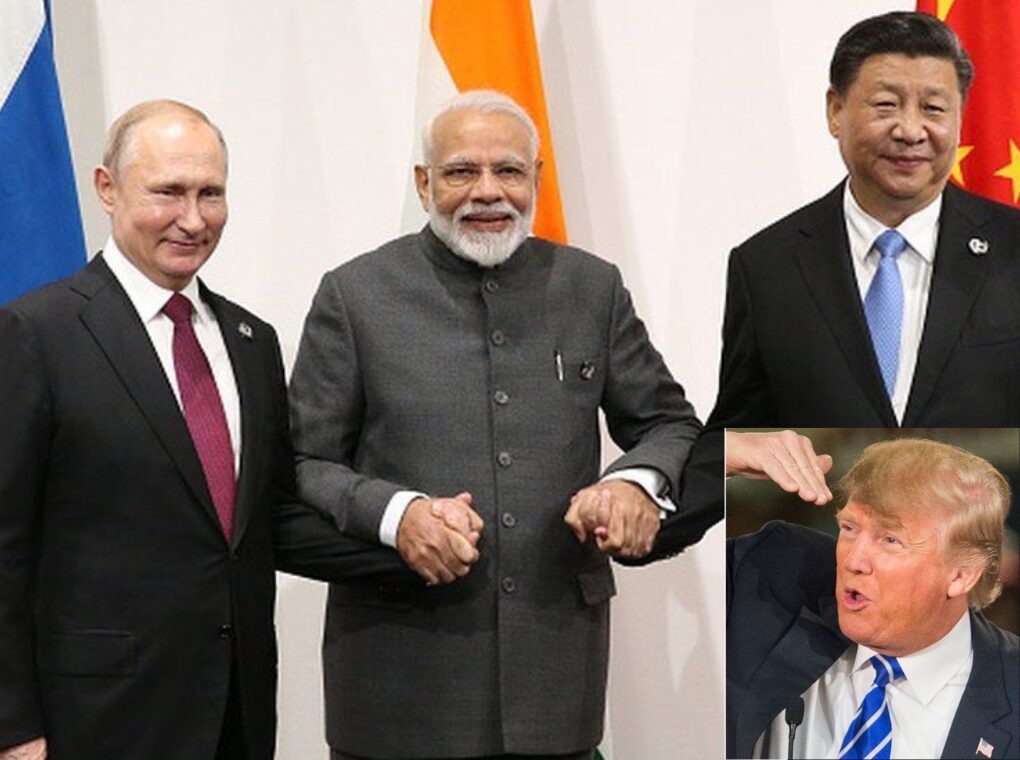
In a dramatic turn in global trade politics, India and China have emerged among the biggest beneficiaries after the US Supreme Court struck down President Donald Trump’s emergency tariffs, reshaping the international trade landscape once again.
The ruling declared that Trump’s use of the International Emergency Economic Powers Act (IEEPA) to impose sweeping duties on trading partners was unlawful. The decision effectively dismantled a significant portion of the tariff regime that had weighed heavily on exports from major economies, particularly in Asia.
Tariff Reset Changes the Playing Field
Following the court’s decision, Trump proposed a revised 15% global tariff framework. However, according to Bloomberg Economics estimates, the effective average tariff rate would stand at roughly 12% — significantly lower than the levels imposed under the earlier “Liberation Day” tariffs introduced in April.
For countries like India and China, which had faced steep levies under the emergency framework, this recalibration offers immediate relief. Economists at Morgan Stanley estimate that Asia’s weighted average tariff rate will fall to 17% from 20%, while average duties on Chinese goods are expected to decline sharply to around 24% from 32%.
In addition, the scrapping of the 10% fentanyl-linked tariff — previously applied to Chinese exports — further reduces the burden on Beijing’s shipments to the US.
India’s Export Boost
For India, the ruling presents a strategic opening. Over the past year, Indian exporters had been grappling with higher duties across several sectors, including textiles, pharmaceuticals, machinery, and auto components. With lower effective tariffs, Indian goods regain pricing competitiveness in the US market.
Trade analysts suggest that sectors such as electronics manufacturing, specialty chemicals, and IT hardware could see improved demand as American importers rebalance supply chains. India had also benefited from supply chain diversification away from China, and the new tariff structure may allow it to consolidate those gains without facing disproportionate duties.
China’s Strategic Relief
China, which bore the brunt of the earlier tariff escalation, stands to gain substantially from the rollback. The reduction in average tariff rates restores some stability to US-China trade flows, which had been disrupted by prolonged uncertainty.
Senior US officials have signaled a desire to maintain continuity in the one-year trade truce between Washington and Beijing. Trump is also reportedly planning a visit to Beijing for talks with President Xi Jinping, indicating potential diplomatic recalibration alongside economic adjustments.
While Chinese authorities have yet to officially comment, analysts believe the ruling reduces immediate downside risks to China’s export sector, which remains a critical pillar of its economic growth strategy.
Winners and Losers
The court’s ruling has effectively reset the competitive landscape. Countries that had negotiated relatively lower tariffs under the earlier reciprocal framework — such as the United Kingdom and Australia at 10% — now find themselves at a disadvantage under the new 15% baseline rate.
Similarly, Japan, which previously operated under a 15% rate viewed as competitive, loses its relative edge under the across-the-board structure.
Meanwhile, Canada and Mexico also stand to benefit, particularly if exemptions under the US-Mexico-Canada Agreement (USMCA) remain intact. The removal of fentanyl-related levies improves their trade outlook with the US.
Has Tariff Uncertainty Peaked?
Despite the legal setback, the Trump camp has indicated it may pursue sector-specific or economy-specific duties to rebuild aspects of its tariff regime. This suggests that while the emergency framework has been struck down, trade tensions may not fully disappear.
However, economists argue that the peak of tariff-related uncertainty may have passed. Analysts at Goldman Sachs estimate that the overall increase in effective US tariff rates since early 2025 will now be trimmed slightly — from just over 10 percentage points to about 9 percentage points — following the court’s decision and revised policy announcements.
Import growth from countries experiencing meaningful tariff reductions is expected to pick up in the coming months. At the same time, any GDP impact in the US is likely to be limited, as increased inventory accumulation and shifts in consumption patterns offset trade adjustments.
A Temporary Calm or Long-Term Shift?
The Supreme Court’s ruling marks a rare judicial intervention in US trade policy and underscores the limits of executive authority in imposing sweeping economic measures under emergency powers.
For India and China, the decision delivers short-term economic relief and renewed export competitiveness. Yet, with Washington signaling potential new tariff mechanisms, the global trading system remains in flux.
For now, however, the balance of advantage has shifted — and Asia’s two largest economies are among the clear winners in this latest chapter of global trade realignment.