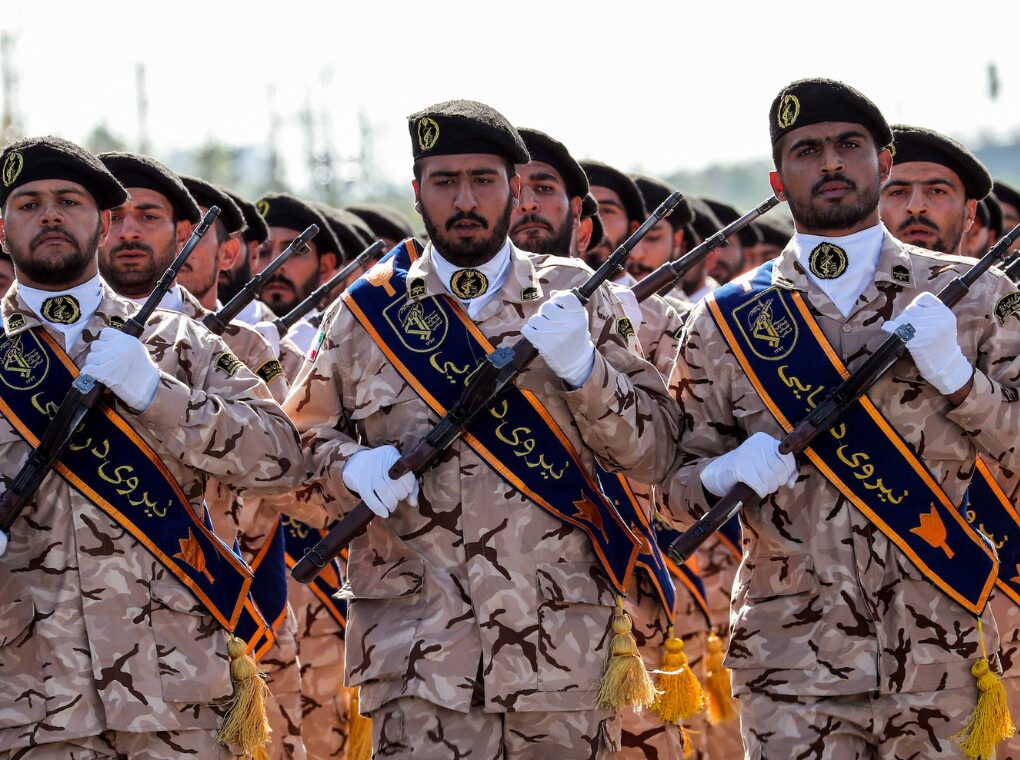
Iran has formally activated its long-prepared “Decentralized Mosaic Defense” doctrine, restructuring the Islamic Revolutionary Guard Corps (IRGC) into 31 semi-autonomous operational commands amid escalating strikes by the United States and Israel.
Under the new framework, one command is aligned with Tehran, while 30 others correspond to Iran’s provinces. The move effectively shifts the country’s military posture from a centralized command structure to a dispersed, resilient network designed to withstand leadership “decapitation” strikes and electronic warfare disruptions.
Why Iran Triggered the Mosaic Defense Now
The activation follows recent U.S. and Israeli air and cyber strikes that reportedly targeted IRGC command nodes, communications hubs, and strategic infrastructure. Iranian officials claim the attacks aimed to paralyze top-down control by severing coordination between Tehran and provincial forces.
Instead, Tehran has responded by accelerating a doctrine that was developed precisely for such a scenario.
Iranian Foreign Minister Abbas Araghchi signaled the shift in a public statement on March 1, declaring that strikes on the capital “will not determine the course of this war.” He emphasized that under the decentralized doctrine, Iran retains the ability to decide “when and how” the conflict concludes. It signals that if central leadership is disrupted, the fight continues.
How the Decentralized Mosaic Defense Works
The Mosaic Defense concept — known in Persian as Defa-e Mozaik — divides Iran into independent “puzzle pieces.” Each provincial IRGC command functions as a self-contained military node with authority to:
Launch ballistic or cruise missiles
Deploy drone swarms
Conduct guerrilla raids
Execute naval swarm attacks
Initiate localized retaliation
Commanders no longer require prior approval from Tehran to act.
Iran’s geography plays a key role in the strategy. Mountain ranges enable ambush warfare. Deserts allow dispersion and concealment. Coastal provinces along the Persian Gulf provide staging points for asymmetric naval operations.
The doctrine builds a “defense in depth” system: destroying one command element does not collapse the entire structure. Instead, the network fragments and continues operating independently.
Strait of Hormuz: The Immediate Flashpoint
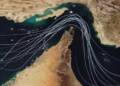
The most immediate implications lie in the Strait of Hormuz, the narrow maritime chokepoint through which roughly one-fifth of global oil shipments pass.
The IRGC Navy has long trained for swarm tactics — deploying fleets of fast-attack craft designed to overwhelm larger warships. In February’s “Smart Control” drills, Iranian forces practiced coordinated but decentralized maritime maneuvers, including:
Swarming exercises with speedboats
Electronic warfare simulations
Radar jamming scenarios
Saturation attack formations
Now, with provincial autonomy activated, coastal commanders can theoretically initiate harassment operations without delays for centralized authorization.
For global energy markets, even limited disruption in Hormuz could spike oil prices and trigger shipping reroutes. Insurance costs for tankers may rise sharply if tensions escalate further.
A Shift in Military Calculus for the US and Israel
For the United States and Israel, the Mosaic Defense complicates traditional airpower doctrine. Modern campaigns often aim to cripple adversaries by striking command centers and leadership hierarchies.
Under decentralization, that strategy becomes less effective.
Instead of a single command spine, Iran now presents multiple autonomous nodes. Neutralizing Tehran’s central headquarters would not necessarily halt provincial missile launches or naval operations.
Strategically, this creates a “hydra effect”: removing one operational head does not stop the others.
Defense analysts suggest this could prolong any conflict, increasing operational costs and expanding the geographic scope of engagement. It also raises escalation risks, as field commanders with broad authority may respond rapidly to perceived threats.
Regional Anxiety and Escalation Risks
The Gulf Cooperation Council (GCC) states are closely monitoring developments. Increased IRGC autonomy means retaliation could originate from multiple fronts simultaneously.
There is also a control dilemma: decentralization enhances resilience but can reduce centralized restraint. Miscalculations at the provincial level could trigger broader regional escalation.
However, Iranian officials argue the opposite — that the doctrine strengthens deterrence by ensuring no quick or decisive victory is possible against Iran.
Doctrine Rooted in Asymmetric Warfare
The Mosaic Defense strategy has roots in lessons drawn from conflicts in Vietnam, Iraq, and Afghanistan, where dispersed insurgent networks challenged technologically superior militaries through attrition and terrain advantage.
Iran’s conventional military capabilities may lag behind U.S. and Israeli airpower, but its asymmetric approach — missiles, drones, cyber operations, and naval swarms — is designed to level the field.
The IRGC, estimated to field approximately 190,000 personnel across ground, naval, and aerospace branches (alongside reserve and paramilitary forces), forms the backbone of this distributed defense architecture.
What Happens Next?
The activation of Decentralized Mosaic Defense marks one of the most significant structural shifts in Iran’s modern military posture. Whether it proves an effective deterrent or accelerates confrontation depends on how both sides adapt in the coming weeks.
Key indicators to watch include:
Increased IRGC naval activity in the Strait of Hormuz
Independent missile launches from provincial units
Expanded drone swarm operations
Cyber and electronic warfare escalation
For now, Iran has signaled it is prepared for a prolonged, decentralized conflict rather than a short, centrally commanded war.
With global oil markets, regional security, and great-power dynamics hanging in the balance, the Mosaic Defense doctrine may become a defining feature of this phase of the Israel-Iran confrontation.
The world’s attention is now fixed on Hormuz — and on whether Iran’s newly autonomous military “puzzle pieces” remain contained or begin reshaping the battlefield.