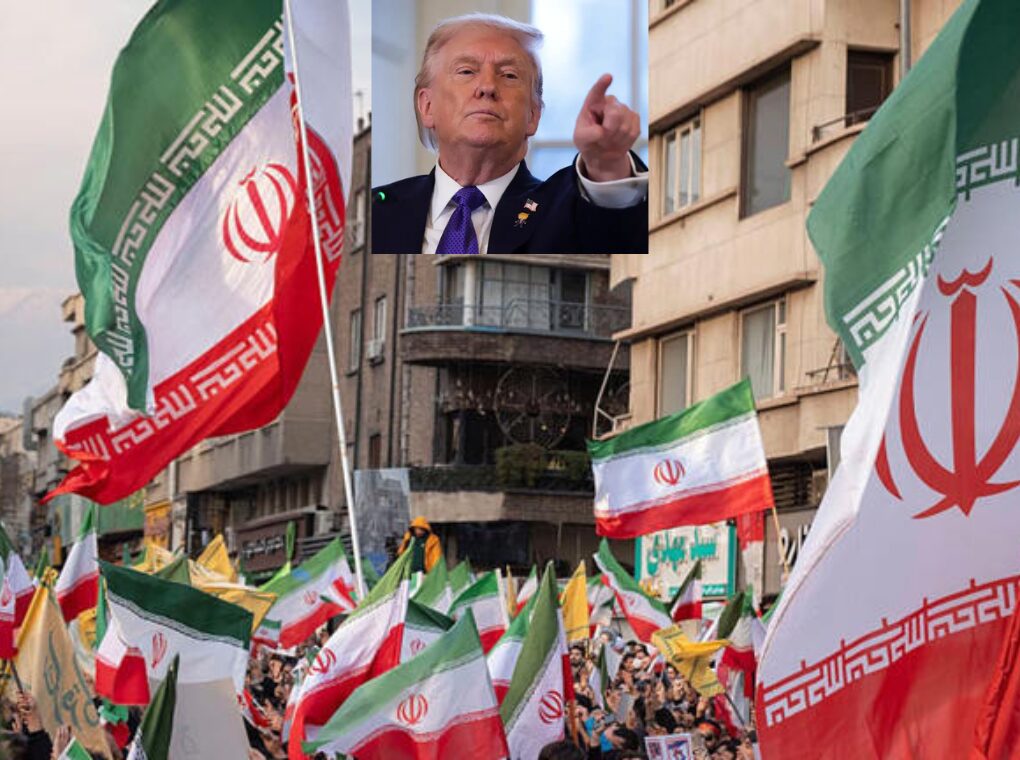
The United States is preparing for a potentially prolonged military confrontation with Iran that could last for months, according to a new report by Politico. The report suggests that American military planners are already bracing for a conflict that may extend well beyond the initial timeline announced by the White House, raising concerns about a wider regional escalation across the Middle East.
Pentagon Planning for Extended Operations
According to the report, the US military’s United States Central Command (CENTCOM), which oversees American operations in the Middle East, has requested additional military intelligence personnel to support ongoing operations against Iran. The request reportedly calls for more intelligence officers to be deployed to CENTCOM headquarters in Tampa, Florida, to sustain operational planning and battlefield analysis for at least 100 days, and possibly through September.
The request was reportedly revealed through an internal “notification” obtained by Politico, indicating that the Pentagon is preparing for a conflict far longer than the four-week campaign initially referenced by US President Donald Trump. Analysts say this preparation signals a shift from a short punitive strike toward a sustained military operation.
Military strategists believe intelligence support will be crucial in monitoring Iranian missile launches, drone attacks, naval movements, and activities of allied militia groups across Iraq, Syria, Lebanon, and Yemen.
Air Defense Reinforcements in the Middle East
The Pentagon is also scrambling to reinforce American bases across the region with additional air-defense capabilities. Officials cited in the report say the US military is focusing on cheaper anti-drone weapons systems to counter Iran’s increasing use of unmanned aerial vehicles (UAVs).
Iran has repeatedly demonstrated the ability to launch large waves of drones alongside missiles. Intercepting these threats with high-cost missile interceptors—such as those used by Patriot or THAAD systems—has proven financially unsustainable during prolonged engagements.
By deploying lower-cost counter-drone systems, the Pentagon hopes to preserve expensive interceptor missiles for higher-priority threats like ballistic missiles or cruise missiles.
NATO’s Indirect Support
While the conflict is largely being conducted by the United States and Israel, Western allies are quietly supporting the effort. In an interview with Newsmax, NATO Secretary-General Mark Rutte stated that the alliance itself is not formally involved in the campaign against Iran.
However, he emphasized that NATO member states are broadly supportive of Washington’s strategy.
“Allies are basically, on a massive scale, supportive of what the president is doing and are also enabling what the US is doing now in the region,” Rutte said.
Support from European allies has taken multiple forms, including intelligence sharing, logistical support, and defensive deployments.
European Military Movements
Initially, some European countries appeared reluctant to be drawn into the escalating confrontation. The United Kingdom and Spain both denied early requests from Washington to use their military bases for strikes against Iran.
However, London later reversed its position after pressure from the White House.
Spain has taken a more defensive role. Madrid recently announced that it would deploy a navy frigate to Cyprus as part of a multinational effort to protect a British Royal Air Force base from potential Iranian missile or drone strikes. The defensive operation reportedly involves coordination with Italy, France, and the Netherlands.
Escalation Following Massive Airstrikes
The conflict dramatically escalated after joint US-Israeli airstrikes were launched on Iranian targets last weekend. The strikes targeted key military facilities and command centers across Iran.
According to reports, the attacks resulted in the death of Iran’s Supreme Leader, Ali Khamenei, along with several senior military commanders and hundreds of civilians. The strikes have continued in the days since, with explosions and air defense activity reported across multiple Iranian cities, including Tehran.
Tehran has retaliated by launching waves of drones and missiles toward Israeli territory and targeting US and British military installations across the Middle East.
Global Reactions and Rising Tensions
The escalation has drawn sharp criticism from Moscow. Russian President Vladimir Putin condemned the killing of Khamenei, describing it as a “cynical violation of all norms of human morality and international law.”
Russia has warned that the ongoing conflict risks destabilizing the entire Middle East and could trigger a broader geopolitical confrontation involving major global powers.
Uncertain Path Ahead
With the Pentagon now preparing for a campaign that could last several months, analysts warn that the conflict may evolve into one of the most dangerous military confrontations in the region in decades.
Iran still retains significant missile capabilities, naval forces in the Persian Gulf, and a network of allied militias capable of striking US and Israeli interests across the region. Meanwhile, the United States maintains overwhelming air and naval power but faces the challenge of sustaining a long conflict far from its homeland.
As preparations intensify on both sides, the prospect of a prolonged war between Washington and Tehran is increasingly becoming a reality—one that could reshape the geopolitical landscape of the Middle East for years to come.