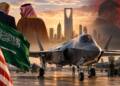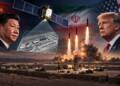

For decades, the idea that American airpower is nearly unbeatable has shaped global military thinking. From the 1991 Gulf War to operations in Afghanistan and Iraq, the United States built a reputation for overwhelming dominance in the skies. Precision-guided weapons, stealth aircraft, massive aircraft carriers, and sophisticated missile defense systems created an image of technological superiority that few nations could challenge.
However, rising tensions and recent military developments involving Iran have sparked a new debate among analysts and defense experts. Many are now asking a controversial question: Has U.S. airpower been overestimated?
Critics argue that the evolving nature of modern warfare—particularly Iran’s heavy reliance on missiles and drones—has begun exposing vulnerabilities in some American military systems.
Aircraft Incidents Raise Questions
Reports circulating in global media and on social platforms claim that several American aircraft, including the F-15E Strike Eagle and the KC-135 Stratotanker, were lost during operations in the Middle East.
While some of these incidents have reportedly been linked to operational accidents or friendly fire during high-intensity operations, critics say the events demonstrate that even the most advanced air force in the world is not immune to mistakes and vulnerabilities.
Defense analysts note that modern conflicts often involve chaotic environments where misidentification and technical failures can occur, especially when multiple air defense systems operate simultaneously.
Missile Defense Systems Under Scrutiny
Another major point of debate concerns the effectiveness and sustainability of U.S. missile defense systems.
The United States and its allies rely heavily on layered air defense platforms such as the Patriot Missile System and the THAAD to intercept incoming ballistic and cruise missiles.
According to Pentagon officials, these systems remain among the most advanced air defense technologies ever developed.
However, Iran has increasingly adopted a different approach to warfare. Rather than focusing primarily on high-end fighter aircraft, Tehran has invested heavily in mass production of missiles and unmanned aerial vehicles (UAVs).
Large numbers of relatively inexpensive drones and ballistic missiles can be launched simultaneously, creating complex threats for defenders.
The Cost-Exchange Problem
This strategy introduces what military experts describe as a cost-exchange imbalance.
For example, a single Patriot interceptor missile can cost several million dollars, while a THAAD interceptor may cost more than ten million dollars. In contrast, some Iranian drones can reportedly be produced for tens of thousands of dollars.
This means defenders could spend millions of dollars intercepting weapons that cost a fraction of that amount to build.
The same dynamic has been observed in the ongoing Russia-Ukraine war, where low-cost drones and missiles have repeatedly forced defenders to use expensive air defense interceptors.
If large-scale attacks continue over extended periods, analysts warn that stockpiles of interceptor missiles could become strained.
Redeployment of Defense Systems
Reports have also suggested that some American missile defense assets have been redeployed from other regions—including parts of the Indo-Pacific—to strengthen defenses in the Middle East.
Such movements highlight the logistical pressures that modern high-intensity conflicts can place on military resources.
Although these adjustments are common in military planning, critics argue they reveal the limits of even advanced defense networks when facing large volumes of incoming threats.
Incident on USS Gerald R. Ford
Another topic that has generated significant discussion is a reported fire aboard the U.S. Navy’s newest aircraft carrier, the USS Gerald R. Ford.
While U.S. officials said the incident was minor and quickly contained, some commentators used the event to question the reliability of highly complex and expensive military platforms.
Debate Over the F-35 Fighter Program
The debate has also reignited criticism of the world’s most expensive fighter jet program, the F-35 Lightning II.
The aircraft was designed to dominate future air combat through stealth capabilities, advanced sensors, and networked battlefield awareness.
However, the program has faced criticism over its massive development costs.
Technology entrepreneur Elon Musk has previously questioned the long-term role of manned fighter jets, arguing that drone swarms and artificial intelligence could eventually replace traditional aircraft in combat.
His comments have resurfaced as drones become an increasingly prominent feature of modern conflicts.
A Changing Battlefield
Despite the criticism, most defense experts emphasize that the situation is far more complex than claims that American airpower has been “exposed.”
The United States still maintains the most powerful and technologically advanced air force in the world. Its global network of military bases, satellites, aircraft carriers, and support systems allows it to project power almost anywhere on the planet.
No other country currently matches this scale of military capability.
However, the evolving battlefield does highlight important lessons.
Modern warfare is rapidly shifting toward unmanned systems, mass-produced weapons, and long-range precision strikes.
Instead of traditional dogfights between fighter jets, conflicts increasingly involve waves of drones, missiles, and electronic warfare systems.
Defending against these threats requires large numbers of interceptors, advanced sensors, and extensive logistical support.
The Future of Air Superiority
The emerging lesson from these developments is not necessarily that U.S. airpower is weak, but rather that military dominance must constantly adapt to new forms of warfare.
Technological superiority alone may no longer guarantee victory.
Future conflicts may depend not only on advanced systems but also on the ability to produce weapons quickly, cheaply, and in large numbers.
For this reason, military planners around the world are closely studying these developments.
The key question may no longer be simply whether U.S. airpower is overestimated.
Instead, analysts are asking a broader question:
Is the traditional concept of air superiority being challenged by a new era of drone warfare, mass missile production, and technological disruption?
The answer to that question could shape global military strategy for decades to come.