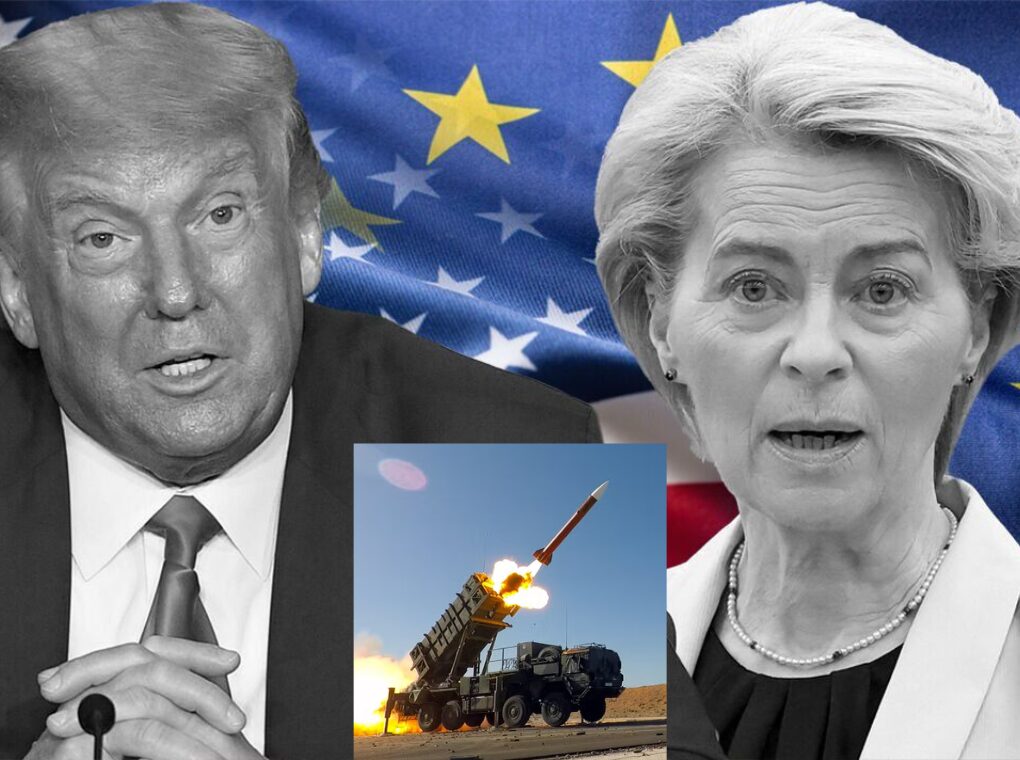
In a significant development highlighting growing strains within the transatlantic alliance, Poland has declined a United States request to deploy one of its Patriot missile defense systems to the Middle East, choosing instead to prioritize national and NATO eastern flank security amid rising tensions with Russia.
Poland’s Defense Minister Władysław Kosiniak-Kamysz made it clear that Warsaw will not relocate its critical air defense assets, even as the US seeks broader allied support in countering escalating threats linked to Iran.
US Request Amid Intensifying Iran Conflict
According to reports, the United States informally approached Poland about temporarily transferring one of its Patriot air defense batteries—along with advanced PAC-3 MSE interceptor missiles—to the Middle East. The request comes as US and allied forces face increasing missile and drone threats amid heightened confrontation with Iran.
However, Polish officials emphasized that no formal request was submitted and that Washington did not exert pressure on Warsaw. Despite this, the outreach reflects growing strain on US and allied air defense resources as the conflict intensifies.
In a firm public response, Kosiniak-Kamysz stated that Poland’s Patriot systems are indispensable for safeguarding its own airspace and NATO’s eastern borders. He underscored that there are no plans to redeploy these systems outside the country.
Poland Prioritizes NATO’s Eastern Flank
Poland currently operates two Patriot missile batteries acquired from the United States under the Wisła air defense program. These systems reached full operational capability only recently and are considered central to Poland’s defense strategy.
Given its geographic proximity to both Russia and Belarus, and the ongoing war in neighboring Ukraine, Warsaw views any reduction in its air defense capability as a significant risk. The decision to retain the systems reflects Poland’s broader security doctrine: prioritizing deterrence against potential Russian aggression over involvement in distant conflicts.
Prime Minister Donald Tusk has consistently emphasized that Poland’s primary obligation lies in securing NATO territory, particularly along its vulnerable eastern flank.
Growing Pressure on NATO Allies
The development comes at a time when the United States is urging its NATO allies to take on a greater share of global security responsibilities. US Secretary of State Marco Rubio recently voiced frustration over what Washington perceives as uneven burden-sharing among allies.
Rubio specifically criticized European leaders who have downplayed the importance of the ongoing crisis in the Strait of Hormuz, a vital global energy chokepoint through which nearly 20% of the world’s oil supply passes. Iranian actions in the region have disrupted shipping routes and triggered volatility in global energy markets.
In pointed remarks, Rubio argued that while the US has contributed heavily to conflicts such as Ukraine, its allies have been less responsive when American strategic interests are at stake. He called on both European and Asian partners to step up efforts to secure key global trade routes and contribute more actively to crisis management.
Strategic Implications for Global Security
Poland’s refusal signals a broader hesitation among European nations to become directly entangled in Middle Eastern conflicts, particularly at a time when the war in Ukraine continues to demand attention and resources.
Security experts suggest that the US request itself underscores a deeper issue: the depletion of Patriot missile stockpiles due to sustained usage in multiple theaters. With rising threats from advanced missile and drone technologies, demand for air defense systems has surged globally.
Earlier this month, Polish officials had already warned that escalating tensions involving Iran could delay US defense deliveries to Europe, including additional Patriot systems, HIMARS rocket launchers, and F-35 fighter jets that Warsaw has on order.
NATO Unity Under Strain
The situation also reflects underlying tensions within NATO, as differing threat perceptions shape national priorities. While the US focuses on the Middle East and securing global energy routes, countries like Poland remain primarily concerned with regional security challenges posed by Russia.
This divergence has reignited debates about alliance cohesion, burden-sharing, and the evolving nature of collective defense in a multipolar world.
Historical Context: Ukraine and Security Commitments
Rubio’s remarks have also sparked renewed discussion about past security assurances, particularly the Budapest Memorandum on Security Assurances. Signed in 1994, the agreement saw Ukraine relinquish its nuclear arsenal in exchange for assurances from the US, UK, and Russia to respect its sovereignty.
However, the memorandum did not include binding military commitments, a limitation that has become increasingly evident since Russia’s actions in Ukraine.
Poland’s decision to reject the US request highlights the complex balancing act facing NATO allies as they navigate overlapping security crises. While Washington pushes for greater global engagement, European nations like Poland are doubling down on regional defense priorities.
As tensions in both Eastern Europe and the Middle East continue to escalate, the episode underscores a critical question for the alliance: how to maintain unity while addressing divergent strategic interests in an increasingly unstable world.