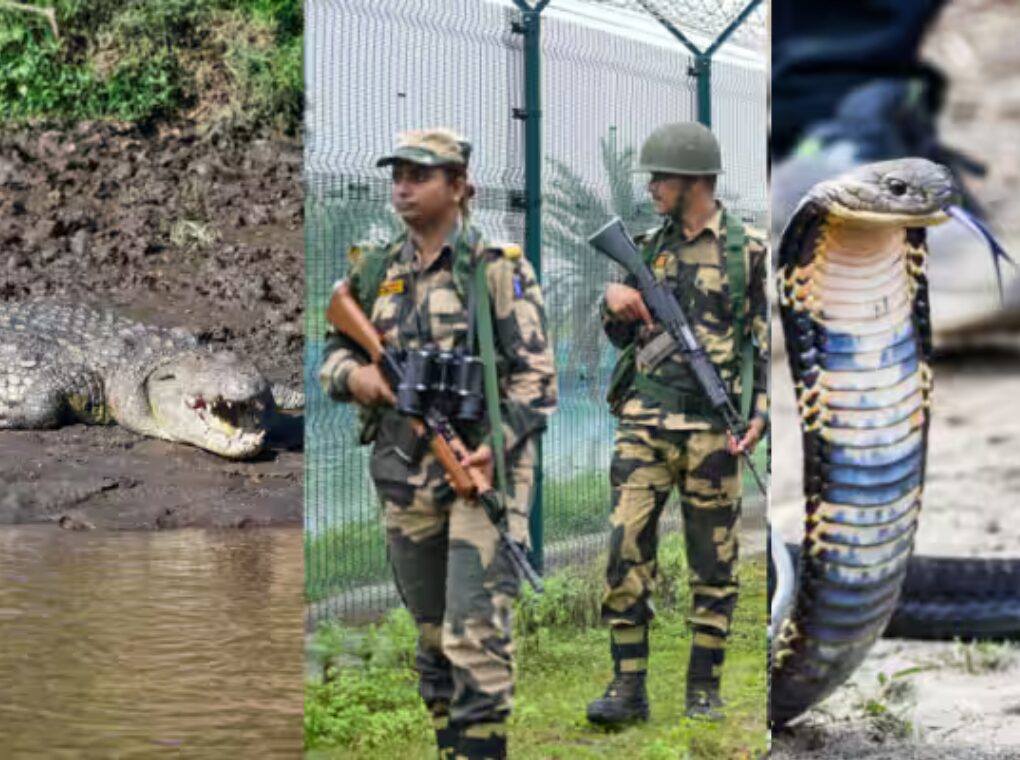
India is exploring an unconventional yet attention-grabbing strategy to strengthen border security—deploying reptiles such as snakes and crocodiles along vulnerable stretches of the India-Bangladesh border. The proposal, currently under feasibility review by the Border Security Force (BSF), is aimed at curbing illegal infiltration and cross-border crime in areas where traditional fencing is not possible.
Why Has the Proposal Emerged?
According to internal communications cited in multiple reports, the idea aligns with directives issued by Union Home Minister Amit Shah. BSF field units have been instructed to assess whether natural deterrents like reptiles can be deployed in riverine and marshy regions that remain difficult to secure through conventional infrastructure.
India shares a vast and complex border with Bangladesh, stretching nearly 5,000 kilometers. A significant portion of this boundary runs through challenging terrain, including rivers, floodplains, dense vegetation, and swampy areas. While fencing has been completed across most sections, several stretches—particularly riverine zones—remain unfenced due to geographical and environmental constraints.
These gaps have long been considered vulnerable points for illegal migration, smuggling, and other cross-border activities.
Focus on Riverine and Marshy Zones
The proposed strategy specifically targets areas where physical barriers cannot be constructed. In such regions, natural obstacles like water bodies and dense mangroves already act as partial deterrents. The idea is to enhance these natural defenses by introducing reptiles that could discourage unauthorized crossings.
The Sundarbans region, which spans parts of India and Bangladesh, is one such area under consideration. Known for its dense mangrove forests and difficult terrain, the region is already home to crocodiles and various snake species. Security agencies believe that leveraging such natural conditions could add an extra layer of deterrence.
Current Status: Only a Feasibility Study
It is important to note that the proposal is still at a preliminary stage. BSF officials have clarified that no decision has been made regarding actual deployment. Instead, field units have been tasked with conducting ground-level assessments to evaluate operational viability.
Authorities are examining several critical factors, including:
>Environmental impact
>Safety of local populations
>Effectiveness as a deterrent
>Logistical and ethical concerns
Officials have also been asked to identify specific river stretches where such a strategy could be tested, if approved.
Challenges and Concerns
While the idea may seem innovative, it comes with significant challenges. One of the primary concerns is the potential risk to civilians living near border areas. Many communities reside along riverbanks and depend on these waters for fishing, agriculture, and daily activities.
Introducing or encouraging the presence of dangerous reptiles could pose unintended risks to these populations.
Additionally, environmental experts may raise questions about disturbing local ecosystems. The Sundarbans, for instance, is a sensitive ecological zone and a UNESCO World Heritage site. Any intervention involving wildlife would require careful consideration and regulatory approvals.
There are also operational uncertainties. It remains unclear how effective reptiles would be as a controlled deterrent, given their unpredictable nature and inability to be “managed” like conventional security measures.
Broader Border Security Strategy
The move is part of India’s broader effort to modernize border management. According to the Ministry of Home Affairs’ 2024–25 report, over 2,950 kilometers of the sanctioned fencing along the Bangladesh border has already been completed. The remaining sections are expected to be secured through a combination of technology and innovative solutions.
These include:
>Smart fencing systems
>Surveillance drones
>Floodlighting
>Advanced sensors
The exploration of natural deterrents adds a new dimension to this multi-layered security approach.
India’s consideration of deploying snakes and crocodiles along its border with Bangladesh reflects the growing complexity of border management in challenging terrains. While the idea is still under study, it highlights the government’s willingness to explore unconventional solutions to long-standing security issues.
Whether this strategy will move beyond the planning stage remains uncertain. For now, the focus remains on evaluating its feasibility, balancing security needs with environmental and humanitarian considerations.