
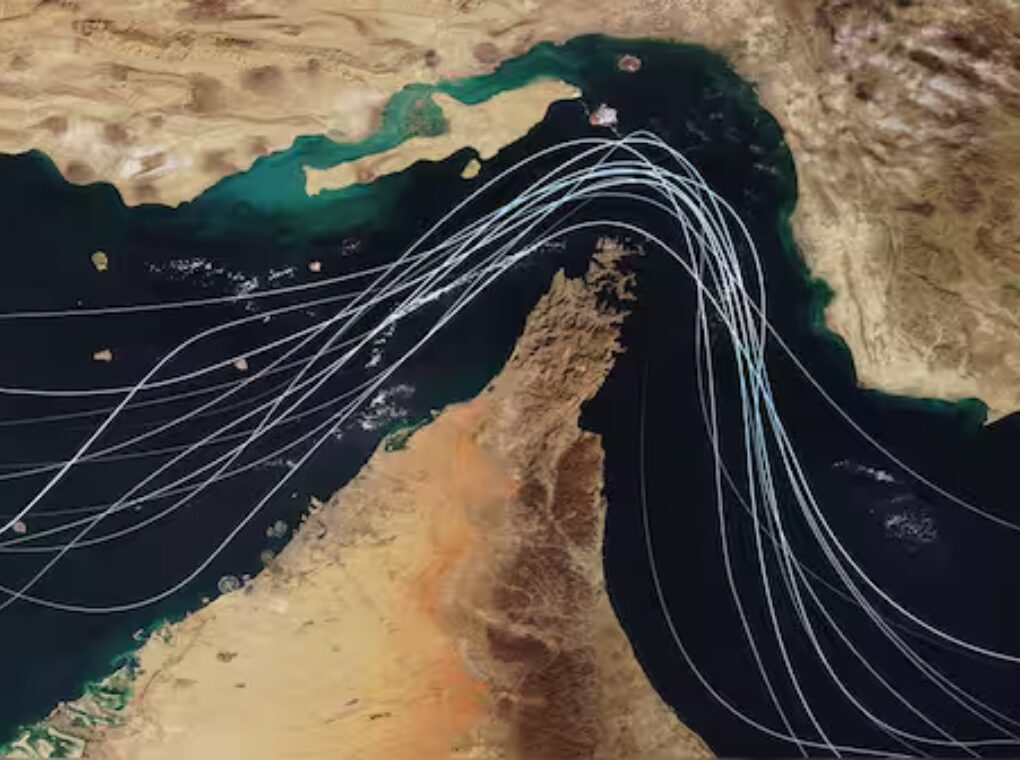
The ongoing Middle East crisis has taken a dangerous turn as Iran reportedly struggles to locate and remove sea mines it deployed in the strategically critical Strait of Hormuz. According to US officials cited by The New York Times, Tehran’s inability to track these explosives is preventing the full reopening of one of the world’s most vital oil transit routes.
A Self-Inflicted Maritime Crisis
The Strait of Hormuz, which connects the Persian Gulf to the Gulf of Oman, handles nearly 20–25% of global oil shipments. Its partial closure in recent weeks has already triggered a surge in global energy prices, raising concerns of a prolonged economic shock worldwide.
Iran reportedly laid the mines hastily using small boats following joint military actions by the United States and Israel during escalating tensions over Tehran’s nuclear program. However, US intelligence now suggests that many of these mines were deployed “erratically” and may not have been properly recorded.
Officials believe that some of the explosives may have drifted due to water currents, further complicating efforts to locate them. This has created a serious navigational hazard, forcing most commercial shipping to halt or reroute.
US Military Begins Mine-Clearing Preparations
In response to the crisis, US naval forces have begun preliminary operations to secure the waterway. Two guided-missile destroyers have been deployed to “set conditions” for potential mine-clearing missions, although officials acknowledge that fully demining the region could take considerable time.
The situation is further complicated by the extensive damage inflicted on Iran’s naval capabilities during recent hostilities, limiting Tehran’s own ability to conduct demining operations efficiently.
Pressure Mounts on Donald Trump
The reopening of the Strait of Hormuz has become a central demand for the United States in ongoing ceasefire negotiations. President Donald Trump has reportedly insisted on the immediate and complete restoration of maritime traffic through the chokepoint as a condition for sustaining the fragile truce.
The economic stakes are high. The disruption of oil flows has already contributed to rising fuel prices and inflation, placing political pressure on the US administration domestically while also threatening global economic stability.
High-Stakes Talks in Islamabad
Diplomatic efforts are underway in Islamabad, where US and Iranian negotiators are engaged in crucial talks aimed at finalizing a ceasefire agreement. Pakistan is playing a key mediating role in attempting to bridge differences between the two adversaries.
However, the continued closure of the strait remains a major stumbling block. While Iran has indicated willingness to reopen the passage, it has also cited “technical limitations” — widely interpreted as its inability to safely clear the mines — as a key obstacle.
Maritime Traffic Severely Disrupted
Shipping through the Strait of Hormuz has nearly come to a standstill. Iran has allowed limited passage for vessels from friendly nations, reportedly under strict conditions and toll arrangements. However, most international shipping companies have avoided the route due to the high risk of mine collisions, as well as threats from Iranian drones and missile systems.
Iran’s Islamic Revolutionary Guard Corps had earlier warned that unauthorized vessels could face severe consequences, including potential attacks.
Global Economic Fallout Looms
Economists warn that the full impact of the crisis is yet to be realized. With oil prices already soaring, the ripple effects are expected to drive up the cost of goods worldwide, exacerbating inflation and increasing the risk of global poverty.
Countries heavily dependent on energy imports — including India, which sources a significant portion of its oil through this route — are particularly vulnerable to prolonged disruptions.
What next?
The inability to secure and reopen the Strait of Hormuz underscores the unpredictable nature of the current conflict. As negotiations continue, both military and diplomatic efforts will be critical in determining whether the situation stabilizes or escalates further.
For now, the world watches closely as a combination of misplaced sea mines and geopolitical tensions threatens one of the most crucial arteries of global trade.