The fragile balance in the Middle East is rapidly unraveling as Iran-backed Houthi forces in Yemen have reportedly begun initial attempts to disrupt shipping through the strategically vital Bab al-Mandab Strait. The development follows the collapse of high-stakes US-Iran negotiations held in Pakistan, raising fears of a wider maritime conflict and a potential global economic shock.
According to regional security assessments, the Houthis have escalated their activities in the Red Sea by targeting shipping lanes and increasing drone and missile operations. While a full blockade has not yet been confirmed, experts believe these actions signal the early stages of a coordinated strategy to pressure global trade routes.
Strategic Fallout After Failed US-Iran Talks
The latest escalation comes in the aftermath of unsuccessful diplomatic efforts between Washington and Tehran. The talks, which were seen as a critical opportunity to de-escalate tensions, ended without any breakthrough, prompting a shift from diplomacy to military posturing.
In response, the United States has reportedly begun preparations for a naval containment strategy aimed at securing key maritime routes. Though not officially labeled as a full blockade, increased naval deployments in the region indicate a clear intent to deter further disruptions.
Iran, on the other hand, appears to be leveraging its regional alliances rather than engaging in direct confrontation. The Houthis, long considered a strategic proxy for Tehran, are now playing a central role in this unfolding crisis.
Why Bab al-Mandab Strait Matters
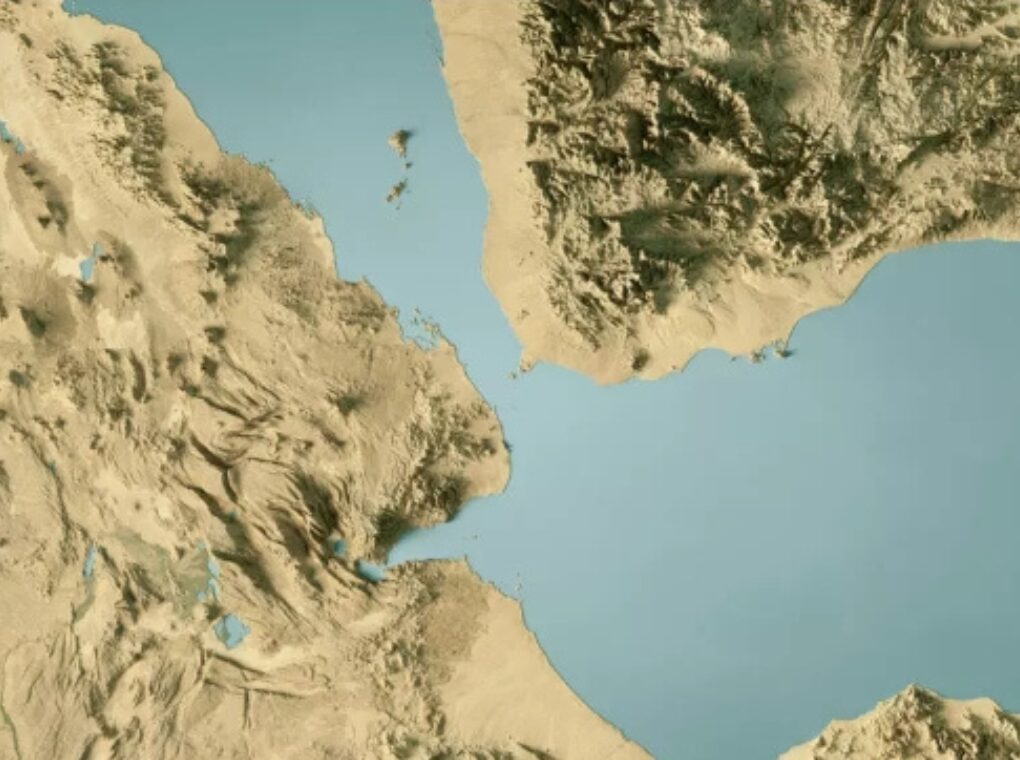
The Bab al-Mandab Strait is one of the most critical chokepoints in global maritime trade. Connecting the Red Sea to the Gulf of Aden, it serves as a gateway for goods traveling between Asia, Europe, and beyond.
Approximately 15 percent of global trade passes through this narrow corridor, including significant volumes of oil and gas destined for European markets. Any disruption here forces ships to reroute around the southern tip of Africa, via the Cape of Good Hope, adding weeks to transit times and significantly increasing transportation costs.
The strait’s importance becomes even more pronounced when viewed alongside the Strait of Hormuz, another critical waterway where tensions have already disrupted energy flows. Together, these chokepoints form the backbone of global energy logistics.
Houthis’ Strategic Position in Yemen
The Houthis’ geographic location in Yemen provides them with a unique advantage. Positioned along the southern edge of the Red Sea, they are ideally situated to influence — or even temporarily halt — maritime traffic through Bab al-Mandab.
Recent incidents involving drone launches and attempted strikes on vessels suggest a shift from symbolic attacks to more calculated operational tactics. Analysts believe these moves are designed to test international responses while gradually increasing pressure on commercial shipping.
Despite their capabilities, sustaining a long-term blockade would be significantly more challenging. It would require consistent military resources and expose the group to potential retaliatory strikes from US-led forces.
Global Trade and Economic Implications
Even the threat of disruption has already had a measurable impact on global shipping patterns. Several major shipping companies have begun reconsidering routes through the Red Sea, with some opting for longer alternatives to avoid risk.
If the situation escalates further, the consequences could be severe:
Oil prices could surge, impacting global fuel markets
Supply chains could face delays, affecting industries worldwide
Inflation could rise, particularly in energy-dependent economies
Europe is expected to be among the hardest hit, given its reliance on energy imports passing through the Red Sea. Additionally, developing regions, particularly in Africa, could face food security challenges as shipping costs rise and deliveries slow.
US Naval Response and Rising Military Tensions
The United States has responded by increasing its naval presence in the region, signaling a readiness to protect critical shipping lanes. Military analysts suggest that Washington is attempting to prevent a repeat of disruptions seen in the Strait of Hormuz.
However, the situation remains complex. Iran’s strategy relies heavily on asymmetric warfare, using allied groups like the Houthis to exert influence without direct engagement. This approach complicates traditional military responses and increases the risk of prolonged instability.
A New Phase in Maritime Conflict
The unfolding situation in Bab al-Mandab marks a significant shift in the nature of modern conflict. Rather than relying solely on conventional warfare, state and non-state actors are increasingly targeting economic chokepoints to exert pressure.
The combination of failed diplomacy, proxy involvement, and strategic geography has created a volatile environment where even limited disruptions can have global repercussions.
As tensions continue to rise, the Bab al-Mandab Strait has once again emerged as a focal point of geopolitical rivalry. The involvement of Houthi forces, coupled with the breakdown of US-Iran talks, has heightened fears of a broader crisis that could extend far beyond the Middle East.
While a full-scale blockade has yet to materialize, the current trajectory suggests that the risk is growing. For now, the world watches closely as one of its most vital trade routes hangs in the balance — a stark reminder that in today’s interconnected economy, even a narrow waterway can shape global stability.