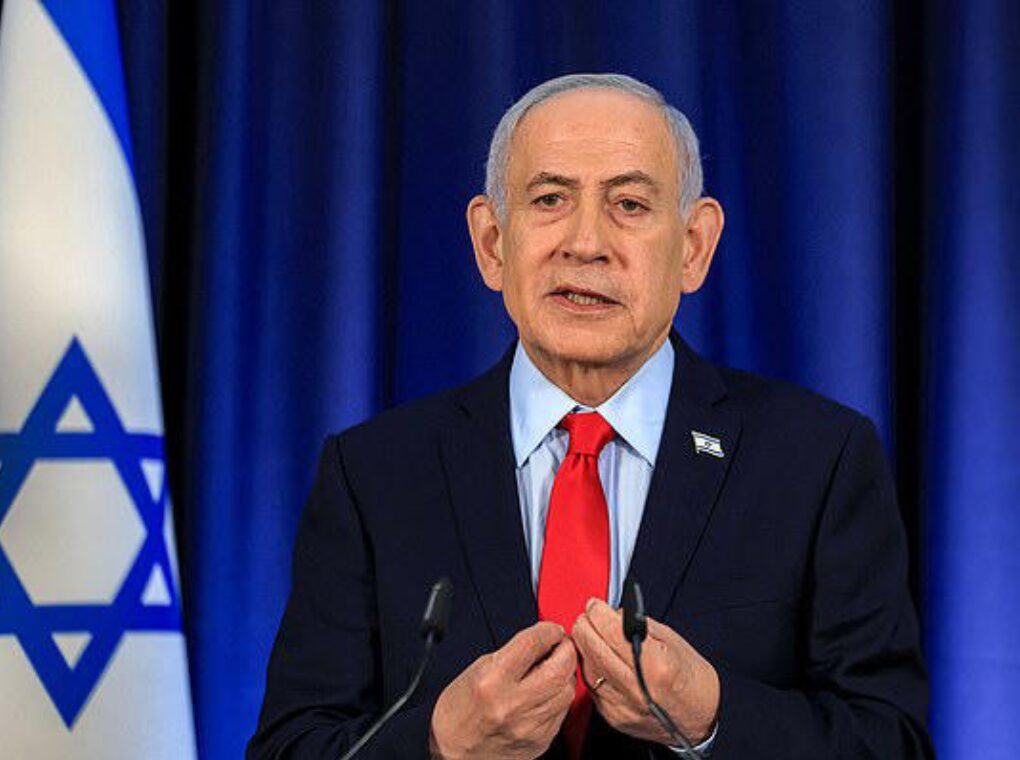
Tensions in the Middle East have surged sharply after Benjamin Netanyahu disclosed that JD Vance personally briefed him following the dramatic collapse of negotiations between the United States and Iran. The failed talks, held in Islamabad, have raised fears that a fragile ceasefire could spiral into a broader regional conflict.
According to Netanyahu, the call from Vance came immediately after discussions broke down, underscoring the urgency and gravity of the situation. The Israeli leader described the breakdown as an “explosion in negotiations,” placing the blame squarely on Tehran’s refusal to meet key US demands.
Trump’s Naval Blockade Strategy Escalates Pressure
The developments come just hours before Donald Trump is set to implement a naval blockade of the Strait of Hormuz—one of the world’s most critical oil shipping routes. The move is part of a broader US strategy aimed at forcing Iran back to the negotiating table.
Trump’s administration has reportedly warned that failure of the blockade to achieve its objectives could lead to renewed military strikes on Iranian targets. This signals a significant escalation in what has already become a high-stakes geopolitical confrontation.
Why the Talks Failed
Netanyahu revealed that the negotiations collapsed primarily due to Iran’s unwillingness to:
Reopen key access points in the Strait of Hormuz
Commit to halting uranium enrichment
Agree on terms related to frozen Iranian financial assets
The US delegation, led by Vice President Vance, had pushed for strict conditions, including a complete freeze on uranium enrichment and the transfer of Iran’s uranium stockpile. However, Tehran reportedly rejected these demands after nearly 21 hours of intense discussions.
The disagreement over how much frozen Iranian funds should be released in exchange for nuclear concessions also proved to be a major sticking point.
Fragile Ceasefire at Risk
A two-week ceasefire brokered by Trump now hangs in the balance. Netanyahu warned that the truce is extremely unstable, stating that “the ceasefire is like a coin—it can flip very quickly.”
This uncertainty has heightened concerns among global markets and policymakers, particularly given the strategic importance of the Strait of Hormuz, through which a significant portion of the world’s oil supply passes.
Iran’s Asymmetric Naval Threat
Despite suffering heavy losses to its conventional navy in recent US strikes, Iran retains significant capabilities to disrupt shipping in the region. The country’s paramilitary force, the Islamic Revolutionary Guard Corps (IRGC), operates a fleet of fast attack boats, underwater drones, and naval mines.
These assets are specifically designed for asymmetric warfare, allowing Iran to challenge larger and more advanced naval forces. Analysts believe that while Iran’s traditional navy has been weakened, the IRGC’s agile and decentralized operations still pose a serious threat to commercial shipping.
US-Israel Coordination at “Historic Levels”
Netanyahu emphasized that coordination between the US and Israel has reached unprecedented levels during this crisis. He dismissed any speculation of a rift between the two allies, stating that communication with Washington has been constant and highly transparent.
“This is coordination like never before,” Netanyahu said, highlighting daily interactions with Trump and his administration.
Global Implications
The collapse of US-Iran negotiations and the impending blockade have far-reaching implications:
Energy Markets: Any disruption in the Strait of Hormuz could trigger a sharp spike in global oil prices.
Regional Stability: Escalation could draw in other Middle Eastern powers, increasing the risk of a wider conflict.
Global Trade: Shipping routes through the Gulf may face delays, higher insurance costs, and potential security risks.
As the situation unfolds, the world watches closely to see whether diplomatic efforts can be revived or if the region is heading toward a dangerous military escalation.