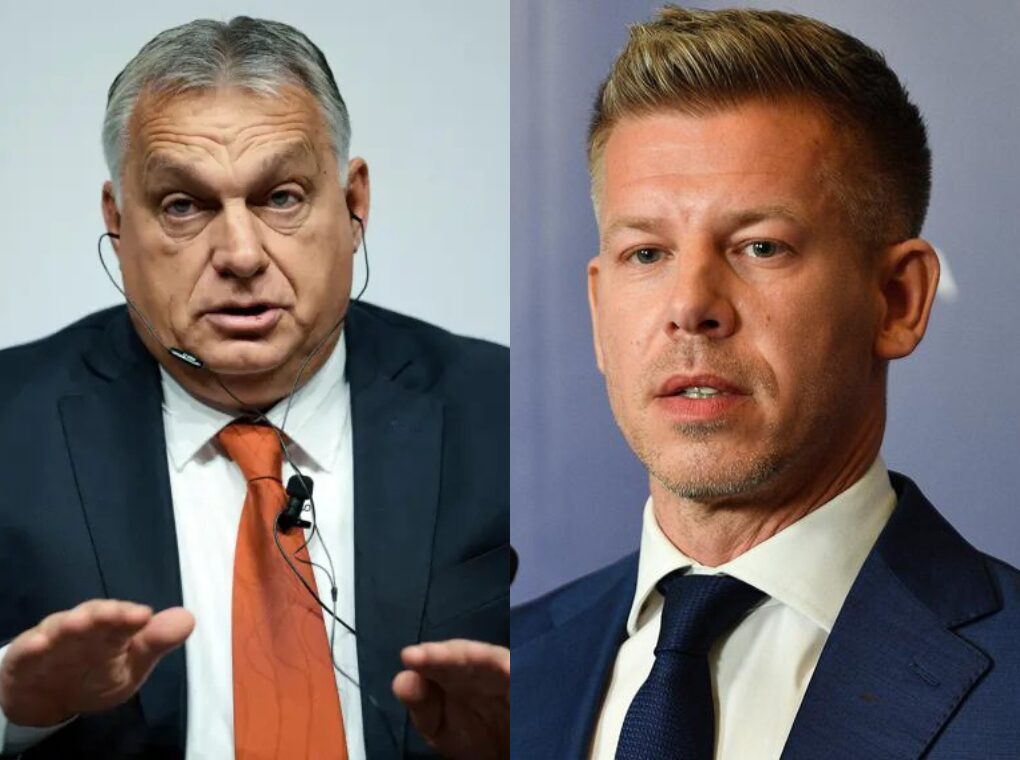
After more than 16 years at the helm, Viktor Orbán is no longer Hungary’s Prime Minister, marking a significant political shift in Central Europe. Rising in his place is Péter Magyar, leader of the Tisza Party, whose victory has sparked optimism across sections of Europe. Many believe his leadership could reset Hungary’s strained ties with both NATO and the European Union.
However, the bigger question remains: will this leadership change truly alter Hungary’s geopolitical stance—especially regarding Russia and Ukraine?
Europe Reacts: A Blow to Russia or Symbolic Shift?
Several Western analysts and liberal media outlets have framed Orbán’s defeat as a setback for Vladimir Putin and a strategic win for Volodymyr Zelenskyy. Orbán was often criticized within Europe for his relatively neutral stance on the Russia-Ukraine war and his resistance to EU policies on migration and sanctions.
Yet, experts caution that such interpretations may oversimplify Hungary’s foreign policy. The country’s approach has long been shaped by national interests rather than personal alliances.
Hungary–Ukraine Tensions: More Than Just Personal Rivalry
Relations between Orbán and Zelenskyy had deteriorated significantly in recent years. The tensions escalated beyond diplomatic disagreements into personal attacks and alleged threats. However, the friction between Budapest and Kyiv was rooted in deeper structural issues.
Contrary to popular belief, Hungary was not entirely opposed to supporting Ukraine. In fact, a substantial portion of military and humanitarian supplies passed through Hungarian territory. The real conflict centered on two critical concerns:
1. Energy Security and Russian Gas
Hungary has historically depended on Russian energy supplies, particularly via the Urengoy–Pomary–Uzhgorod pipeline. Following disruptions linked to the war, including Ukraine’s actions in the Kursk region, this supply chain was significantly impacted.
Additionally, threats to the Druzhba pipeline further strained relations. While Kyiv aimed to halt Russian energy transit to Europe, Hungary opposed such moves, citing economic stability and energy security concerns.
This situation mirrors global energy chokepoints like the Strait of Hormuz, where regional conflicts disproportionately affect dependent nations. For Hungary, cheap and stable energy remains a non-negotiable priority.
2. Hungarian Minorities in Transcarpathia
The second major issue lies in Transcarpathia, a region in western Ukraine with a significant ethnic Hungarian population. Historically part of the Austro-Hungarian Empire, this area remains culturally sensitive for Hungary.
Policies of Ukrainization, including restrictions on minority language education, have been a longstanding concern. Orbán consistently advocated for the rights of these communities, framing it as a matter of cultural identity rather than politics.
Interestingly, Péter Magyar has already indicated continuity on this issue, signaling that Hungary’s stance may not shift dramatically under his leadership.
EU Relations: Reform or Resistance?
On the European front, expectations of a major policy shift may also be overstated. While Magyar has hinted at lifting Hungary’s veto on certain EU financial mechanisms for Ukraine, he has simultaneously clarified that Hungary may not directly contribute financially.
Meanwhile, European Union has wasted no time in testing the new leadership. Shortly after the election results, Brussels reportedly presented Hungary with a list of 27 conditions tied to unlocking €35 billion in subsidies. These include:
Supporting a €90 billion EU loan package
Relaxing asylum and migration policies
Aligning more closely with EU foreign policy
This puts Magyar in a delicate position. Any perceived compromise on sovereignty—especially on migration—could alienate his core voter base, which largely overlaps with Orbán’s conservative support.
Domestic Realities: Continuity Over Change?
Despite being seen as a fresh face, Magyar represents a similar political constituency. Many Hungarian voters view him as a younger, more moderate version of Orbán rather than a radical departure.
Hungary’s foreign policy is shaped by three enduring priorities:
Affordable and stable energy supply
Protection of Hungarian minorities abroad
Strategic alignment within the EU framework
These structural factors limit how much any leader—regardless of political affiliation—can shift the country’s stance.
What This Means for Russia and Ukraine?
The narrative that Orbán’s exit weakens Russia may not hold up under scrutiny. Orbán was never a direct ally of Moscow but positioned himself as a pragmatic intermediary.
Similarly, Hungary under Magyar is unlikely to become a staunchly pro-Ukraine military supporter. The new Prime Minister has already made it clear that Hungary will not send weapons to Ukraine.
For Budapest, the war remains a conflict it does not want to be drawn into. Public sentiment strongly opposes deeper involvement, with fears of escalation and regional instability.
The Bigger Picture
Ultimately, Hungary’s political transition reflects a change in leadership, not necessarily in policy direction. While Péter Magyar may adopt a more diplomatic tone with Brussels, the core pillars of Hungarian foreign policy are expected to remain intact.
For both Vladimir Putin and Volodymyr Zelenskyy, the implications are limited. Hungary is likely to continue balancing its national interests while avoiding deeper entanglement in the conflict.
In the end, the idea that this election is a decisive geopolitical victory for one side may be more narrative than reality.