
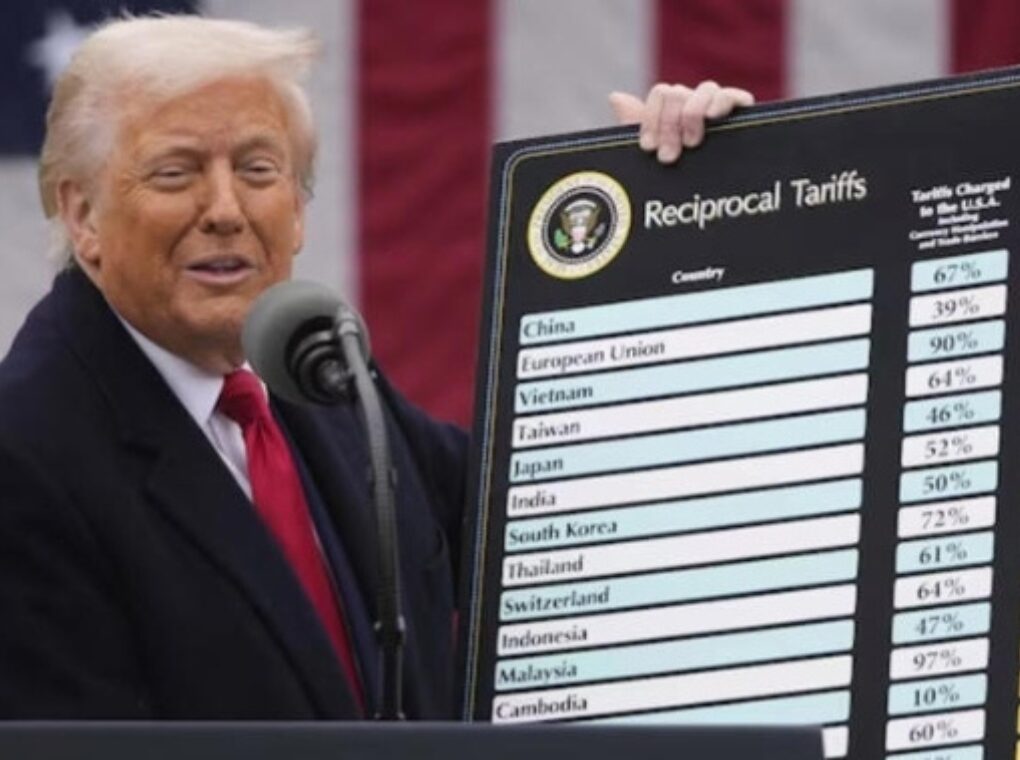
The United States manufacturing sector is witnessing a selective but notable resurgence under the aggressive tariff policies introduced by Donald Trump. While the broader industry continues to grapple with structural challenges, several key sectors—particularly steel, appliances, and domestically anchored producers—are reporting gains in output, investment, and competitiveness.
This emerging trend reflects a complex reality: tariffs have created both winners and losers. Yet, for firms aligned with domestic production and supply chain resilience, the policies are proving transformative.
Steel Industry Leads the Comeback
Among all sectors, the steel industry has emerged as the clearest beneficiary of the tariff regime. Data from the American Iron and Steel Institute shows that steel imports dropped by 12.6% in 2025, while domestic production increased by approximately 2.5 million tons.
This shift has triggered more than $25 billion in fresh investments across the country. New steel plants and expansions are underway in states like Texas, Arkansas, West Virginia, and South Carolina—regions that had long suffered from deindustrialization.
Major players such as Nucor and Steel Dynamics are at the forefront of this expansion. These companies are not only increasing capacity but also creating high-paying jobs, with median wages often exceeding $100,000 annually.
Similarly, Century Aluminum has committed $50 million to revive a South Carolina facility, restoring production to peak levels last seen in 2015. Industry leaders have described the tariffs as a “game changer,” fundamentally reshaping the competitive landscape by reducing reliance on imports.
Appliance Makers and Domestic Producers Gain Momentum
Beyond steel, American appliance manufacturers are also reaping benefits. Whirlpool Corporation has been particularly vocal in its support for the tariff regime. The company credits the policies with enabling a “renaissance in U.S. manufacturing” by curbing unfair foreign competition.
CEO Marc Bitzer has emphasized that tariffs provide a critical opportunity to strengthen domestic production. Government officials, including U.S. Trade Representative Jamieson Greer, have reinforced this narrative through factory visits and public endorsements of American manufacturers.
Other sectors—including drones, solar energy systems, and heavy equipment—are also benefiting. Firms with minimal dependence on imported components have gained a competitive edge, as tariffs disproportionately impact companies reliant on foreign supply chains.
Foreign Investment Driven by Tariff Pressure
Interestingly, tariffs are not only reshaping domestic firms but also influencing foreign companies to expand operations within the United States. Automakers like Toyota, Nissan, and Honda have announced plans to boost U.S. production capacity, in some cases even exporting vehicles manufactured on American soil.
Pharmaceutical giants are following suit. Johnson & Johnson and AbbVie have pledged billions of dollars toward new U.S. manufacturing facilities. Meanwhile, Abbott Laboratories has committed $500 million to expand plants in Illinois and Texas.
This influx of investment reflects a central pillar of Trump’s strategy: impose tariffs on imports while incentivizing companies—both domestic and foreign—to build and expand within the United States.
Supply Chain Realignment and Reshoring
Tariffs have also accelerated broader supply chain shifts. Imports from China have declined significantly, approaching levels last seen in the early 2000s. Companies are increasingly adopting “friend-shoring” strategies, redirecting supply chains toward allied nations such as Mexico or bringing production back home.
In the metals sector, new aluminum and copper smelting projects are underway, including plans for the first U.S. aluminum smelter in decades. The administration has highlighted projections of up to 4 million tons of new steelmaking capacity coming online in the near future.
Economic indicators offer cautious optimism. The ISM Manufacturing PMI entered expansion territory in early 2026, signaling growth in production and new orders. Additionally, manufacturing productivity recorded its strongest annual increase in nearly two decades in 2025.
Challenges Persist Across the Sector
Despite these gains, the overall picture remains mixed. Not all manufacturers have benefited from tariffs. Industries heavily reliant on imported components—such as automotive parts, furniture, and downstream manufacturing—have faced rising input costs and margin pressures.
As a result, overall manufacturing employment experienced declines in 2025, with estimates suggesting net job losses ranging from tens of thousands to nearly 100,000. Critics argue that while primary industries like steel have gained, secondary industries are absorbing the costs.
Economic analyses also suggest that while tariffs have increased federal revenue, their broader impact on GDP remains limited or uneven. Retaliatory measures from trading partners and higher consumer prices are cited as potential downsides.
A Long-Term Bet on American Industry
Supporters of the tariff strategy contend that it is too early to assess its full impact. Manufacturing investments typically take years to materialize into operational facilities and sustained employment.
The Trump administration maintains that tariffs, combined with pro-growth policies, are laying the groundwork for long-term industrial revival. Early signs—such as rising job openings and periodic monthly job gains—are seen as indicators of momentum.
Companies thriving under the current environment share common characteristics: strong domestic production capabilities, flexible supply chains, and alignment with protected sectors. For these firms, tariffs are not merely a protective measure but a catalyst for innovation and expansion.
The resurgence of select U.S. manufacturing firms under Trump’s tariffs highlights a broader economic transition. While challenges remain, particularly for import-dependent industries, the policies have undeniably reshaped the industrial landscape.
For sectors like steel and appliances, the benefits are clear—rising output, renewed investment, and increased global competitiveness. For others, the adjustment continues.
Ultimately, the success of this tariff-driven strategy will be measured over time. As new factories come online and supply chains stabilize, the long-term impact on American manufacturing—and its role in the global economy—will become clearer.