
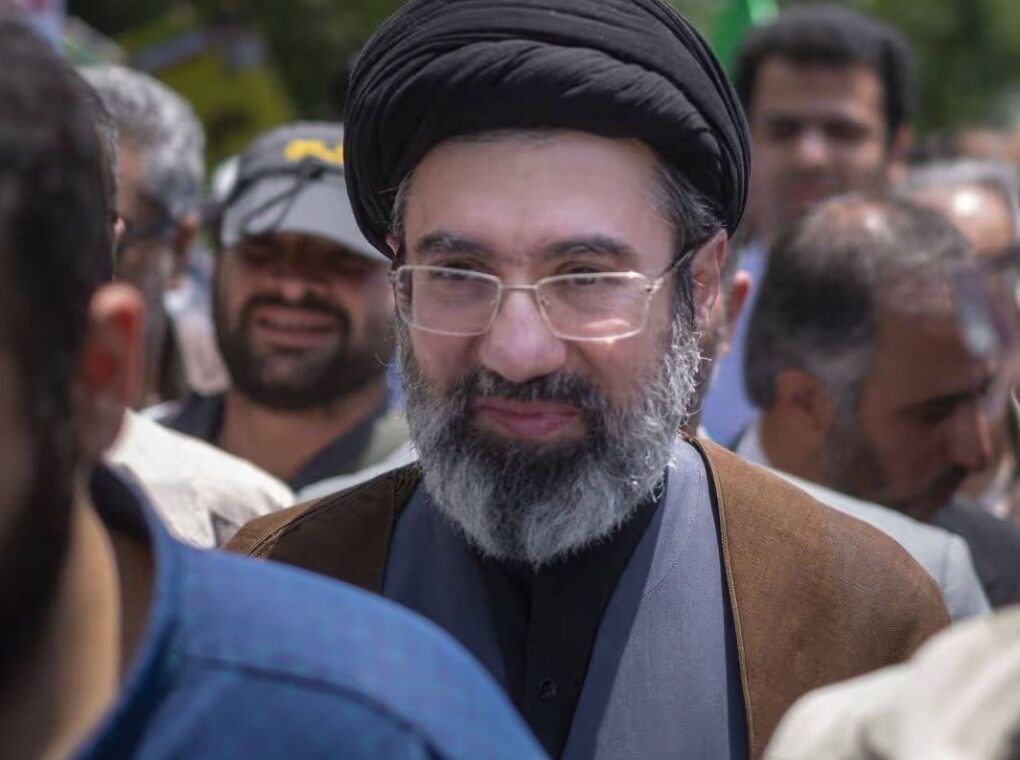
A reported leak of a confidential letter addressed to Mojtaba Khamenei has sparked intense debate over whether Iran’s leadership is facing internal divisions at a critical geopolitical moment. The document, allegedly signed by top Iranian officials, points to growing disagreements within Tehran over whether to pursue negotiations with the United States or continue a confrontational approach.
A Secret Letter That Shook Tehran
According to multiple reports, the classified letter warned of Iran’s worsening economic crisis and argued that the country may have little choice but to engage in talks with Washington—particularly over its nuclear program. The document reportedly bore the signatures of prominent figures such as Mohammad Bagher Ghalibaf, Masoud Pezeshkian, and Abbas Araghchi.
However, the authenticity of the letter has immediately come under scrutiny. Some officials have denied signing it, while others have distanced themselves from its contents. Ali Bagheri Kani, a key figure in Iran’s foreign policy establishment, reportedly rejected any association and even shared the document with hardliners to underscore his denial.
Despite these denials, the mere circulation of such a letter—originally intended for a highly restricted audience—has fueled speculation that internal disagreements are deeper than publicly acknowledged.
Negotiations vs Resistance: The Core Divide
At the heart of the controversy lies a fundamental policy question: should Iran negotiate with the United States or maintain its long-standing resistance strategy?
The letter reportedly advocates for diplomacy, citing economic strain and strategic limitations. Years of sanctions, coupled with ongoing regional tensions, have put significant pressure on Iran’s economy. This pragmatic camp appears to believe that negotiations, particularly around nuclear issues, are unavoidable.
On the other hand, hardliners argue that engaging with Washington risks undermining Iran’s ideological stance and strategic autonomy. This faction insists on maintaining a firm resistance line, rejecting any compromise that could be perceived as capitulation.
The divide is not entirely new. Iranian politics has long oscillated between pragmatists and hardliners. However, what makes this episode significant is the apparent involvement of high-ranking officials and the timing—amid heightened tensions and fragile diplomatic efforts.
Echoes of 1988: A Historical Parallel
Observers have drawn comparisons between the current situation and the final phase of the Iran-Iraq War. In 1988, senior Iranian officials urged then Supreme Leader Ruhollah Khomeini to accept a ceasefire, warning that the war was unsustainable.
Khomeini ultimately agreed to United Nations Security Council Resolution 598, effectively ending the conflict despite his earlier insistence on continuing the war. Analysts suggest that the current letter may represent a similar moment, where practical realities challenge ideological commitments.
Public Denials and Displays of Unity
In response to the reports, Iran’s leadership has strongly denied any internal rift. Officials have emphasized unity and dismissed claims of factionalism.
Ghalibaf publicly rejected the notion of divisions, asserting that all officials are united under the leadership and committed to defending Iran’s interests. President Pezeshkian echoed this sentiment, calling distinctions like “hardliners” and “moderates” baseless.
Judiciary chief Gholam-Hossein Mohseni-Ejei went further, dismissing external claims of division and criticizing U.S. rhetoric on the issue. These statements appear aimed at projecting stability and discouraging perceptions of internal weakness.
The Nuclear Red Line Controversy
Complicating matters further is a reported “red line” set by Mojtaba Khamenei: Iranian officials were not to discuss nuclear issues with the United States. However, during recent indirect talks, nuclear topics reportedly did come up—triggering backlash from hardline factions.
Figures like Mahmoud Nabavian accused negotiators of making a “strategic mistake” by violating this directive. Other hardline politicians and media outlets have also criticized the negotiating team, framing their actions as a deviation from the leadership’s stance.
This dispute has spilled into public discourse, with pro-establishment media warning against narratives that portray certain officials as favoring compromise over resistance.
Leak Fallout and Political Implications
The leak itself has become a major issue. Iranian authorities have warned that disclosing classified documents could result in severe legal consequences, including lengthy prison sentences. This underscores the sensitivity of the matter and the regime’s concern over maintaining control of internal narratives.
Beyond the immediate controversy, the episode raises broader questions about decision-making within Iran’s political system. If the letter is genuine, it suggests that key figures are willing to challenge prevailing policies—at least behind closed doors.
At the same time, the swift and unified public denials indicate a strong effort to prevent any perception of weakness, especially in the context of ongoing geopolitical tensions.
So, Is Iran Really Divided?
The truth likely lies somewhere in between. While public statements emphasize unity, the reported letter and subsequent reactions suggest that debates within Iran’s leadership are real and potentially intensifying.
Such internal discussions are not unusual in any political system, particularly during periods of crisis. However, in Iran’s case—where power is highly centralized, and dissent is tightly controlled—even subtle differences can carry significant implications.
Whether these differences evolve into a visible split or remain confined behind closed doors will depend on how the situation develops—especially regarding Iran’s economic conditions and its complex relationship with the United States.
The alleged “secret letter” to Mojtaba Khamenei has opened a rare window into the inner workings of Iran’s leadership. It highlights the tension between pragmatism and ideology at a decisive moment for the country.
While Tehran continues to project an image of unity, the underlying debate over negotiation versus resistance may shape Iran’s future trajectory—and its role on the global stage.