
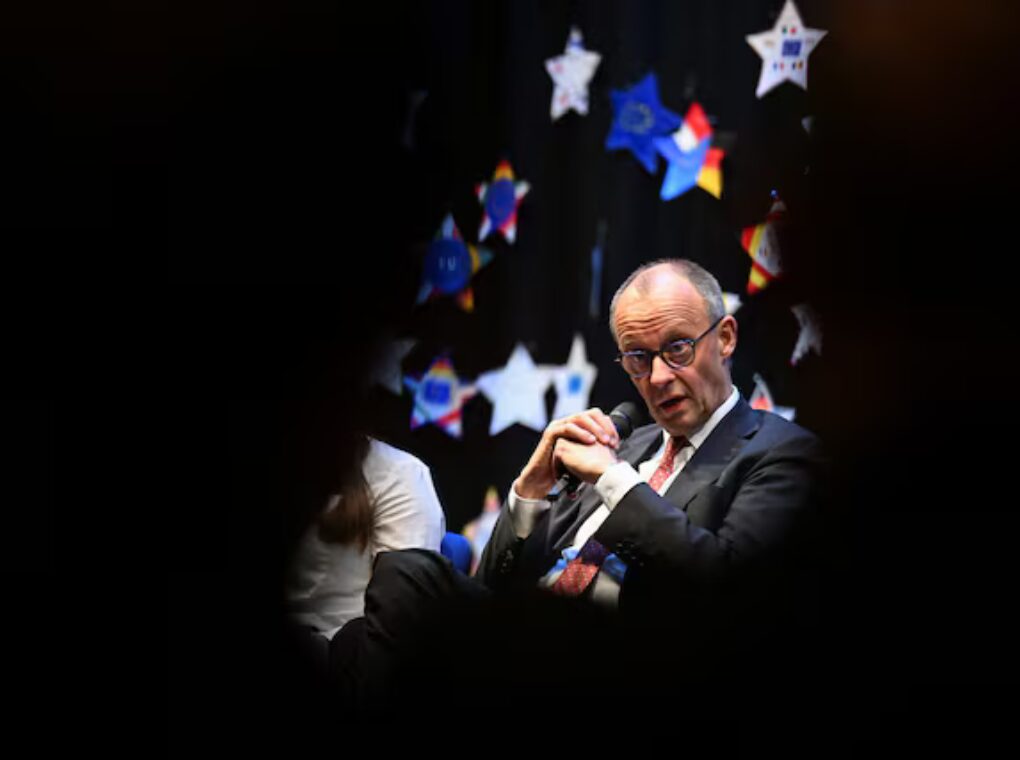
Germany’s Chancellor Friedrich Merz has sparked a fresh geopolitical debate after suggesting that Ukraine may ultimately have to accept territorial losses to Russia as part of a future peace settlement. His remarks, made during a discussion with students in Marsberg on April 27, 2026, reflect a growing sense of realism among some European leaders about how the prolonged conflict might end.
Merz stated that at some point, Ukraine will likely sign a ceasefire followed by a formal peace treaty with Russia. In that context, he acknowledged that “it may be that part of Ukraine’s territory is no longer Ukrainian,” a comment that underscores the entrenched nature of Russian control over significant portions of Ukrainian land.
A Shift Toward Pragmatic Realism
While Merz’s comments may sound controversial, they align with a pragmatic view increasingly discussed behind closed doors in European capitals. Since the outbreak of the Russia-Ukraine War, Russia has consolidated control over Crimea—annexed in 2014—and large parts of eastern and southern Ukraine, including regions like Donetsk, Luhansk, Kherson, and Zaporizhzhia.
Despite continued Ukrainian resistance under President Volodymyr Zelenskyy, battlefield dynamics have largely evolved into a war of attrition. Neither side has achieved a decisive breakthrough, and the cost—both human and economic—continues to mount.
Merz’s remarks suggest that European policymakers are increasingly acknowledging a difficult truth: a complete restoration of Ukraine’s pre-2014 borders may not be achievable through military means alone.
Referendum as Political Legitimacy
One of the more striking aspects of Merz’s statement was his suggestion that any territorial compromise would require democratic legitimacy within Ukraine. He argued that if Zelenskyy were to pursue such a path, he would likely need to hold a national referendum to secure public support.
This reflects the deep sensitivity of the issue within Ukraine. Public opinion has consistently opposed any formal cession of territory, viewing it as a violation of sovereignty and a reward for aggression. However, after years of war, shifting public sentiment—driven by fatigue, economic hardship, and demographic pressures—cannot be ruled out.
EU Membership: A Long Road Ahead
Merz also poured cold water on expectations of Ukraine’s rapid accession to the European Union. He emphasized that Ukraine cannot join the EU while the war is ongoing and described timelines such as 2027 or 2028 as unrealistic.
EU membership requires adherence to the Copenhagen criteria, which include strong democratic institutions, rule of law, anti-corruption measures, and a functioning market economy. For a country at war, meeting these benchmarks presents a formidable challenge.
Instead, Merz hinted at alternative approaches, such as gradual integration or observer status, as interim steps toward eventual membership.
Russia’s Strategic Position
From Moscow’s perspective, statements like Merz’s may reinforce the belief that time is on its side. President Vladimir Putin has consistently maintained that Russia’s objectives include securing territorial gains and limiting Ukraine’s alignment with Western institutions.
Russia currently controls an estimated 18–20% of Ukraine’s territory and has shown little willingness to withdraw without significant concessions. Its strategy has relied on endurance—absorbing sanctions, sustaining military operations, and leveraging its economic ties with non-Western partners.
The longer the conflict continues, the more entrenched these realities become, complicating any future negotiations.
Western Fatigue and Strategic Limits
Merz’s comments also highlight a broader issue: growing fatigue among Ukraine’s Western backers. Since 2022, the United States and European nations have provided billions in military and financial aid to Kyiv. While this support has been crucial in sustaining Ukraine’s defense, it has also strained budgets and political consensus.
European economies continue to grapple with energy costs and inflation, partly linked to the severing of ties with Russian energy supplies. Meanwhile, domestic political pressures are forcing governments to balance international commitments with internal priorities.
In this context, calls for a negotiated settlement—however imperfect—are becoming more frequent.
The Difficult Road to Peace
Any potential peace agreement faces significant hurdles. Ukraine insists on the restoration of its internationally recognized borders, while Russia demands recognition of its annexations and security guarantees that limit Ukraine’s military alignment with the West.
These positions remain far apart, and trust between the two sides is minimal. Even if a ceasefire were achieved, questions about enforcement, security guarantees, and the risk of future conflict would remain unresolved.
A Turning Point in the Narrative?
Merz’s remarks may mark a subtle but important shift in the Western narrative surrounding the war. While official positions still support Ukraine’s sovereignty and territorial integrity, there is increasing acknowledgment that the eventual outcome may involve compromise.
For Ukraine, the challenge lies in balancing national pride and sovereignty with the practical realities of war. For Europe, the question is how to support Ukraine while managing long-term stability and security on the continent.
As the conflict continues, one thing is clear: the path to peace will be complex, contentious, and shaped as much by battlefield realities as by political decisions in Kyiv, Moscow, and beyond.