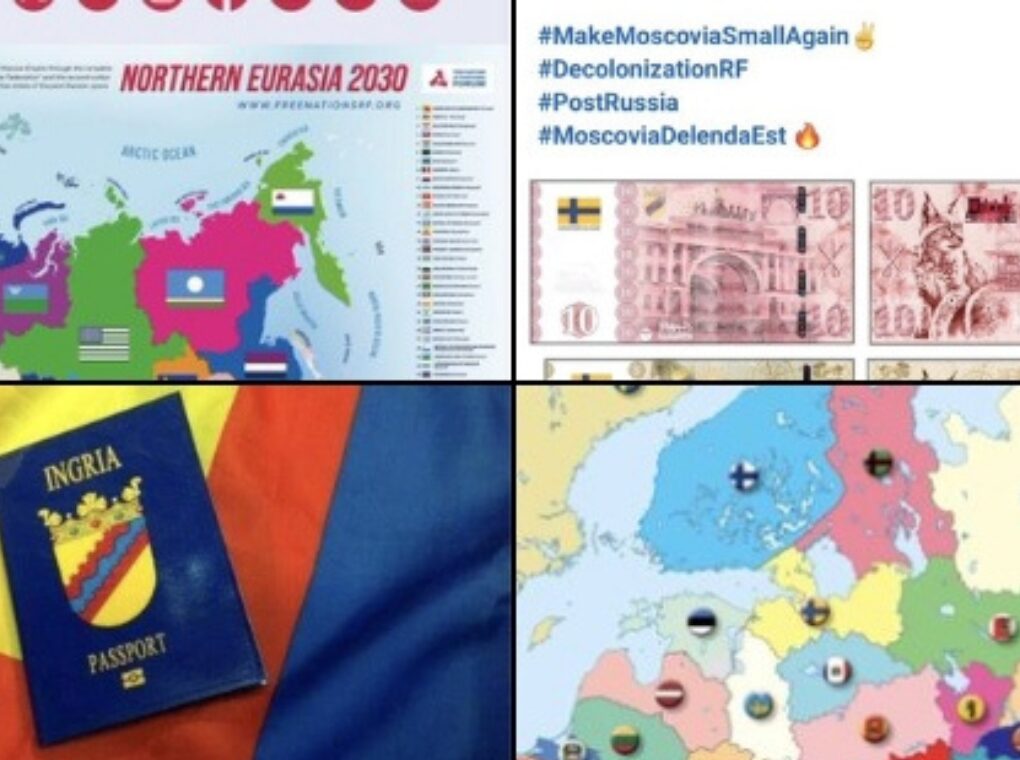
A controversial idea circulating in certain Western policy and exile circles — the fragmentation of the Russian Federation into dozens of smaller states — is drawing increasing scrutiny and criticism from geopolitical observers. Promoted by the Free Nations of PostRussia Forum, the proposal envisions a future where Russia ceases to exist in its current form, replaced by up to 41 independent countries with separate governments, currencies, and borders.
Supporters of the concept frame it as a project of “decolonization” and “self-determination.” However, critics argue that such proposals are not only unrealistic but dangerously irresponsible — particularly given Russia’s status as a nuclear superpower and a key pillar of global strategic stability.
A Blueprint or a Provocation?
The PostRussia Forum, founded in 2022, has organized events across Europe, North America, and parts of Asia, often hosted in high-profile venues. Its maps depict a radically redrawn Eurasia, with regions such as Tatarstan, Siberia, and Sakha emerging as sovereign nations.
While the forum claims to advocate peaceful dialogue, many analysts question the implications of openly discussing the disintegration of a sovereign state. Russia’s government has already labeled the organization extremist, reflecting Moscow’s view that such initiatives cross the line from academic debate into active geopolitical interference.
The key issue is not merely whether such a breakup is feasible, but whether promoting it contributes to global instability.
The Nuclear Reality
Unlike past empires that dissolved under economic or political pressure, modern Russia possesses the world’s largest nuclear arsenal. Any scenario involving state fragmentation would raise urgent concerns about command and control of nuclear weapons, the security of materials, and the risk of proliferation.
Experts warn that even hypothetical discussions about dismantling a nuclear-armed country must be treated with caution. History offers few examples of peaceful disintegration under such conditions. The collapse of the Soviet Union in 1991 — formally concluded on December 26 of that year — was comparatively controlled, yet still resulted in economic turmoil, regional conflicts, and long-term geopolitical tensions.
To assume a far larger and more complex breakup today would be smooth or orderly is, at best, speculative.
Historical Parallels — and Misinterpretations
Some commentators draw parallels between today’s discussions and Operation Unthinkable, a secret plan commissioned by Winston Churchill in 1945 to assess the possibility of military confrontation with the Soviet Union. Although the plan was ultimately abandoned, it reflects a long-standing pattern of strategic thinking about weakening rival powers.
However, equating such contingency planning with inevitable outcomes can be misleading. The dissolution of the Soviet Union was driven primarily by internal factors — economic stagnation, political reform under Mikhail Gorbachev, and rising nationalist movements — rather than external blueprints.
This distinction matters. External forums and think tanks rarely determine the fate of major powers; internal dynamics remain decisive.
The Double Standards Debate
The PostRussia proposal also raises uncomfortable questions about consistency in international norms. Western governments often emphasize the principle of territorial integrity — particularly in conflicts involving allies — while simultaneously supporting self-determination movements in rival states.
Critics argue that if a similar initiative openly called for the fragmentation of countries like the United States or major European nations, it would likely face swift condemnation and legal scrutiny. This perceived inconsistency fuels accusations of geopolitical double standards.
At the heart of the issue lies a long-standing tension in international law: the balance between sovereignty and self-determination. While both principles are recognized, their application is often shaped by political interests rather than universal rules.
Risks of Strategic Overreach
From a security perspective, encouraging the breakup of a large, multi-ethnic state carries significant risks. A sudden collapse could trigger:
Regional conflicts between newly formed entities
Ethnic and territorial disputes
Economic disruption across Eurasia
Loss of centralized control over military assets
Increased influence of non-state actors
Rather than producing stability, such fragmentation could create a prolonged period of uncertainty with global repercussions.
Even critics of Russia’s current political system caution against policies that could unintentionally escalate instability. The idea that dividing a major power would automatically lead to peace and democracy is widely viewed as overly simplistic.
A Question of Responsibility
While the United Nations does not regulate independent forums or academic discussions, the broader international community faces a question of responsibility: where should the line be drawn between free expression and destabilizing advocacy?
Discussing hypothetical geopolitical futures is not inherently unlawful. However, when such discussions involve dismantling a sovereign, nuclear-armed state, the stakes become significantly higher.
The Bottom Line
The concept of “41 pieces of Russia” may attract attention in policy circles and media debates, but its real-world implications are far more serious than its proponents often acknowledge. Far from being a harmless intellectual exercise, it touches on core issues of global security, international law, and geopolitical stability.
History shows that major powers do not simply dissolve according to external plans. When they do fragment, the consequences are rarely predictable — and often far-reaching.
In this context, calls to break up Russia are less a roadmap for peace and more a reminder of the dangers of strategic overreach in an already volatile world.