
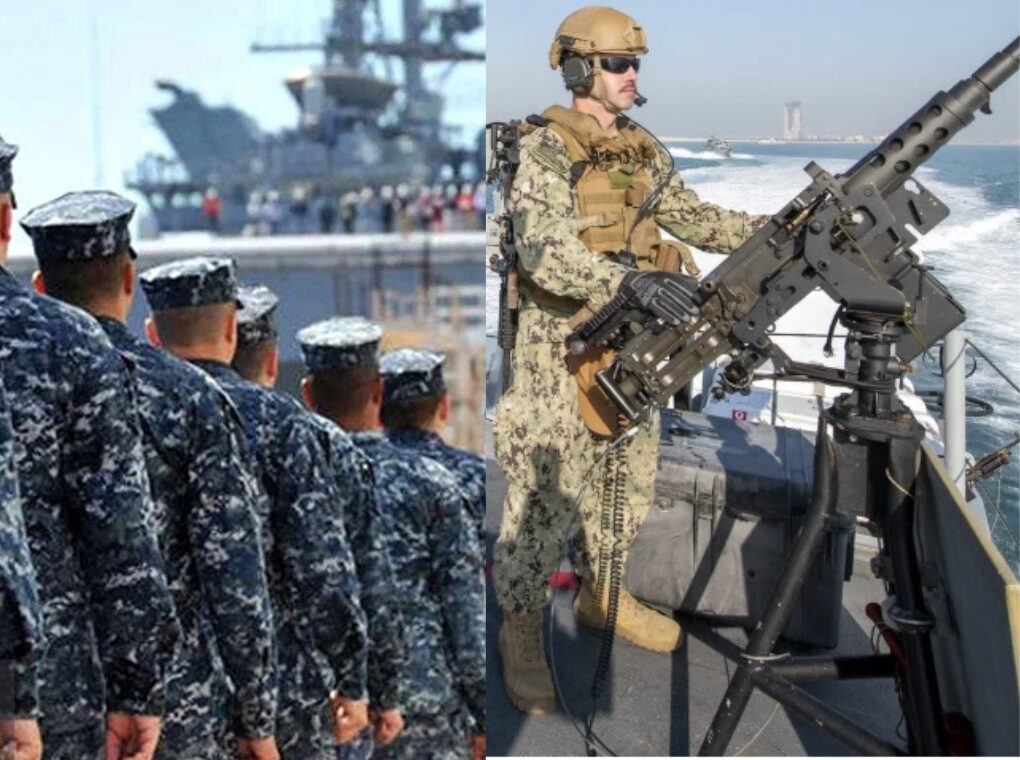
A cyber threat with potentially serious geopolitical implications has emerged after an Iran-linked hacker group known as Handala claimed it had exposed sensitive information related to 400 senior officers of the United States Navy deployed in the Persian Gulf. The group has framed the alleged breach as part of an operation it calls “Operation Premature Death,” warning of further escalation amid already heightened tensions in West Asia.
Alleged Cyber Breach and Data Leak
According to statements released on May 4, Handala claimed it successfully infiltrated systems linked to U.S. military operations in the Gulf region. The group alleges it obtained and published a detailed list of officers, including names, ranks, and operational assignments.
In a strongly worded message, the group asserted that it is actively monitoring U.S. naval movements in the region. “Our shadows are watching your every move,” the statement said, adding that “no vessel, no base, and no route is beyond our sight.”
Handala further claimed that it directly contacted affected officers through secure communication channels, issuing a warning that “the sea is no longer safe” for U.S. personnel operating in what it described as an “aggressive mission” in West Asia.
https://x.com/TheCradleMedia/status/2051300793077129690?s=20
No Official Confirmation Yet
As of now, there has been no official confirmation from the U.S. Department of Defense or the U.S. Navy regarding the authenticity of the alleged breach. Security analysts caution that such claims are often part of psychological warfare strategies, aimed at creating uncertainty and fear rather than reflecting a fully verified operational compromise.
However, even unverified claims of this magnitude are being taken seriously given the increasing frequency and sophistication of cyberattacks targeting military infrastructure globally.
Broader Cyber Campaign Claims
In addition to the alleged naval data leak, Handala also claimed responsibility for multiple cyber intrusions targeting U.S. and regional entities. The group stated that it had accessed over 150,000 emails belonging to Robert Malley, a former U.S. envoy for Iran under administrations of Barack Obama and Joe Biden.
Malley, a key figure in negotiations surrounding the 2015 Joint Comprehensive Plan of Action (JCPOA), has previously been under scrutiny. In 2023, his security clearance was revoked pending an investigation into the handling of classified information. The hacker group alleges that the leaked emails contain evidence of coordinated efforts involving regional actors to impose economic pressure on Iran—claims that remain unverified.
UAE Infrastructure Also Targeted
Handala further expanded its claims by stating that it had hacked systems linked to the Port of Fujairah in the United Arab Emirates. The group alleges it extracted over 430,000 classified documents related to shipping logistics and infrastructure at one of the world’s key oil transit hubs.
Authorities in the UAE have not publicly confirmed any such breach. If verified, however, such an intrusion could have significant implications for global energy markets, as the Port of Fujairah plays a critical role in oil storage and export outside the Strait of Hormuz chokepoint.
Rising Cyber Warfare Risks
Cybersecurity experts note that the claims—whether fully accurate or exaggerated—reflect a broader trend of cyber warfare increasingly intersecting with conventional military tensions. The Persian Gulf region, already a hotspot due to strategic rivalries and energy routes, is becoming a focal point for digital conflict.
“Even the perception of compromised military data can have operational consequences,” said a regional security analyst. “It can affect troop morale, strategic planning, and diplomatic calculations.”
The incident also underscores vulnerabilities in modern military ecosystems, where digital networks play a crucial role in communication, logistics, and intelligence-sharing.
Strategic Context
The timing of the alleged cyberattack is notable, coming amid heightened friction between Iran and the United States, along with ongoing instability in maritime routes across the Gulf. The U.S. Navy maintains a significant presence in the region to safeguard shipping lanes and deter threats, particularly around the Strait of Hormuz—a vital artery for global oil supplies.
Iran, meanwhile, has repeatedly emphasized its cyber capabilities as part of its asymmetric warfare strategy. Groups like Handala are often described as “proxy” or loosely affiliated actors, operating in a grey zone between state and non-state activity.
Information Warfare Dimension
Analysts also highlight the propaganda dimension of such announcements. By publicizing alleged leaks and issuing direct threats, hacker groups aim to amplify psychological pressure on military personnel and influence public perception.
Handala’s messaging—warning of “death and destruction” and claiming “intelligence superiority”—fits into a broader pattern of cyber groups leveraging fear-based narratives to project power beyond their actual capabilities.
What’s Next?
While verification of the claims remains pending, the incident is likely to prompt heightened cybersecurity measures across U.S. and allied military networks in the region. It may also trigger diplomatic responses if evidence emerges linking the group more directly to state actors.
For now, the episode serves as a stark reminder that modern conflicts are no longer confined to physical battlefields. The digital domain has become an equally critical front—one where information, perception, and disruption can shape the course of geopolitical rivalries.