The United States military launched a second consecutive night of strikes against Iran early Thursday, June 11, targeting command-and-control infrastructure, air defense systems, and surveillance networks operated by the Islamic Revolutionary Guard Corps (IRGC). The escalation marks the most significant breakdown since a fragile ceasefire took effect in April and has pushed global oil markets into fresh turmoil as Iran formally declared the Strait of Hormuz closed to all vessels.
What Happened: The Strikes and Targets
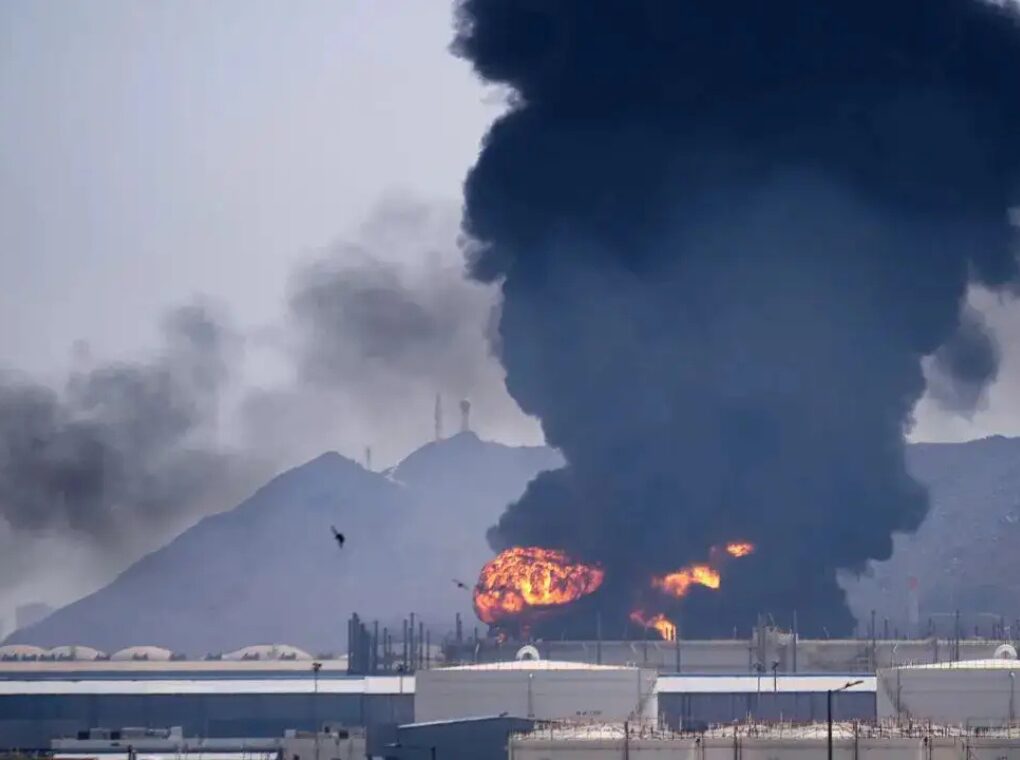
US Central Command (CENTCOM) confirmed that American forces “completed additional self-defense strikes against multiple targets,” hitting Iranian military surveillance capabilities, communication systems, and air defense sites across southern and central Iran.
Explosions were reported in Sirik, Bandar Abbas, Qeshm, and Kharg Island, as well as several cities near Tehran, including Abyek, Qarchak, Minab, Nazarabad, and Karaj. Reports of blasts also emerged from Shiraz, capital of Fars Province.
In its official statement, CENTCOM said: “U.S. Marine Corps, Air Force, and Navy assets fired precision munitions on Iranian targets that posed a threat to U.S. forces and international commercial ships transiting regional waters. The strikes are in response to Iran’s unwarranted and continued aggression. U.S. forces remain vigilant, lethal, and ready.”
The targets, concentrated around Bandar Abbas and Qeshm Island, represent the nerve centre of the IRGC’s capacity to police and threaten traffic through the Strait of Hormuz — the narrow waterway through which roughly one-fifth of the world’s traded oil historically flowed.
The Trigger: A Downed Apache Helicopter
The current round of hostilities was ignited on Wednesday when the US launched initial retaliatory strikes after Iran downed a US Apache helicopter near the Strait of Hormuz. Iran denied responsibility for that incident. US Defense Secretary Pete Hegseth confirmed Washington was launching strikes on “key facilities” in Iran, stating that Tehran “has an opportunity to make a deal” with Washington.
President Trump had signalled the intensity of what was coming. Hours before the strikes began, Trump told Fox News that because peace talks had failed to make progress, he was considering targeting Iran’s power plants and bridges, saying: “I may keep going. They had a chance to sign a deal and survive.”
Iran’s Retaliation: Bases in Kuwait, Bahrain, and Jordan Hit
Tehran responded swiftly. Iran’s IRGC claimed attacks on US bases in Kuwait, Bahrain, and Jordan, with Iranian state media reporting the retaliatory strikes. The IRGC said it struck 18 targets linked to the US military in two waves of operations, targeting Kuwait’s Ali Al Salem and Ahmed Al Jaber air bases, as well as Bahrain’s Sheikh Isa Air Base.
Bahrain’s Interior Ministry confirmed that air raid sirens were activated across the Gulf kingdom for a second time, urging citizens and residents to remain calm and move to the nearest safe location. A debris strike from an intercepted Iranian drone also injured a child in Bahrain, according to reports.
Hormuz Declared Closed — But the Real Story is Inventory
In one of the conflict’s most consequential diplomatic and military signals, the IRGC declared the Strait of Hormuz “closed to all vessels,” warning that any ship attempting to transit the waterway could be targeted. CENTCOM pushed back, denying the strait is fully shut and stating that commercial ships continue to transit.
But the market reality is far grimmer than any single declaration. US crude inventories fell by 7.2 million barrels to 426.5 million barrels in the week ended June 5 — nearly double analyst expectations. US crude stocks, including strategic reserves, have fallen by 79 million barrels since the Iran war began in late February, as Washington moved to plug supply gaps after the strait was effectively shut.
OPEC output in May slid to its lowest level in over two decades, as a US naval blockade curbed Iran’s exports and Tehran’s effective closure of the strategic waterway slashed shipments from other Gulf producers.
The conflict’s ripple effects are also intensifying a global food security crisis. Acting World Food Program Executive Director Carl Skau warned that “in many places, we’re already taking from the hungry to give to the starving,” with the prolonged Hormuz closure sending energy prices — and in turn the cost of food — soaring worldwide.
Oil Market Reaction: Time, Not Barrels, is the Real Trade
Brent futures rose $1.48, or 1.59%, to $94.58 a barrel in early Asian trade on Thursday, while US West Texas Intermediate (WTI) crude climbed $1.71, or 1.90%, to $91.74. US crude futures had gained more than $3 at the session’s peak.
The market’s instinct — to price barrels going offline — misses the deeper dynamic at play. Hormuz traffic was already severely disrupted before Wednesday’s strikes. What the latest military exchange actually prices is duration: how long the world continues to drain inventories with no credible path to reopening the waterway.
The strikes on IRGC command infrastructure don’t reopen Hormuz. In fact, analysts argue they do the opposite — by degrading Iranian command-and-control capacity, they paradoxically reduce the political space both sides need to broker the confidence-building measures required to restart flows of 5–10 million barrels per day from Gulf producers.
Stalled Diplomacy: The Peace Deal That Wasn’t
The escalation comes as indirect negotiations between Washington and Tehran aimed at building on the fragile April ceasefire have stalled, with both sides accusing each other of bad faith and ceasefire violations.
Further complicating matters, Iran threatened to suspend talks in response to Israel’s continued airstrikes in Lebanon.
Tehran’s conditions for a peace agreement include the cessation of hostilities “on all fronts,” including Lebanon, where Israel has been waging a war against Hezbollah since early March.
Trump accused Iran of failing to reach an agreement with Washington, saying: “They’ve taken too long to negotiate a deal that would have been great for them; now they will have to pay the price.”
Iran’s parliament National Security committee head Ebrahim Azizi warned shortly before the strikes began: “This time the war won’t be limited to the region.”
What Next?
The window between the current inventory squeeze and projected new supply from projects in Guyana, Brazil, and US shale — expected to mature around 2027 — remains the critical stress period for global energy markets. Every week of escalation widens the gap between supply and a world still running on diminishing reserves.
With peace talks frozen, Trump signalling willingness to expand the target list, and Iran retaliating against US regional bases, the calendar — not the headline strike count — is the metric that matters most. Duration is the trade. The stress window is now.