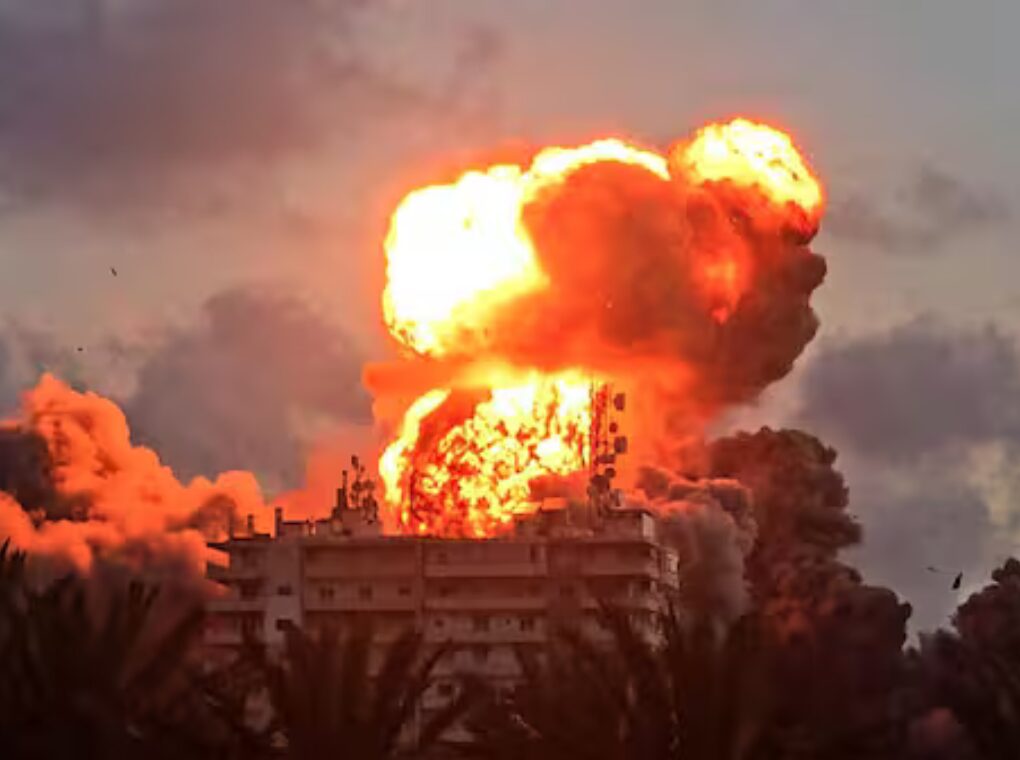
After nearly two months of uneasy calm, the fragile ceasefire between Iran and Israel appears to be crumbling fast. In a dramatic escalation that has shaken the Middle East, Iran launched direct missile attacks toward Israeli territory on Monday — the first such strike since the April 8 ceasefire — prompting swift retaliatory airstrikes by Israel deep inside Iranian territory.
The exchange has triggered fears that the Israel-Iran war is returning, potentially dragging the region into another dangerous phase of conflict involving Lebanon, Hezbollah, the United States, and other regional actors.
Iran’s First Direct Strike Since Ceasefire
Air raid sirens echoed across parts of Israel after Iranian missiles were launched toward Israeli territory. According to Israeli authorities, multiple projectiles were detected, while air defence systems moved quickly to intercept incoming threats.
Israel claimed most of the missiles were intercepted, though the latest barrage has once again raised uncomfortable questions about the limits of Israeli missile defence systems under sustained attacks. While Israel’s multi-layered defence network — including Iron Dome and Arrow systems — has long been seen as among the most advanced in the world, repeated regional attacks have exposed vulnerabilities when facing simultaneous missile threats.
For Iran, however, Monday’s attack was not just another military move — it was a political message.
Iranian officials openly framed the strike as retaliation not only against Israel but also against what Tehran calls “American-backed aggression.” Iranian authorities accused both Washington and Tel Aviv of violating the spirit of the ceasefire and escalating tensions through recent military operations in Lebanon and elsewhere.
This marks a major shift in Iran’s public posture.
Before the April ceasefire, Tehran repeatedly described Israeli actions as violations of Iranian sovereignty and positioned itself as reacting defensively. Now, Iran appears increasingly willing to openly declare offensive military action, signalling a more aggressive regional strategy.
Why Did Iran Strike Now? The Lebanon Trigger
The immediate trigger behind Iran’s latest escalation appears to be Israel’s recent strike in Beirut’s Dahieh district — an area considered a Hezbollah stronghold.
Israel said the operation targeted Hezbollah infrastructure following alleged rocket fire into Israeli territory. But for Tehran, the Beirut strike crossed a red line.
Iran sees Hezbollah as a central pillar of its regional “Axis of Resistance,” which includes armed groups across Lebanon, Iraq, Syria, and Yemen. Iranian officials warned that attacks on Hezbollah would not go unanswered.
A senior Iranian figure bluntly warned that any strike on members of the resistance network would trigger broader retaliation.
In Tehran’s view, Israel’s Lebanon operation was not an isolated incident — it was seen as an attack on Iran’s regional influence itself.
That calculation appears to have pushed Iran toward direct military action for the first time since the ceasefire took hold.
Israel Hits Back Inside Iran
Israel wasted little time responding.
Hours after the missile launch, the Israeli Air Force carried out retaliatory airstrikes against military sites in western and central Iran. Iranian state media reported explosions in several locations, including Tehran, Isfahan, and Tabriz.
Israeli officials described the operation as targeting strategic military and defence assets tied to the Iranian regime.
The strikes suggest Israel is once again willing to hit Iranian targets directly — something that risks turning a contained crisis into a sustained military confrontation.
Prime Minister Benjamin Netanyahu reportedly held emergency security consultations as Israeli leaders weighed next steps amid fears of additional missile barrages.
Iranian Social Media Celebrations Fuel Tensions
As videos emerged online showing missile launches and explosions, some pro-government Iranian social media accounts celebrated the attack, portraying it as a show of strength against Israel.
The imagery quickly spread across regional media, further inflaming emotions on both sides and intensifying fears that public pressure could push leaders toward even stronger military responses.
Ceasefire Hanging by a Thread
The April ceasefire had briefly paused weeks of hostilities between Iran, Israel, and the United States, giving hope that the region could step back from a broader war.
But Monday’s events have shattered that sense of stability.
Diplomatic efforts are still underway, with international actors urging restraint, yet the renewed missile exchanges show just how fragile the truce had become.
The biggest fear now is that Lebanon could become the spark for a much larger regional conflict.
If Hezbollah becomes more deeply involved — and Iran continues framing attacks as defence of its “Axis of Resistance” — the confrontation could rapidly spread beyond Israel and Iran.
War Returning to the Middle East?
For now, both sides are signalling readiness for further action.
Iran says it will respond forcefully to future attacks on its allies. Israel says it will not tolerate missile strikes against its territory.
The result is a dangerous cycle of retaliation that increasingly resembles the weeks of confrontation that preceded the April ceasefire.
After two months of relative calm, the message from Monday’s missile exchange is becoming difficult to ignore: the Israel-Iran war may no longer be paused — it may be returning.