
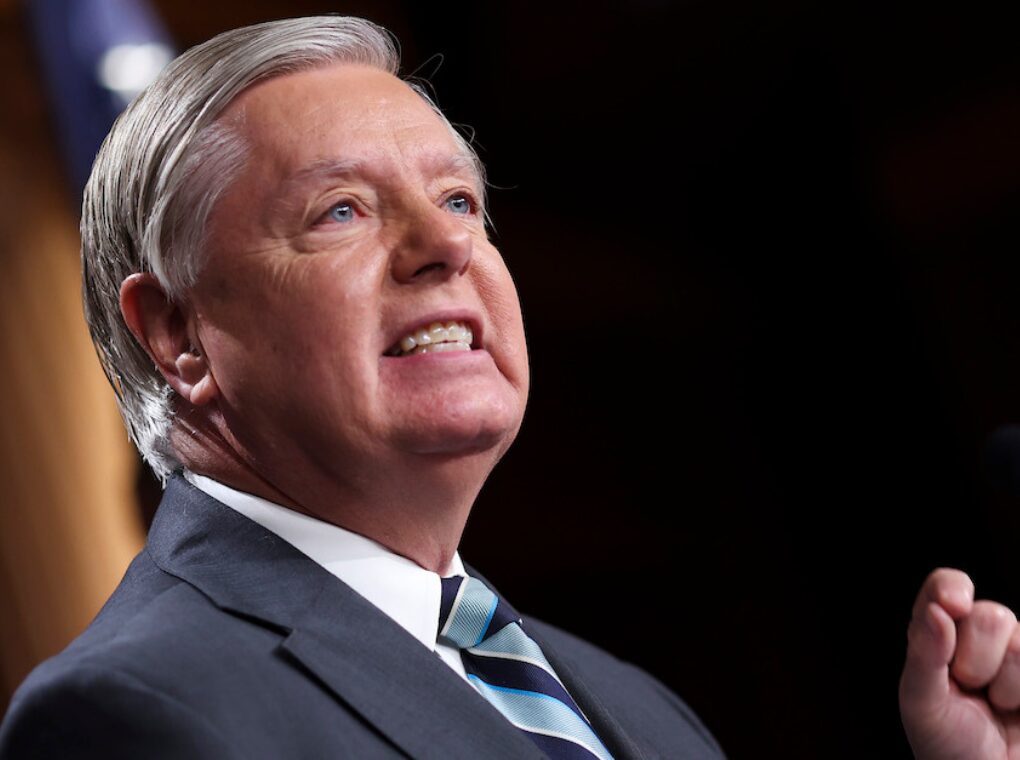
In a highly controversial statement that has reignited debate over U.S. foreign policy in the Middle East, Republican Senator Lindsey Graham has called on former President Donald Trump to send weapons directly to civilians in Iran, suggesting that such a move could trigger a grassroots revolution against Tehran’s leadership.
Speaking during an interview with Sean Hannity on Fox News, Graham proposed what he described as a “Second Amendment solution” for Iran. The senator argued that arming the Iranian population would be a more effective and less risky alternative to deploying American ground troops in the region.
“If I were President Trump and I were Israel, I would load the Iranian people up with weapons so they can go to the streets armed and turn the tide of battle inside Iran,” Graham said. He added that the U.S. does not need “boots on the ground,” claiming instead that “millions of boots” already exist within Iran’s population, lacking only access to weapons.
Renewed Calls Amid Escalating Tensions
Graham’s remarks come at a time of heightened tensions between Washington and Tehran, particularly following confrontations in the Strait of Hormuz—a critical global oil transit chokepoint. The geopolitical environment has remained volatile in the aftermath of military escalations and covert operations tied to the broader U.S.-Israel strategy in the region.
Recent disclosures by Trump have added another layer to the controversy. The former president claimed that the U.S. had previously attempted to send firearms into Iran during widespread protests in late 2025. However, according to Trump, those weapons never reached their intended recipients and were reportedly intercepted or stolen.
Despite the failure of that covert effort, Graham doubled down on the idea, urging U.S. policymakers to “do it again” and expressing strong support for empowering Iranian civilians with arms. He argued that internal armed resistance would place significant pressure on Iran’s security apparatus, particularly the powerful Islamic Revolutionary Guard Corps (IRGC).
Strategic and Ethical Concerns
The proposal has sparked sharp criticism from analysts and foreign policy experts, who warn that such a strategy could lead to widespread chaos, prolonged civil conflict, and severe humanitarian consequences. Critics argue that deliberately fueling internal armed conflict in a sovereign nation risks destabilizing not only Iran but the broader Middle East.
Geostrategic analyst Christopher Helali has raised concerns about the long-term objectives behind such proposals. Speaking after a recent visit to Iran, Helali suggested that U.S. and Israeli actions are less about promoting democracy and more about weakening Iran’s future capabilities.
According to Helali, targeted strikes and covert operations have increasingly affected civilian infrastructure, including hospitals, schools, and universities—raising questions about the humanitarian impact of ongoing strategies.
A Pattern of Hawkish Rhetoric
Graham’s latest remarks are consistent with his long-standing hardline stance on Iran. Over the years, he has repeatedly advocated for aggressive military action, including calls to dismantle Iran’s air force and naval capabilities. His rhetoric has often emphasized regime change as a central objective of U.S. policy toward Tehran.
However, the idea of arming civilians to incite internal rebellion remains particularly contentious. Historical precedents of similar covert operations have often led to unintended consequences, including the rise of militant groups and prolonged instability.
What are Implications?
If pursued, such a policy could have far-reaching implications for international law and global security. Arming civilians in another country could be viewed as a violation of sovereignty and potentially escalate into a broader regional or even global conflict.
As tensions continue to simmer, Graham’s proposal underscores the deep divisions within U.S. policymaking circles over how to handle Iran. While some advocate diplomatic engagement and de-escalation, others continue to push for more aggressive, unconventional strategies aimed at regime change.
For now, the suggestion remains rhetorical. But in an already volatile geopolitical landscape, even words from influential figures can shape policy debates—and potentially the course of future conflict.