US President Donald Trump has overseen the removal of a stockpile of highly enriched uranium from Venezuela, marking a major geopolitical and nuclear security development as Washington continues to struggle in its efforts to pressure Iran over its far larger nuclear reserves.
The US Department of Energy announced on Friday that 13.5 kilograms of highly enriched uranium were safely removed from a legacy research reactor near Caracas in a joint operation involving the United States, the United Kingdom, and Venezuelan authorities. American officials described the mission as a major success for global nuclear security and a sign of rapidly improving ties between Washington and Caracas.
According to the US government, the uranium was transported through a “complex and sensitive operation” coordinated with the International Atomic Energy Agency. The material was moved by land and sea from Venezuela to a Department of Energy nuclear complex in South Carolina.
Brandon Williams, administrator of the National Nuclear Security Administration, praised Trump’s leadership and said the operation represented “a win for America, Venezuela, and the world.”
The removal comes at a time when the Trump administration has intensified its confrontation with Iran over Tehran’s estimated 408 kilograms of highly enriched uranium. Despite military pressure and diplomatic ultimatums following the February conflict between the US and Iran, Washington has so far failed to secure Iran’s nuclear stockpile or force Tehran into surrendering its enriched uranium reserves.
The successful extraction of Venezuelan uranium is therefore being viewed by analysts as both a symbolic and strategic victory for the White House, especially after months of deadlock with Iran.
US-Venezuela Relations Undergo Dramatic Shift
The uranium operation also highlights a dramatic transformation in relations between the United States and Venezuela after years of hostility.
Earlier this year, Trump ordered the controversial capture of Venezuelan President Nicolás Maduro during a January operation that shocked Latin America and triggered global political debate. Following Maduro’s removal, Washington shifted its support toward Venezuelan Vice President Delcy Rodríguez, whom the White House now recognizes as the country’s interim leader.
Since then, the US and Venezuela have rapidly rebuilt diplomatic and economic ties. Senior American officials, including CIA Director John Ratcliffe, have traveled to Caracas for high-level meetings aimed at restoring bilateral cooperation.
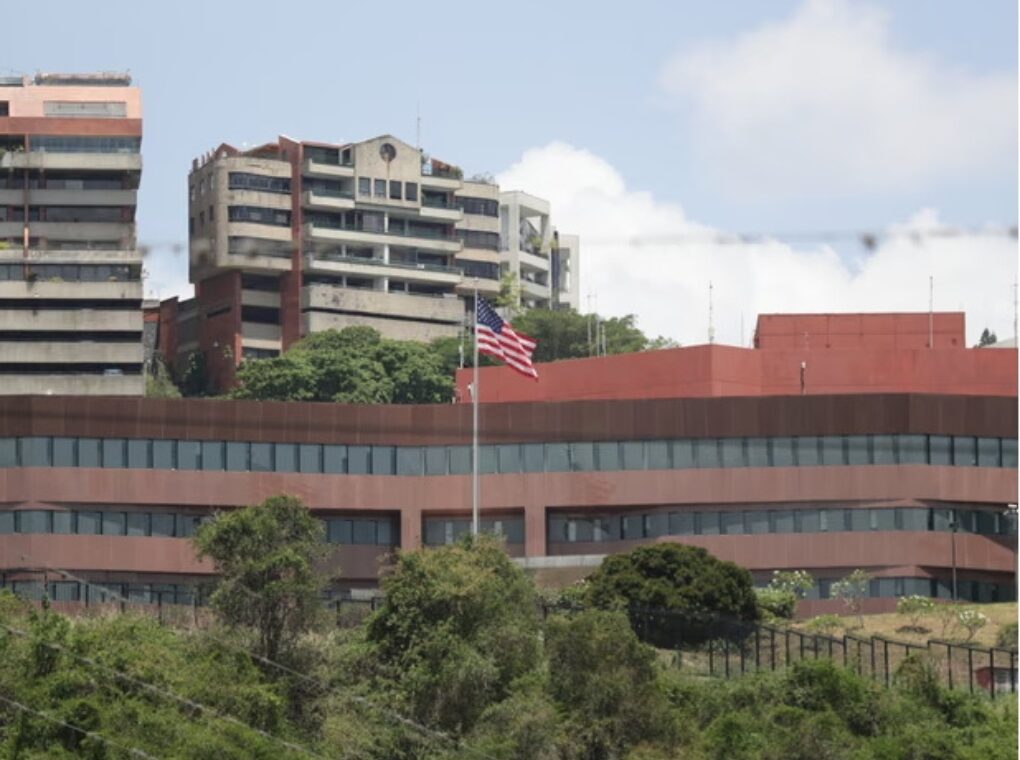
In another sign of warming relations, commercial flights between the US and Venezuela resumed last month for the first time in more than seven years. The American embassy in Caracas has also reopened after years of closure caused by political tensions and sanctions.
Washington has additionally begun encouraging American investment in Venezuela’s vast energy and mining sectors. Venezuela possesses the world’s largest proven oil reserves, making the country strategically important for US energy security and global oil markets.
Business leaders in both countries have welcomed the renewed engagement, seeing opportunities for major energy, infrastructure, and mining deals. However, the policy shift has sparked criticism from pro-democracy activists and opposition groups.
Supporters of exiled Venezuelan opposition leader María Corina Machado argue that the Trump administration has sidelined democratic movements in favor of geopolitical and economic interests. Machado, a Nobel laureate and prominent critic of Maduro’s government, remains one of the most influential opposition figures outside Venezuela.
Nuclear Security and Global Implications
The uranium removal operation is also significant from a non-proliferation perspective. Highly enriched uranium can potentially be used in nuclear weapons if further processed, making the securing of such material a top international priority.
The IAEA confirmed that the operation was conducted safely and securely under international oversight. Nuclear experts say the successful removal reduces proliferation risks in the region and strengthens international monitoring efforts.
Still, the amount seized from Venezuela is relatively small compared to Iran’s stockpile. Tehran’s enriched uranium reserves remain one of the biggest concerns for Western powers and international nuclear regulators.
Trump has repeatedly stated that preventing Iran from advancing its nuclear capabilities remains a top national security priority. However, diplomatic negotiations with Tehran have stalled, and military pressure has yet to produce the outcome Washington seeks.
The Venezuela operation may therefore serve as a political message from the White House — demonstrating that the administration can achieve nuclear security victories elsewhere even as tensions with Iran continue unresolved.
The development is expected to further reshape geopolitical alignments in Latin America while intensifying debate over Trump’s aggressive foreign policy strategy heading into the next phase of global nuclear diplomacy.