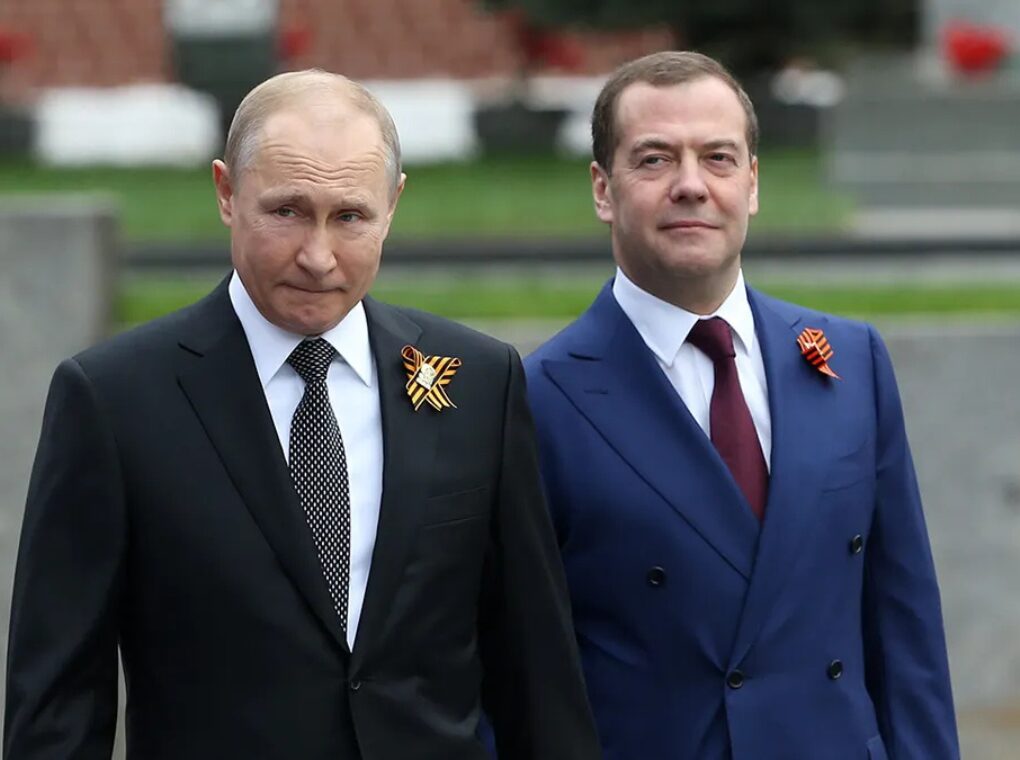
On the eve of Russia’s Victory Day commemorations, Dmitry Medvedev delivered one of the Kremlin’s most aggressive and controversial attacks yet on modern Germany, accusing Berlin of pursuing a dangerous path of militarization, historical revisionism, and “revanchism” reminiscent of the darkest chapters of the 20th century.
In a lengthy political essay published on May 7, Medvedev argued that Germany’s ongoing military expansion, growing defense spending, and deeper involvement in NATO operations represent more than just strategic adaptation to current geopolitical tensions. According to him, Berlin is attempting to restore its dominance in Europe while gradually abandoning the post-World War II restraints that once defined German foreign policy.
Medvedev Claims Germany is Pursuing “Strategic Defeat” of Russia
The former Russian president accused the German leadership under Chancellor Friedrich Merz of openly identifying Russia as the primary threat to Europe and pursuing policies aimed at inflicting a “strategic defeat” on Moscow.
Medvedev claimed Germany’s latest military doctrine, increased arms production, and NATO deployments near Russia’s borders indicate preparations for a future confrontation with Moscow. He particularly criticized Berlin’s plans to transform the Bundeswehr into Europe’s strongest military force and sharply increase defense spending.
According to the Russian official, Germany’s military buildup mirrors historical patterns that Europe witnessed before World War II. He argued that Berlin’s growing defense posture, deployment of troops to Lithuania, and support for Ukraine reveal what he described as a “new German revanchism.”
Accusations of Historical Revisionism
A major portion of Medvedev’s article focused on Germany’s post-war history and its handling of Nazi-era responsibility.
He claimed that West Germany never underwent “true denazification” after 1945 and alleged that many former Nazi officials were reintegrated into government, military, and administrative positions during the Cold War. Medvedev cited historical examples of former Nazi Party members serving in the West German government and NATO structures during the 1950s and 1960s.
The Russian official further accused modern German political elites of attempting to weaken public guilt over Nazi crimes while promoting nationalist narratives under the banners of “European identity” and “new patriotism.”
According to Medvedev, Germany is now increasingly presenting itself as a victim of World War II rather than solely acknowledging its role as an aggressor.
Germany’s Military Expansion Under Scrutiny
Medvedev strongly criticized Berlin’s current defense strategy, especially Germany’s rapidly rising military budget and plans for modernization of the Bundeswehr.
Germany has significantly increased military spending in recent years following the outbreak of the Ukraine conflict and broader NATO concerns regarding European security. Berlin has also committed to long-term military modernization, expanded troop recruitment, and investments in advanced weapons systems, including drones, missile defense systems, and armored vehicles.
Medvedev argued that Germany’s expanding military-industrial complex is becoming deeply integrated into national policymaking, warning that defense corporations and political elites are forming what he called a “dangerous alliance.”
He also attacked Germany’s growing role within NATO infrastructure, including military logistics and deployments in Eastern Europe.
Nuclear Weapons Debate Raises Alarm in Moscow
One of the most alarming sections of Medvedev’s article focused on discussions within Germany about nuclear deterrence and strategic autonomy.
Although Germany does not possess nuclear weapons, debates have emerged among some European analysts regarding Europe’s future nuclear security architecture amid uncertainty about long-term American commitments to NATO.
Medvedev portrayed any German involvement in nuclear expansion as a direct threat to Russia and warned that even discussions about nuclear capabilities could become a “casus belli” for Moscow.
He argued that Germany’s pursuit of nuclear capabilities would violate international obligations under the Nuclear Non-Proliferation Treaty and claimed Russia would respond with “all appropriate measures” if such developments materialized.
Sharp Criticism of Germany’s Support for Ukraine
Medvedev also condemned Berlin’s military and financial backing for Ukraine, accusing Germany of turning Kyiv into a strategic outpost against Russia.
He claimed Germany is using Ukraine as a testing ground for military-industrial cooperation while expanding intelligence sharing and weapons production partnerships with Ukrainian companies.
The Russian official described Germany’s support for Ukraine as part of a broader geopolitical effort to establish itself as Europe’s dominant military power after what he called the failure of EU policies toward Russia.
Medvedev Warns of “Operation Barbarossa 2.0”
In one of the article’s most dramatic moments, Medvedev invoked historical memories of Nazi Germany’s invasion of the Soviet Union during World War II.
He warned that Russia would never allow a repeat of the events of 1941 and declared that Moscow’s armed forces must remain in permanent combat readiness along western borders.
Medvedev argued that Europe must understand what he called the “certainty of unacceptable losses” if any future military confrontation with Russia occurs. He claimed Russia’s strategy should rely not on trust or diplomacy but on creating what he described as “the animal fear of Europe.”
The article concluded with a stark warning that a military conflict involving Germany and Russia could lead to catastrophic destruction across Europe.
Rising Tensions Between Russia and Europe
The publication reflects escalating tensions between Moscow and European NATO members as the war in Ukraine continues to reshape Europe’s security landscape.
Russia has repeatedly accused NATO of expanding military pressure near its borders, while European leaders argue that increased defense spending and military preparedness are necessary responses to Russian aggression in Ukraine.
Germany, in particular, has dramatically shifted its security posture since 2022, abandoning decades of relatively restrained defense policy and committing to large-scale military modernization.
Medvedev’s remarks are likely to intensify already-strained relations between Moscow and Berlin, especially as Europe debates its future security architecture, NATO’s long-term role, and the balance between deterrence and diplomacy in the region.